


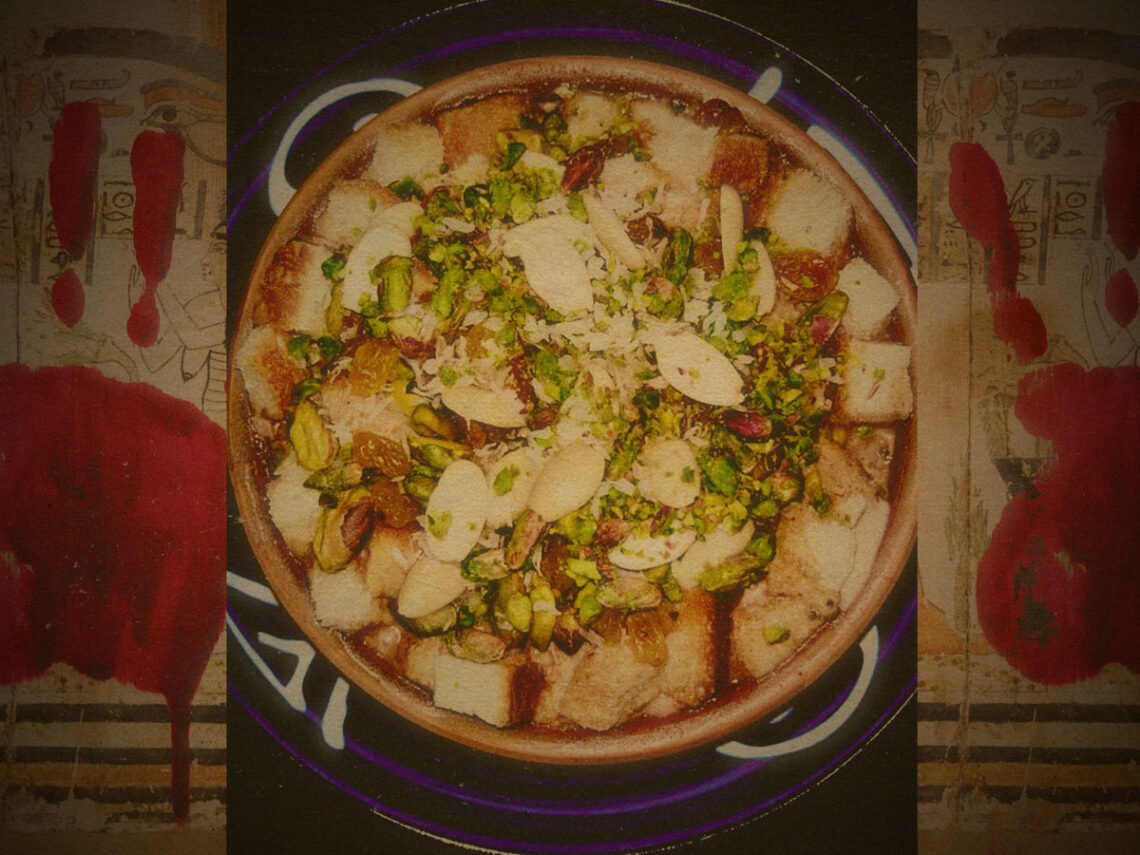
The Egyptian pudding named after a brutal murder from 1257
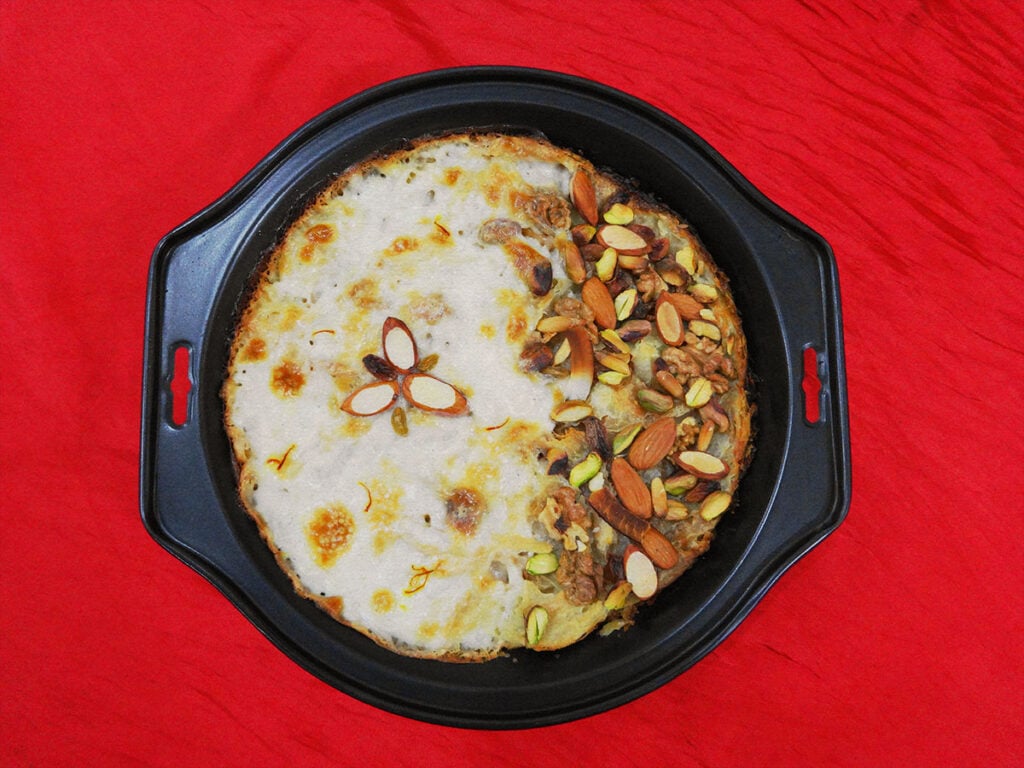
Sometimes, the best food in life is blissfully simple. You take some high-quality bread, break it up and blend it with raisins, pistachios, coconut flakes and plenty of sugar, then you douse the whole thing with milk, a touch of cream and some cinnamon, then stick it in the oven until the top is golden brown. Congratulations, you’ve just discovered Om Ali, otherwise known as pudding perfection.
The Egyptians had to invent writing for this decadent treat not to be their single greatest contribution to civilisation, and even then, the first time you taste Om Ali, you might struggle not to give it the top spot anyway.
It’s one of the great equalisers of Egyptian culture. Literally anyone, rich, poor, upper class or lower class, cannot deny its deliciousness, and there isn’t really a way of perfecting it. So long as the ingredients are good, it is good. You can’t really pay more for the best version of it.
Perhaps that’s what makes its name more fitting than you might realise.
If you’re not up on your Arabic, the English translation of the pudding is ‘Ali’s mother’. Which might sound a little strange, but admittedly, England’s favourite dessert is called Spotted Dick. However, unlike our steamed delicacy, there’s a valid historical reason why Om Ali is called that, one that dates back to the 13th century and a pitched battle of royal succession that wouldn’t seem out of place in Game of Thrones.
Om Ali was the first wife of Izz al-Din Aybak, the first sultan of the Mamluk Dynasty. However, as anyone who’s paid the slightest bit of attention to royal dramas over the past few years will tell you, the first monarch of a new dynasty probably didn’t get there by playing nice, waiting their turn and sucking up to their predecessor.
No, dynasties don’t give up power easily, and Izz al-Din Aybak didn’t take over from the previous Ayyubid dynasty by making the perfect deal with them.
Instead, he waited until the last sultan of that dynasty, As-Salih, died in battle, then married his widow, Shajar al-Durr, to secure his claim, carpet-bagging the honour, placing his bloodline on the throne and making himself public enemy number one to the whole of Egypt. This included his new wife. This was, after all, a political allegiance, and they clashed over the direction he should put the country in many times. This was at least until Shajar became bored with these clashes and had Aybak murdered.
This put Shajar herself on the Egyptian throne, but not for long. Eventually, Shajar herself was murdered. In some versions of the story by Om Ali herself, who was said to have teamed up with her ladies in waiting to beat the queen of Egypt to death with their wooden clogs. After the deed was done, Om Ali decided to celebrate by ordering said ladies in waiting to create a delicious dish, one that spread all throughout Egypt to celebrate the death of the duplicitous queen.
One that got so popular that it was given her name, Om Ali, in tribute.
It’s a hell of a story, but is it entirely true? Well… It’s complicated. The record books of Egypt at the time do very much say that the battle of succession between the two dynasties happened, as did Shajar’s catastrophic, 80-day reign. She was murdered, too, but as I mentioned, whether Om Ali did it as vengeance for her murdered husband is heavily disputed.
Then there’s the pudding of it all, and that’s the part of the story where it all falls apart. Because there’s no record of Om Ali being made in Egypt until the 19th century, long after the woman herself lived and died. However, when it comes to stuff like this, it’s always best to print the legend.