


Fandom Wars: The rival actors who started a lethal riot in 1849
Toxic fandoms, whether they relate to musicians, sports teams or actors, are often thought of as a textbook issue of the internet age.
On the one hand, this belief, albeit naive, makes a great deal of sense. After all, people surely wouldn’t say or even threaten such awful things to each other if they were in each other’s actual presence, right? Well, you can always count on people to disappoint you, and thus, the truth is that flame wars on social media are actually a more civilised version of what fans do to each other when breathing the same air.
A few decades ago, it was football hooliganism. Centuries ago, in ancient Rome, it was factions of rival gladiators that got so violent they nearly overthrew the emperor on one memorable occasion. Those are both lower forms of culture, though, surely you won’t see something like that from the high-minded, intellectual lovers of the lively art of theatre? Oh boy, how wrong.
High culture and low culture are both bullshit concepts anyway, and theatre fans can be just as violent and repulsive as any other cultural pastime you care to mention. Need proof? Check out the Astor Palace riot.
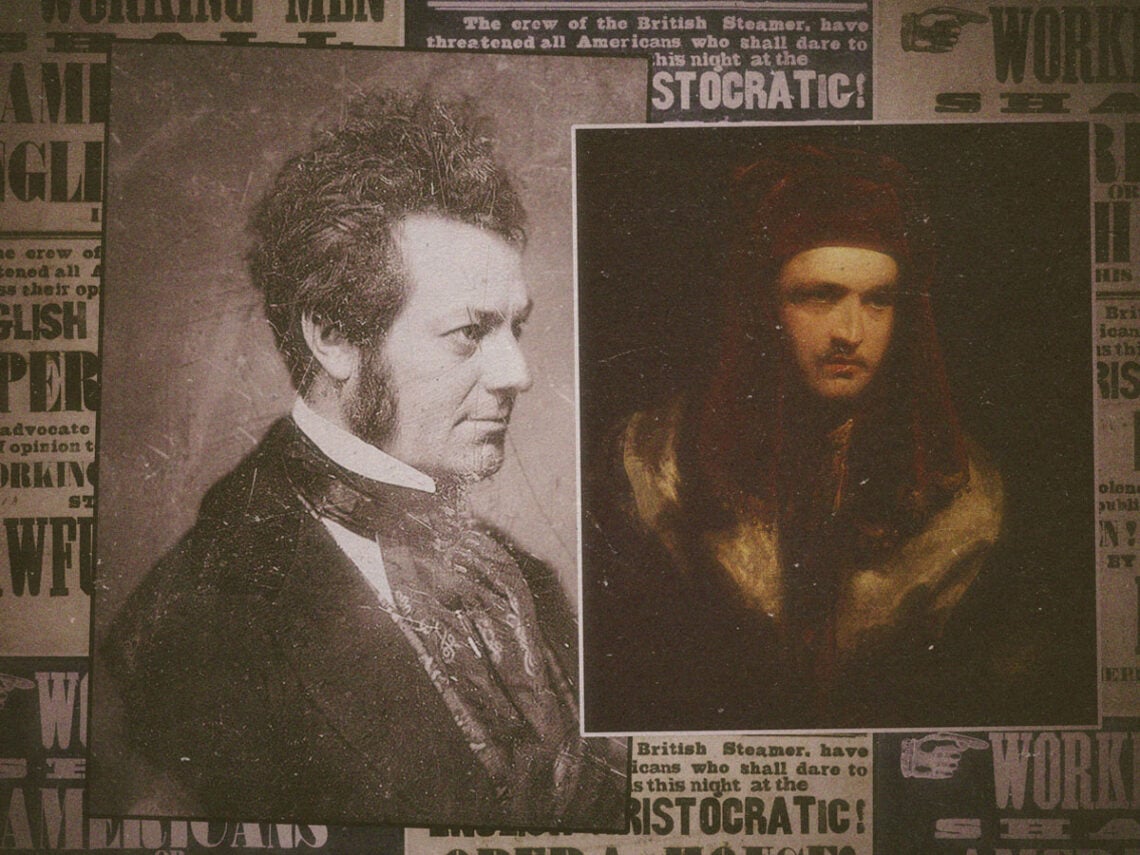
The spark was nothing more than a dispute between two actors in 1849, the rugged, handsome American actor Edwin Forrest and the effete, restrained British actor William Macready, who were active in the New York City theatre scene at the same time.
While the two actors had little respect for each other’s performance style, what set their fanbases apart was something more insidious: class. Macready, being a Brit and therefore perceived to be a more authentic Shakespearean actor, was beloved by the middle and upper-class audiences of New York, who were often of English descent themselves. Forrest, being a Philly-boy, was beloved by the American working class, who saw themselves in him, that one of their own had done good.
New York City was one of the world’s premier textile hubs in the 1850s, and the majority of Forrest’s audience were the people who worked in the factories. Meanwhile, Macready’s audience owned those factories.
Industry disputes were a daily occurrence, a pitched battle between money-hungry suits fucking over the workers, who were having daily discussions with themselves about what was more important, fighting for their true worth or their need to eat that day.
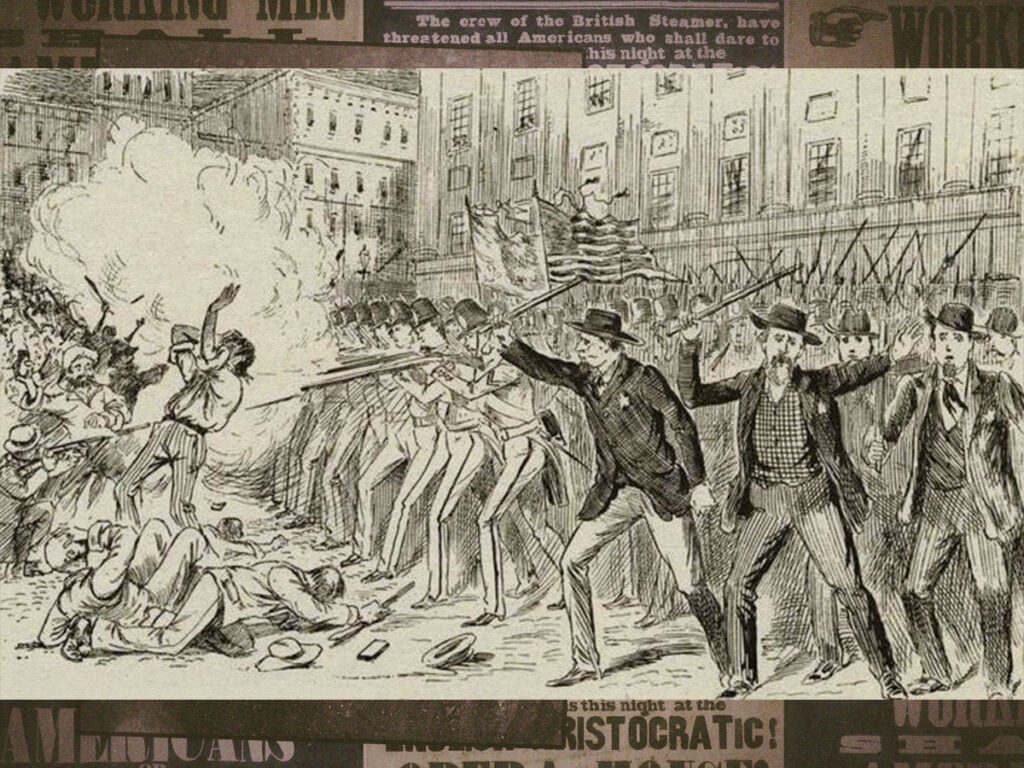
All this came to a head on May 7th, 1849, when Macready began a residency at the Astor Opera House playing the title role in Macbeth. At the same time, Forrest had a turn in the same role down the road, and his fans turned out in force to protest. This was partially because they were angry their pick of the two actors was having his moment in the spotlight undercut, sure, but also because a bunch of their oppressors would be at that play, and this was a chance for them to get a piece of their workforce’s mind. This wasn’t a few irate activists either.
If history is to be believed, three days after Macready’s Macbeth began its run, a crowd of no less than 10,000 irate Forrest fans gathered outside the Astor Opera House and, for lack of a more delicate way of putting it, started fucking shit up.
The mob started baying, breaking windows, hammering on doors and generally doing all they could to upset these toffs’ sophisticated night at the theatre. Word is it was a commotion you could hear all the way inside the theatre, one that ruined the performance. Which is all well and good until you remember that this is a bunch of rowdy working-class people disrupting the night out of a number of rich people. Unsurprisingly, this doesn’t end nicely.
The army was called in and, after a number of warnings went unheeded, they fired indiscriminately into the assembled crowd of protestors, leaving between 22 and 31 people killed, depending on the source and nearly 50 people wounded. Macready was distraught, particularly with himself for choosing to continue the run after the initial outcry. He left the city two days after and never returned to New York City.
Suddenly, Forrest’s play was the only Mackers in town, playing to massive, standing room only crowds for the rest of its run and getting nightly standing ovations on the line “What rhubarb, cyme, or what purgative drug would scour these English hence?”