


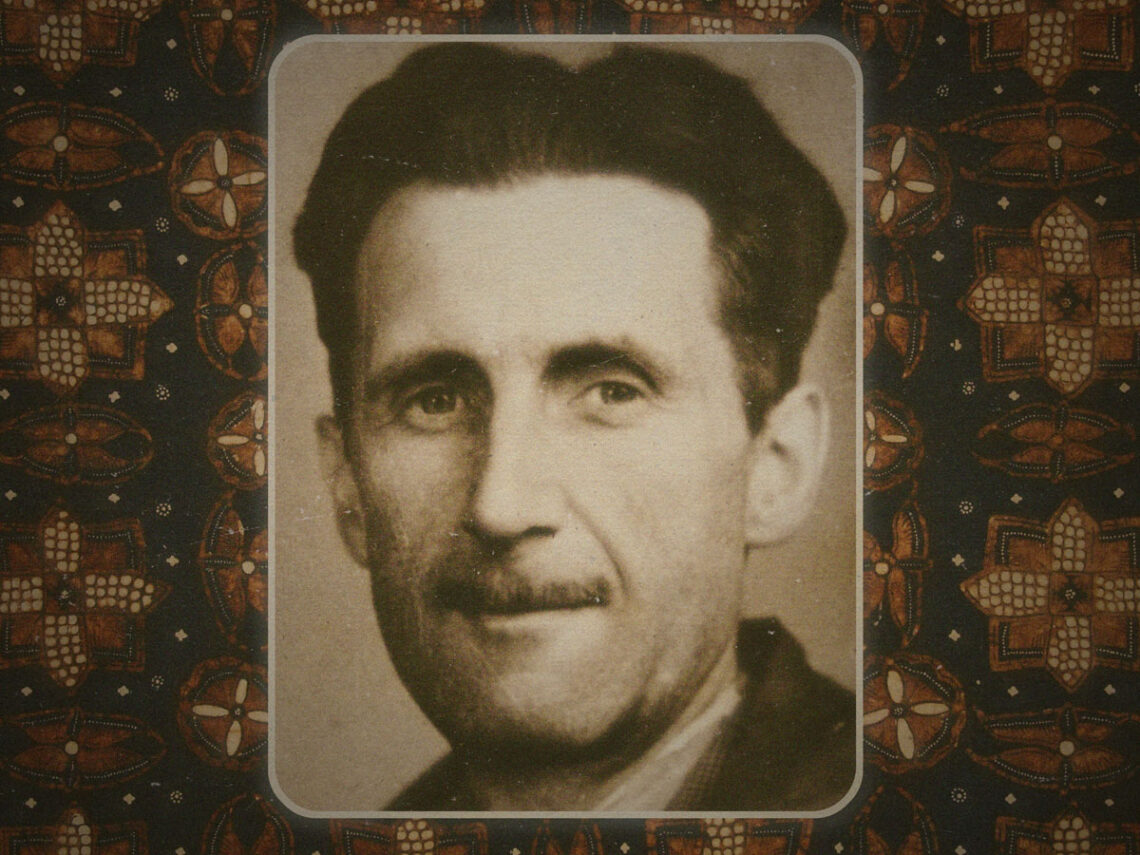
George Orwell on the necessity of Christmas spirit
While it’s something of a tired observation to say that British cuisine has all the joy, variety and spice of British winters, in the vast majority of cases it’s true.
Anyone who thinks they’re being daring by saying such a thing should probably know that others have been saying the same thing for literal centuries. Not just anyone, either, George Orwell himself said as much in a number of his essays.
After describing the British diet as “simple” and “slightly barbarous”, he then levelled this barbed broadside against the British restaurant industry: “It is not a law of nature that every restaurant in England should be either foreign or bad, and the first step towards an improvement will be a less long-suffering attitude in the British public itself.” Ouch.
As anyone who knows the slightest thing about Orwell can attest, he wasn’t the kind of guy blinded by British patriotism. You don’t write a satire as bleakly vicious as Nineteen Eighty-Four, one that ostensibly takes place in the same London streets he lived in, while having much of a romantic feeling for your home country. Thus, if he found some form of British cuisine that he wouldn’t just stand by, but develop a recipe of his own for, you can be sure that it was for no more complicated reason than the actual recipe itself worked like gangbusters.
Perhaps it also helped that, while the dish it makes is as British as steak and kidney pie, the recipe itself was connected with something that Orwell actually did have a longstanding love for. Not a country, but a season. Christmas!

Wait, George Orwell loved Christmas?!
He absolutely fucking did.
In a somewhat less venomous essay than the one he published regarding British restaurants, one actually called ‘In Praise of Christmas’, he said that celebrating Christmas to its fullest was a necessity. Especially considering the time it was published in, just after the end of the Second World War. Those times when you ignored what was healthy or logical were part of being human.
The exact words were “One may decide, with full knowledge of what one is doing, that an occasional good time is worth the damage it inflicts on one’s liver. For health is not the only thing that matters: friendship, hospitality, and the heightened spirits and change of outlook that one gets by eating and drinking in good company are also valuable.”
Presumably, the recipe he put together for a Christmas pudding was part of this time of seasonal indulgence. One that didn’t deviate much from a traditional Pudding. Beef suet, sugar, dried fruit, flour, spice, alcohol, put them all together and set it on fire. ‘Tis the season indeed. Doesn’t matter that, to modern tastes, the traditional Christmas pudding isn’t exactly palatable; what matters is the spirit of Christmas.
And if a buzz kill as notorious as George Orwell is telling you to enjoy it to the fullest, who are you to argue?
George Orwell’s Christmas pudding recipe:
Ingredients
- 1 lb each of currants, sultanas & raisins
- 2 ounces sweet almonds
- 1 ounces sweet almonds
- 1 ounces bitter almonds
- 4 ounces mixed peel
- ½ lb brown sugar
- ½ lb flour
- ¼ lb breadcrumbs
- ½ teaspoonful salt
- ½ teaspoonful grated nutmeg
- ¼ teaspoonful of powdered cinnamon
- 6 ounces suet
- The rind and juice of 1 lemon
- 5 eggs
- A little milk
- 1/8 of a pint of brandy, or a little beer
Method
“Wash the fruit. Chop the suet, shred and chop the peel, stone and chop the raisins, blanch and chop the almonds. Prepare the breadcrumbs. Sift the spices and salt into the flour. Mix all the dry ingredients into a basin. Heat the eggs, mix them with the lemon juice and the other liquids. Add to the dry ingredients and stir well. If the mixture is too stiff, add a little more milk.
“Allow the mixture to stand for a few hours in a covered basin. Then mix well again and place in well-greased basins of about 8 inches in diameter. Cover with rounds of greased paper. Then tie the tops of the basins over the floured cloths if the puddings are to be boiled, or with thick greased paper if they are to be steamed. Boil or steam for 5 or 6 hours. On the day when the pudding is to be eaten, re-heat it by steaming it for 3 hours. When serving, pour a large spoonful of warm brandy over it and set fire to it.
“In Britain, it is unusual to mix into each pudding one or two small coins, tiny china dolls or silver charms which are supposed to bring luck.”