


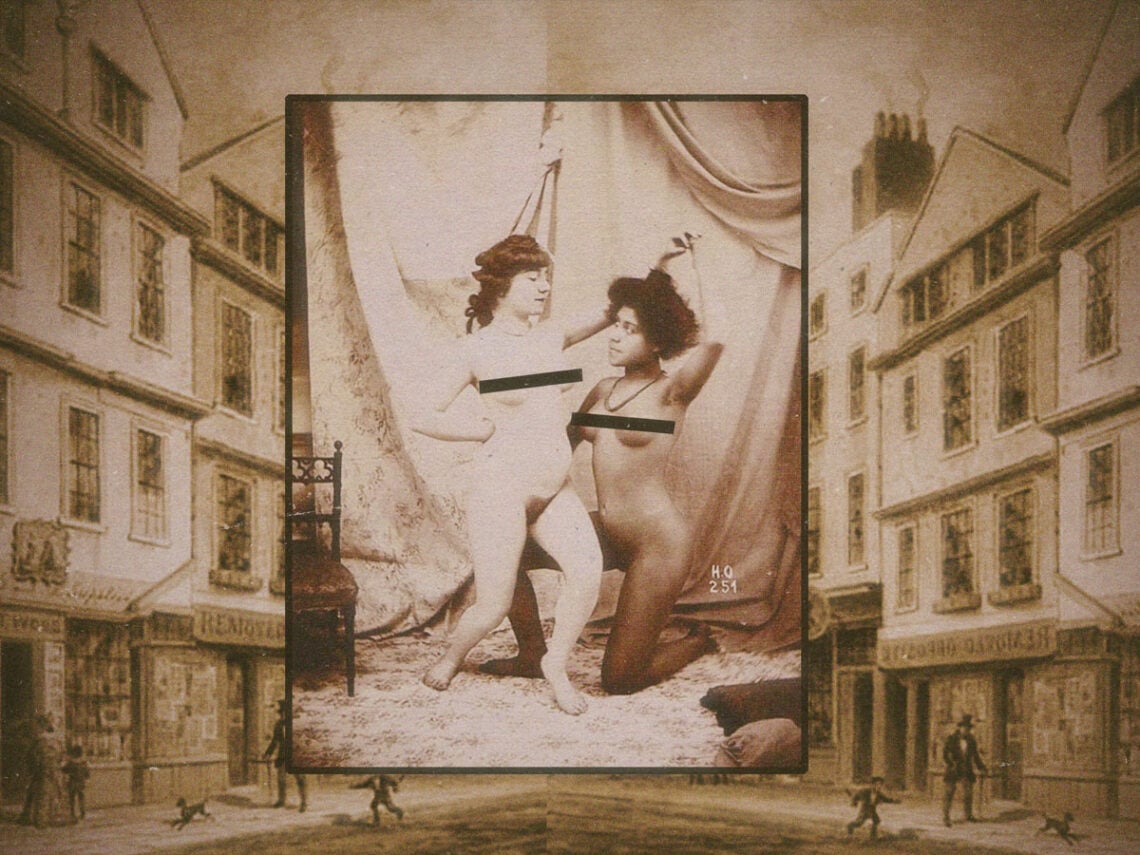
‘The most vile street in the civilised world’: How porn shaped Victorian London
A few centuries on, repression remains heavily associated with the Victorians, especially when it comes to sex.
When you talk of London, England, from around 1840 to 1900, it’s only a matter of time before you get to jokes about people passing out from the sight of a chair-leg. In fact, jokes like this are so popular that it’s almost become a little rote to mention that when a culture gets as repressed as this, everyone gets a little weird with it behind the scenes. Nevertheless, few people ever got as weird with it as the Victorians.
Seriously, if you don a hazmat suit and look into what’s getting people’s rocks off today, you might think that something is profoundly wrong with us. The truth is that humans have always been horny little freaks, and anything you can find on the depths of the internet today, you could first find on Victorian erotica. Except for all the stuff with Minions and Elmo and the like. They had to wait a few centuries for pop culture to perfect itself enough for that, but I guess they could settle for Dickens in the meantime.
In the Victorian era, porn was as huge a trade as it ever would be, and pretty much every scrap of it came through Holywell Street in the heart of the Strand. Throughout the ages, this small lane, little more than a backstreet, became one of the most controversial and fascinating parts of London. Situated close to the publishing powerhouse of Fleet Street, Holywell Street became a bookselling haven in the early 1800s, mainly as a place for radical political activists to congregate and have their polemics printed onto pamphlets.
It didn’t take long for the government to crack down on subversive political acts like that in the 1810s. Thus, with all this printing equipment and bookshops to hand, all the people who had made their name publishing revolutionary pamphlets instead turned their hand to a slightly more acceptable form of outlawed literature, erotica. After a few decades of thriving activity, this production was outlawed as well, thanks to the Obscene Publications Act of 1857, however, the denizens of Holywell Street wouldn’t go down that easy. The characters would, but not the people.
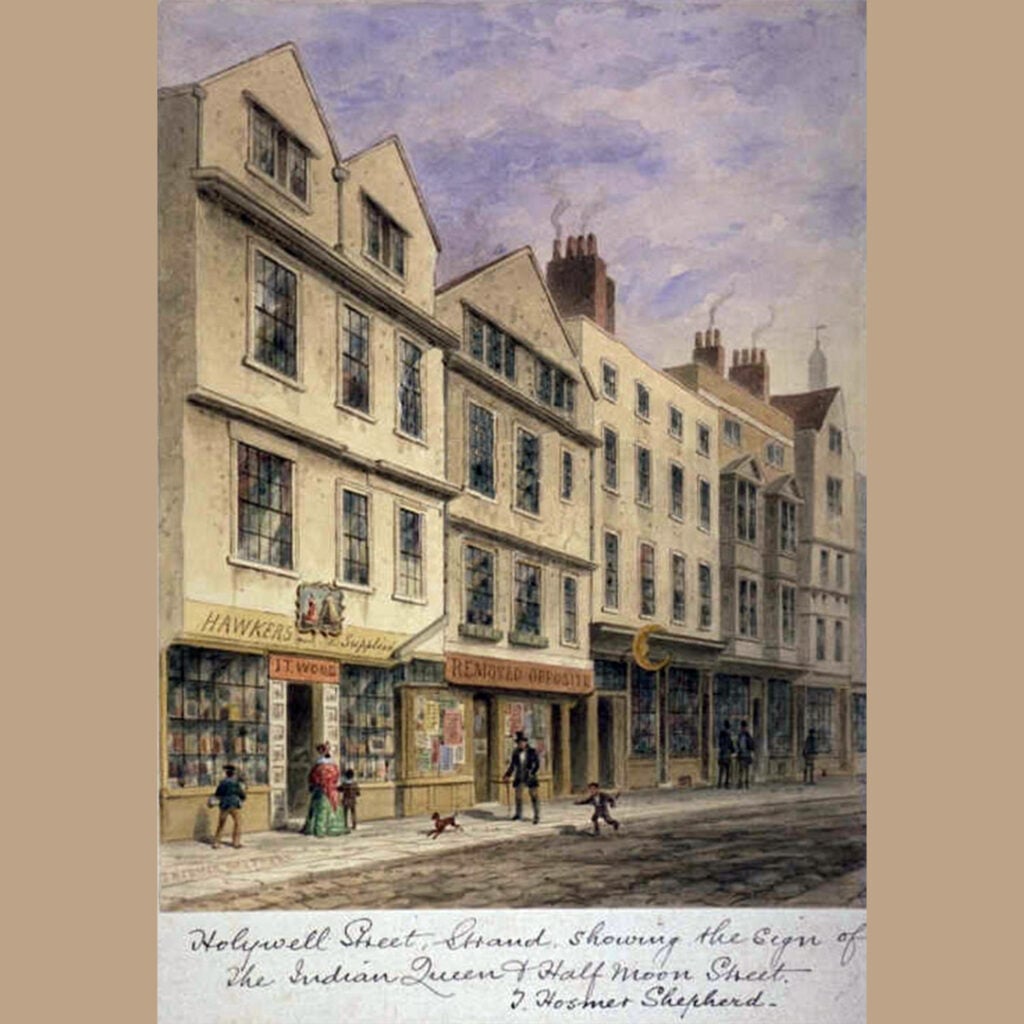
The street had spent nearly half a century building an audience for their wares, and while they couldn’t advertise it as freely as they had before, people did still know where all the dirty books, lithographs and songs spreading through London were being published. If they still wanted them, they could just take a stroll down Holywell Street, now ostensibly a street of more mainstream bookshops and second-hand clothes stores, and know that all it would take was a question to the right shop owner and it was all there for the taking.
There, you could still find page turners like 1891’s The Power of Mesmerism: A Highly Erotic Narrative and The Seducing Cardinal from 1830. Perhaps you’d stumble across Captain Stroke-All’s Pocket Book! or An Experimental Lecture by Colonel Spanker, or get really lucky and find one of the 150 copies printed of The Story of a Dildoe (A Tale in Five Tableaux). I really can’t stress enough how all of these are real, we really are exactly the same as we ever were.
While all of this was very illegal, it was under wraps enough that the police couldn’t do much about it without looking like they were destroying an innocent, independent business over a suspicion. This, obviously, didn’t stop them from doing just that, but if one porn baron was carted off to the clink, another would spring up in his place. It was very much an open secret that this trade was still alive on Holywell Street, though, leading no less an authority than The Times to label it “the most vile street in the civilised world”.
The only option was to wipe the whole street off the map and, tragically, that’s exactly what they did. Holywell Street was demolished in 1901 to make way for Aldwych. Not before the vast majority of the printers made their way a few miles into the centre and set up their wares once more in Charing Cross Road, giving the world Soho a few decades later.