


Why was New Orleans called a Necropolis until 1905?
Not to sound like the most tourist-y of tourists, but I felt like I was at home in New Orleans – I was sat at the Cafe Du Monde tucking into a pair of beignets with my then-partner on a baking hot day in early August, a busker set up shop just outside the outside seating area, pulled out a trombone and started playing a ruminative, thoughtful version of ‘Moon River’. I’ve never thought harder about moving out of London full-time than on that holiday.
Which was stupid of me – I was a crass, ignorant tourist judging a place on its crassest, most tourist-friendly things, I was nothing more than a mark getting swindled, no matter how cultured I thought I was being, and I was right to be, because the reality of New Orleans isn’t jazz music and an accent. I don’t know what the reality of that city is because I’ve spent all of two weeks there, but scratch the surface of New Orleans, and you find a city that has suffered more than most.
Not only in the obvious way, either, though it’s still a city shaped by the aftershock of Katrina and most likely always will be. No, The Crescent is one of the few cities in the United States that wears its history on its sleeve, at least in most parts of it, and that history is as much shaped by death and despair as it is music and joy. So much so that it spent nearly an entire century with the nickname “the Necropolis”. The city of death.
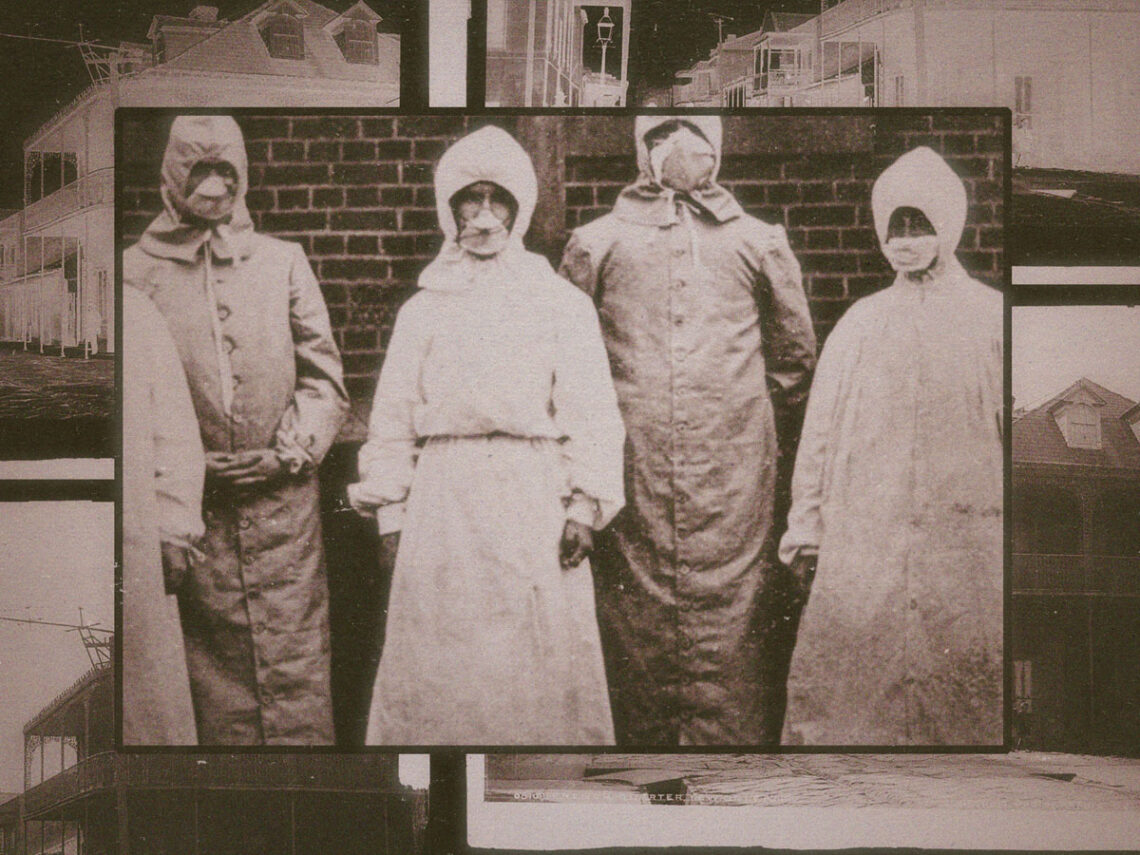
It got that nickname by, essentially, being a city in thrall to an epidemic. One that started in 1817 and didn’t stop until 1905. While a commercialised, artistic form of death haunts the streets of New Orleans for tourists, tales of vampires, ghosts and the like, a much more literal form of death stalked the French Quarter for that time. One that defined the city in the public eye for almost the entire 19th century and added to some of the worst, most repugnant parts of its history.
A disease called yellow fever.
How did yellow fever terrorise New Orleans?
The disease thrives in high-density population areas with warm, humid climes, so New Orleans was always going to be a hotspot for it, which is a tragedy, since yellow fever is a horrific bastard of a disease, one that comes with a 50/50 chance of an agonising death, blood pouring from every orifice in your body – a number of doctors of the time reported patients bleeding from under their toenails at the point of death. At the time, there was no vaccine the way there is today, the only known immunity came from catching the disease.
This gave the entire city a terrible, symbiotic relationship with the disease. You had to have it in order to function at any level, whether that’s for work or for one’s social life, but it would also wipe out 10% of the city’s population every. Single. Summer. For 87 years. This was life in New Orleans for almost a century, every single citizen playing dice with their lives for the chance to live there. Tragically, it gets worse from there, because at the time, it was said that there was a kind of person who was immune to yellow fever.
The city was, of course, one of the nerve centres of the Antebellum South. One of the countless racist lies that was peddled to justify slavery was that black people were immune to yellow fever. Thus, black people could work in places that white folks couldn’t without risk. This was, of course, a bare-faced lie. One of several concocted to preserve the white, male power structure that still lives on today. The last confirmed outbreak of yellow fever in New Orleans may have been in 1905, but the sour soul of that time period lives on today.
Because, as we all saw through Covid, the people in power still haven’t stopped manipulating life-threatening epidemics – turning them into power plays that threaten the most vulnerable members of our society.