


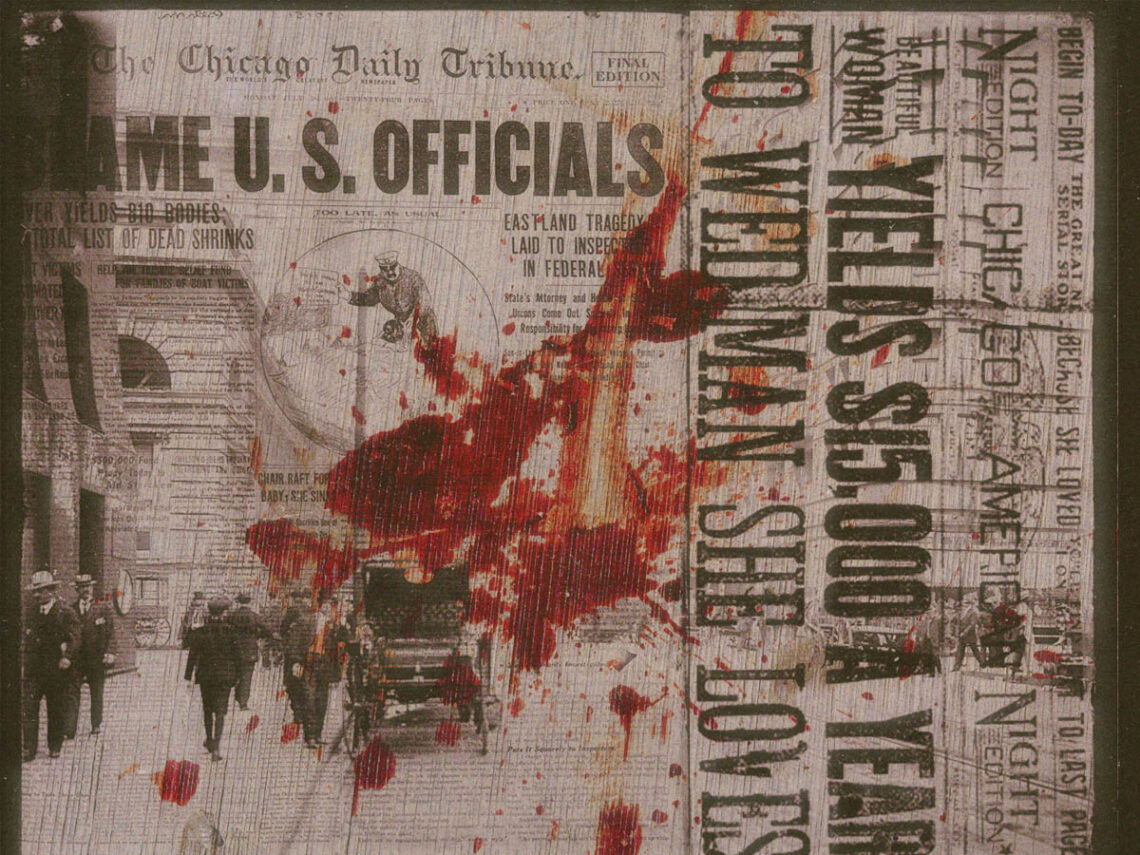
The publication wars: how rival newspapers turned 1900s Chicago into a bloody battlefield
Chicago is a city known for its tenacity. Fun fact, one of the reasons that Chicagoans call it “the second city” has nothing to do with its population count or the time it formed, and everything to do with the fact that when one third of the city was burnt down in 1871, its citizens picked themselves up, dusted themselves down and built a second one on top of it.
It’s true, Chicagoans don’t know when to quit and won’t back down without a fight. Admirable qualities, I’m sure you’d agree. However, those same qualities might also, unfortunately, be why it has such a long history of violence and organised crime. A history that doesn’t just stretch to the supposed “glory days” of Al Capone (those times were absolutely terrifying for everyone in the city, and don’t you ever forget it) but also to its publishing industry.
It’s true. Nowadays, the job market in journalism is a metaphorical bloodbath, but in Chicago at the turn of the 20th century, it was a very literal one as well. One that began with, as all blood feuds do, a friendly rivalry. In the late 1800s, Chicago was well-served by nine reputable English language newspapers, which all competed for the same readership via the medium of sensationalist headlines, lurid photos and enticing journalists to them who had the biggest scoops.
All of this changed when publishing mandate and literal Nazi William Randolph Hearst tried to expand his New York-based newspaper empire nationally in 1900. He was building up for a presidential campaign and thus, wanted to become a figure known and trusted all over the country. He entered the Chicago scene by force, starting a new newspaper called the Chicago Evening American and trying to get a foothold right at the top of the food chain by pricing his new paper at a single penny. Fully half the price of his new competitors.
This was seen as a low move from the other papers, like the Chicago Tribune and the Chicago Daily News, and thus, they set out to try to rid the entire town of Hearst and his Chicago Evening American. They did this via two core ways. The first was by building on their existing relationship with the city’s newsstands to prevent the new paper from being stocked there. The second was by taking a meeting with the business tycoons of the city and getting it in writing that no established Chicago business would advertise in Hearst’s paper.
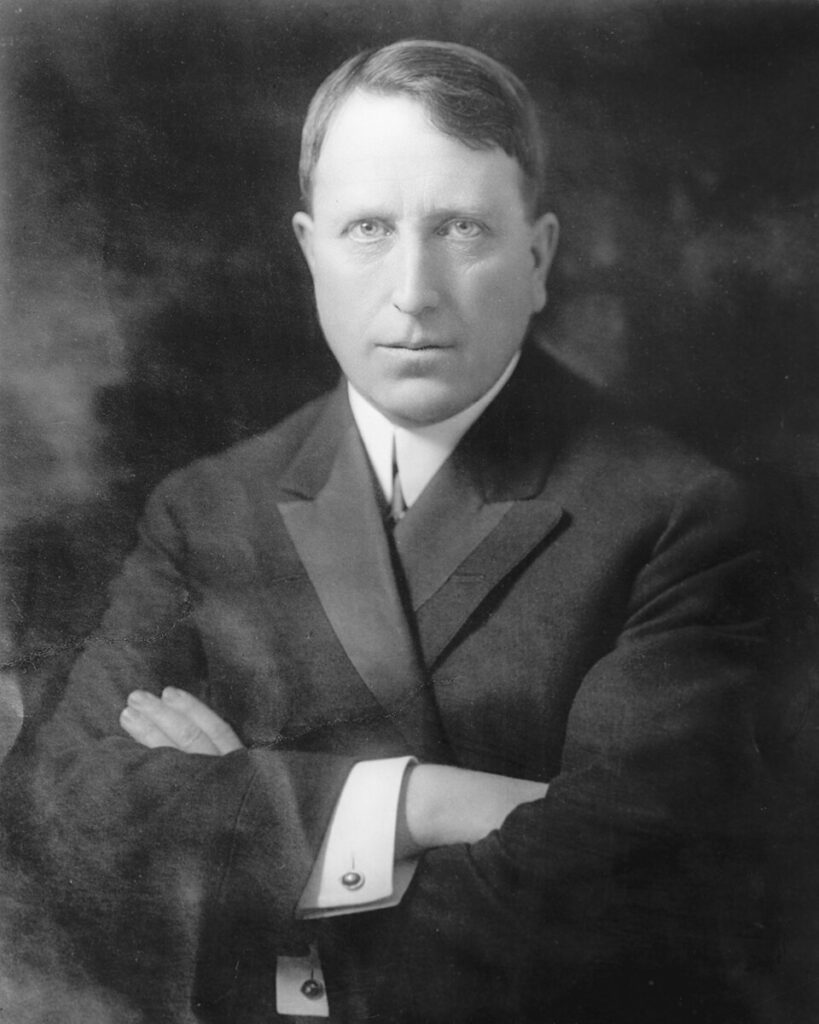
This was treated as no less than an act of war by Hearst, who responded with a ruthlessness that Capone himself would be proud of. His first course of action was to poach the Annenberg brothers from the services of the Tribune. The brothers were both in charge of the circulation of the paper, and Hearst thought that getting two true-blue Chicago boys like them would help rehabilitate his image in the eyes of the city.
On the surface, this was a good move. Chicago very much did see Hearst as an entitled Yankee blowhard, one who had strutted in like he owned the place and thought he could throw money around until his paper was the only game in town. However, the Annenberg brothers might have been “circulation managers” on the surface, but really, they were gangsters. Those who would browbeat newspaper owners into doing what they wanted with threats, and often actions, of physical violence.
This was the real reason that Hearts hired the brothers. He very much approved of this action and bankrolled them to do more, giving them the money to hire a literal crime gang. One that went around the city’s newstands checking to see if the Evening American, now renamed the Examiner, was being sold. If it was? You were sound. If it wasn’t? You got beaten to a pulp.
As for the business refusing to put adverts in the Evening American? They got the same treatment too. Groups of men led by the Annenberg brothers destroyed shopfronts until they agreed to put advertising in the Examiner. Hearst may have escalated the tactics, but the other papers did not back down, firing back in kind with gangs of their own until the streets of Chicago were running red with the blood of not only publisher-affiliated street gangs, but the innocents caught in the crossfire.
This was a war that both sides were pumping millions of dollars of 1900s money into. One that couldn’t move into a courtroom either, because of any crime one could accuse the other of, both were clearly guilty of. The cherry on top of this cursed sundae is that the public were none the wiser about it, because it wasn’t being reported in the news. Living in inner-city Chicago became a baffling carousel of violence surrounding the neighbourhood newsstands, with absolutely no explanation why.
Typically, the end of the Chicago Circulation wars came not from anyone deciding that enough was enough and actually communicating with each other, but something even more bloody on the horizon. The outbreak of the First World War in 1914 meant that every newspaper had more than enough lurid, sensational material to put on the front page and sell papers. With the entire city buying more papers than ever, no one needed to compete anymore, and the gangs were disbanded.
However, many of those gangs were put back to work just under a decade later, when organised crime exploded in the city in the wake of prohibition. Because, as grotesque as the Chicago Circulation Wars were, they were a mere trial run for everything that came next.