


Spring-heeled Jack: The tale of the original urban legend that haunted London
Whether it originates in London or Laos, an urban legend is vastly different from folklore, yet, on the surface, the two are more or less one and the same.
At their core, both of them are stories. They are passed down from person to person, lingering on the edge between fiction and fact. Maybe it’s there to provide an explanation for something that no one really understands, or created to sugarcoat a truth that no one wants to acknowledge. More likely, they are just created for the fun of it, who knows, and that’s basically the point.
Of course, in our modern day, an urban legend should be an incredibly easy thing to create. We live in the misinformation age, just a cursory glance at your phone can make you believe in all manner of categorically wrong things. Yet, it doesn’t seem to be that simple. There’s a world of difference between something that bad-faith actors created to actively harm people like QAnon and the weirdly wholesome Spring-heeled Jack.
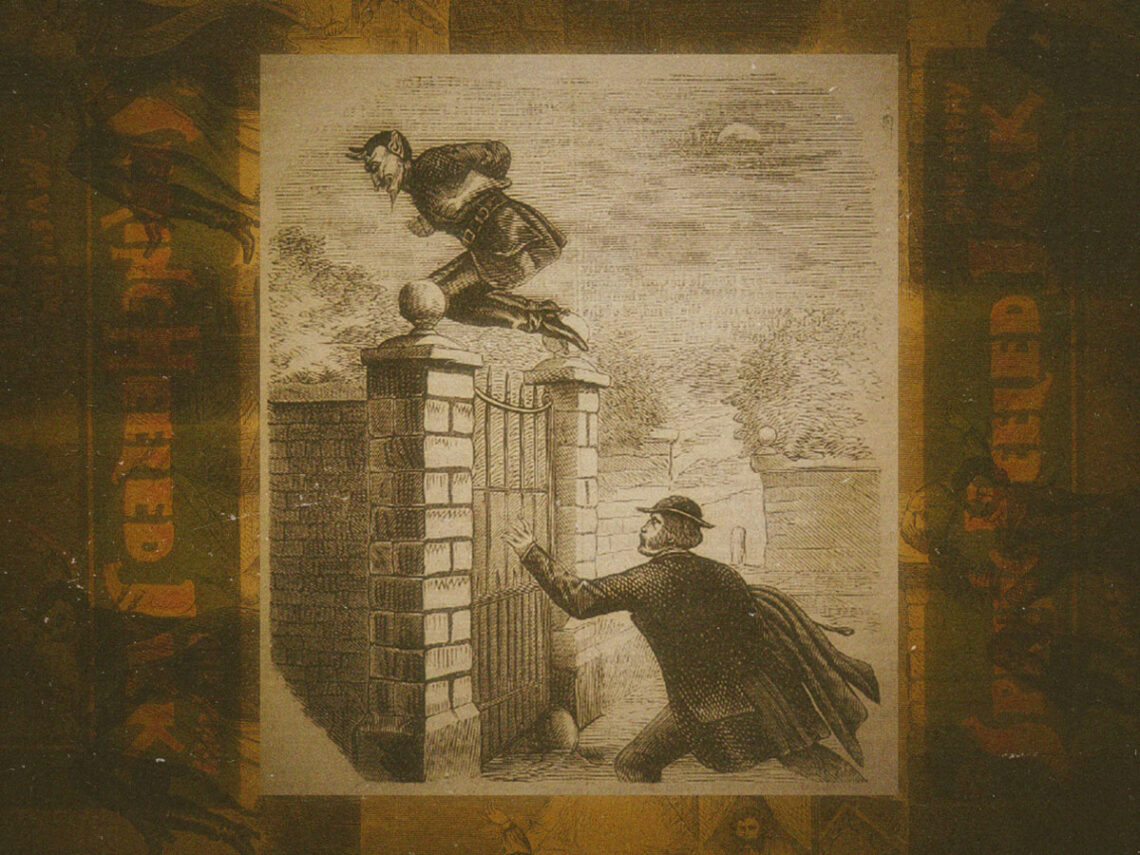
Of course, the urban legend didn’t feel so wholesome at the time. In fact, quite the opposite. It began as a number of reports in East London in the early 19th-century of strange creatures walking the streets. They looked human until you got closer and saw their deathly pallor and long claws on each hand. If you got too close, they would escape, clearing ten feet in a single leap as they scurried onto rooftops and into the fog of old London town.
In 1837, this went from reports to an outright accusation when Mary Stevens reported that one of them had attacked her.
What was Spring-heeled Jack?
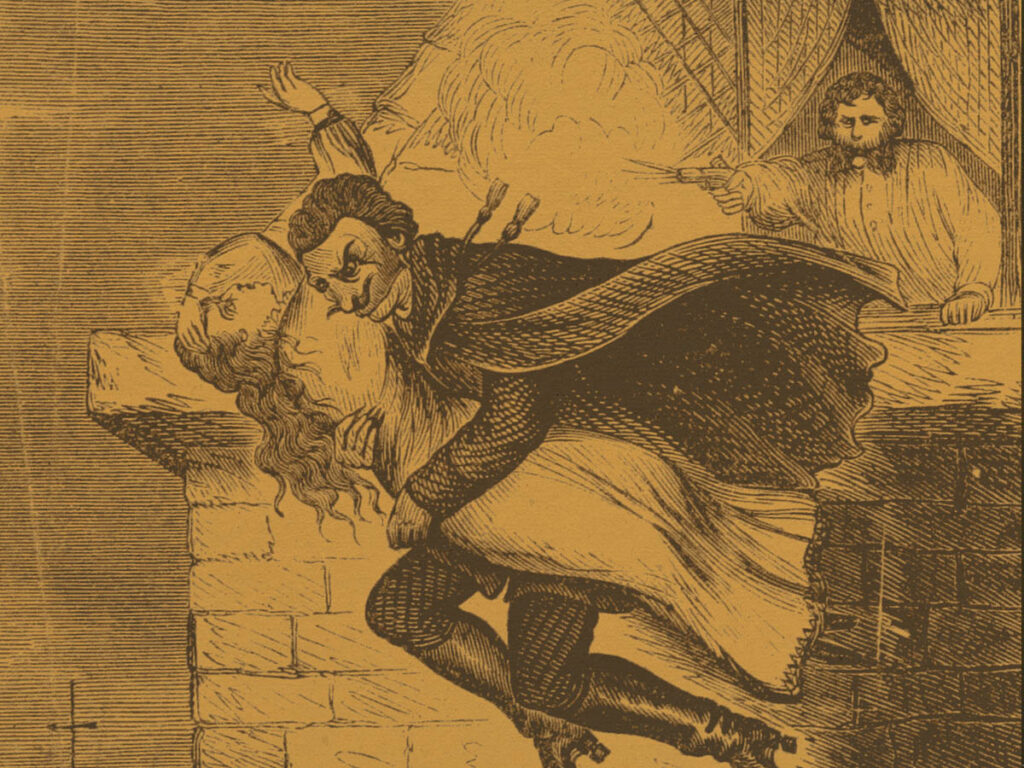
Stevens was working as a maid in Lavender Hill. Late one October night, she was walking home from visiting her parents in Battersea, when a strange figure grabbed her and forcibly kissed her. After Stevens screamed, the figure fled, leaping over a nine foot tall wall while cackling hysterically. This was a story tailor-made for the press of Victorian London, and after Stevens’ tale made headlines, suddenly a whole lot of people started saying that they had had similar experiences.
As people started talking about him, he was given the name Spring-heeled Jack and suddenly, it wasn’t just regular people talking about him, but the Lord Mayor of London himself. Sir John Cowan was sceptical, but it was a sign of just how much his city was gripped with hysteria that he was forced to address it due to the sheer amount of letters and reports of encounters with Spring-heeled Jack flooding his home at all times.
Whatever it was, though, the nature of Spring-heeled Jack got more outlandish with every telling. One report from Jane Alsop talked of Jack as a tall figure in a large cloak spewing blue flame from his mouth while wearing a large helmet. Others talked of his burning red eyes and ever-present lantern hanging from his hand. By the middle of the 1800s, Spring-heeled Jack had now become a fixture of Victorian penny dreadfuls, tales of his exploits becoming some of the earliest mass-produced horror stories ever created.
Sightings and attacks from him began to dwindle after he made his way into the literal funny papers, but for a good few decades, Londoners lived in real fear of Spring-heeled Jack. Sure, people probably weren’t scared of encountering a literal devil, who could leap tall buildings in a single bound, but London was a dangerous place to be. Cities, the way that we know them, were a very new phenomenon, with people living in genuinely diverse communities for the first time ever.
They didn’t know who or what could be around the next corner, and when you’re in a state of mass panic, the mind can play the strangest of tricks on you…