


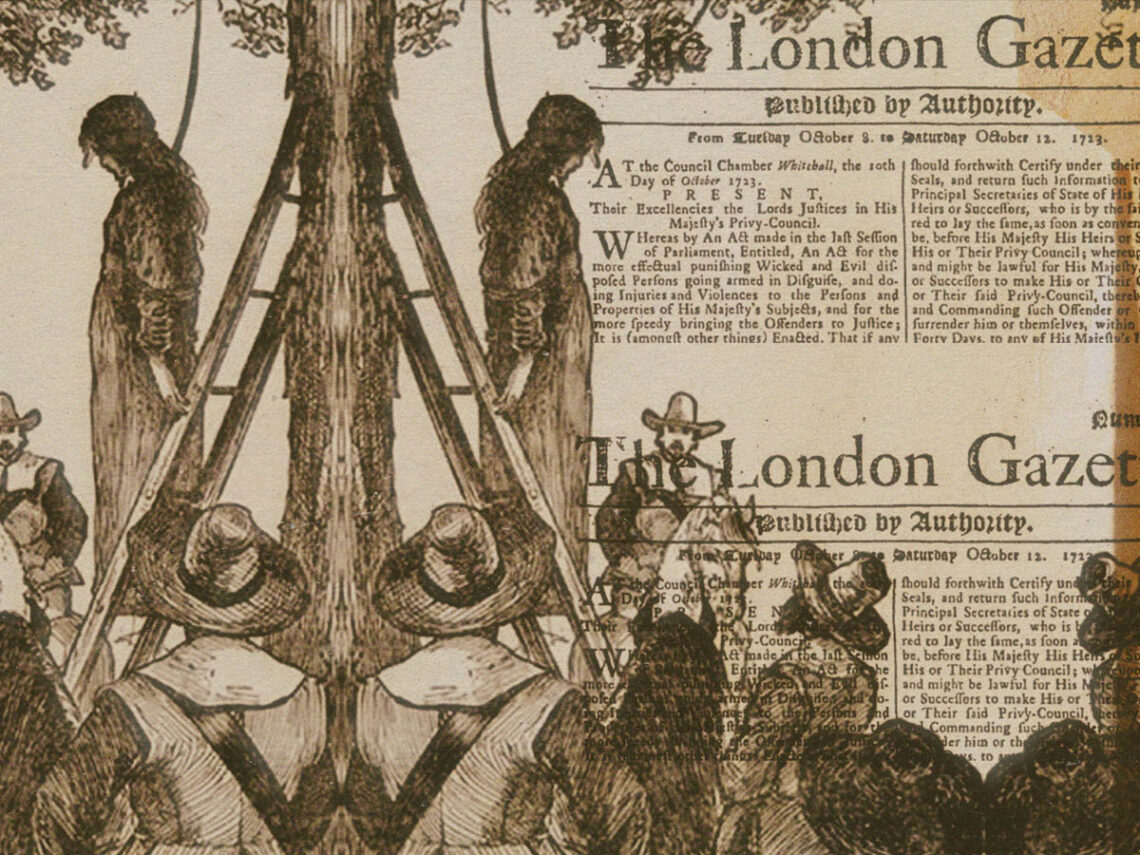
The horrifying 1723 law that sentenced grieving mothers to death
George Savile, First Marquess of Halifax, once said, “Men are not hanged for stealing horses, but that horses may not be stolen”. In other words, capital punishment isn’t done out of a bloodthirsty desire to see people die, but as a way of deterring people from committing crimes, which does very much ignore the fact that people did get sentenced to death for stealing horses.
If the 1700s had podcast grifters howling about government suppression, that sounds like a lie they would spin to heighten the mistrust people feel about their governments. If you steal a car today, the most you’ll get is seven years in jail, which sounds about right, at least to me. Yet for over a century, you could be hanged for stealing a horse, and that was one of the less insane results of what came next.
In the early 1700s, almost the entire British economy was being held up by the South Sea Company, an absolutely bonkers story well worth its own article one day. Suffice to say that pretty much every major financial power in the country had taken on a share of government debt in exchange for shares in the company. Thus, when the company’s stock market bubble burst in 1720, it took the entire national economy with it.
This led to a massive spike in crime in the country as people became desperate, and since the government wasn’t going to do something truly out there like “help anyone”, they chose a different strategy. In 1723, the Waltham Black Act was introduced, which essentially allowed the government to make any crime they wanted punishable by death. In 1688, the total number of capital crimes was around 50, with some exceptions made in extreme circumstances.
By 1820, that number had quadrupled, with the Waltham Black Act being commonly known under a different, yet more accurate name – ‘The Bloody Code’.

What did ‘The Bloody Code’ make punishable by death?
Suddenly, acts of petty theft were as serious in the eyes of the law as murder, sexual assault and arson. The Waltham Black Act, in particular, had been put in place to combat the rising deer thefts from royal forests. After all, Prince Thimblecunt the Third of Dover needs to have his Thursday morning hunt much more than poor people need to eat. It also went much deeper than that – thieves used to blacken their faces with soot in order to blend in with the night sky, so if you were caught with a blackened face? Yup, punishable by death.
Cutting down trees? Punishable by death. Breaking river banks? Punishable by death. Stealing from a rabbit warren? You guessed it. The only reason this isn’t terrifying is that we’re centuries removed from it. Especially when you look a little deeper and find that unwed mothers whose only crime was having a stillborn child was a capital crimes. Let that sink in – grieving mothers were put to death in the name of “keeping peace”. Do you know what the ultimate irony of all this was? That it didn’t fucking work.
Because of course it doesn’t. Capital punishment doesn’t work. A cursory glance at history shows us that, as does a cursory glance at the effects of ‘The Bloody Code’. Crime rose despite these measures, and, strangely enough, executions didn’t rise with them – in fact, the execution rate lowered because no jury would sentence a desperate teenager to death for the crime of stealing a deer to feed his family, which is why the very measures put in place to dissuade people from committing crimes ensured that more people than ever got away with those crimes.
After a century of this, the Judgement of Death Act of 1823 repealed the death penalty as a standard punishment for all crimes except murder and treason. Cold comfort to the innocent lives that were lost due to nothing more than class suppression by the rich.