


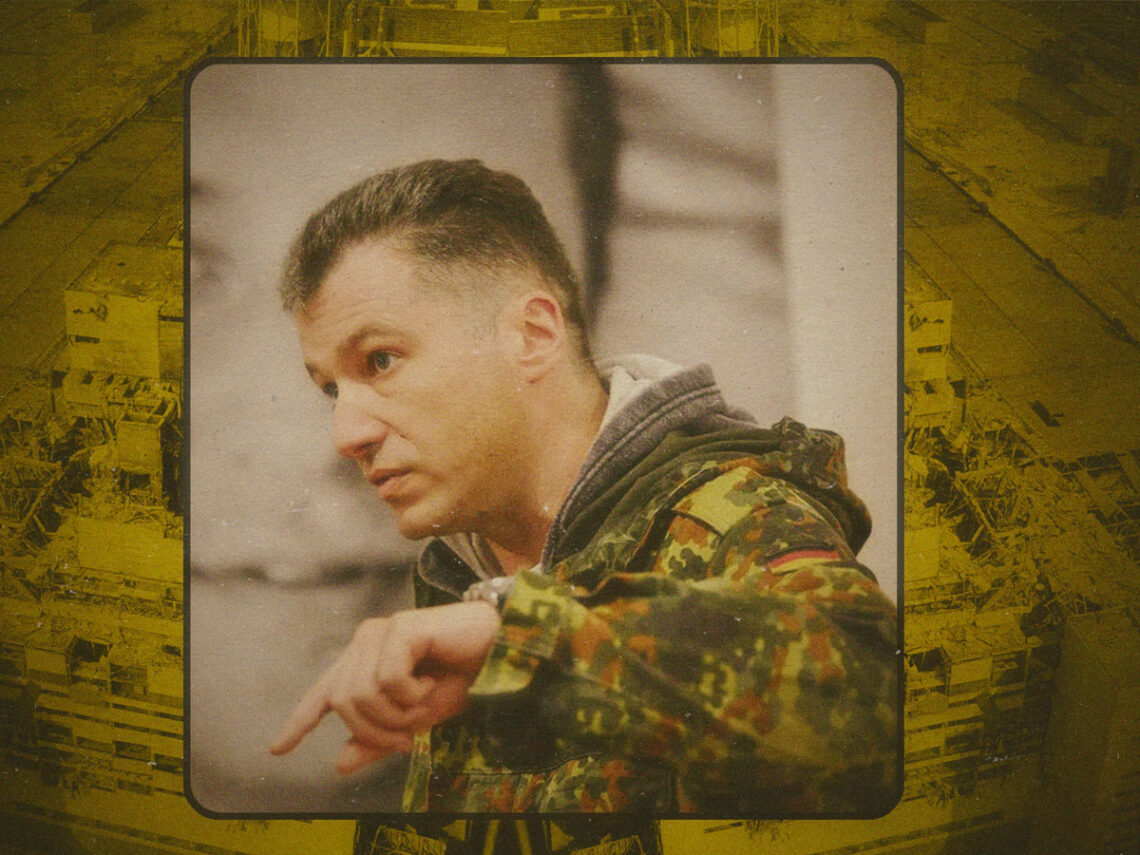
Fallout: The artist who visited Chernobyl to intentionally irradiate himself
Chernobyl is many things: a world-changing disaster, a near miss with apocalypse, a bleak and infuriating example of elites gambling with ordinary lives, and, more recently, a gripping television series.
Yet, there is one aspect of that potential mass extinction event that often gets overlooked. Chernobyl was also a city in Ukraine where people lived, real people with lives that were completely uprooted due to an eminently preventable disaster.
Sure, it’s natural to focus on the history that occurred there and how it spoke to corruption that ran all the way to the very top of the Soviet Union. However, it is always worth sparing a thought for the human cost of events like these too.
This human cost was on the artist Taras Polataiko’s mind for most of his life. Born in 1966 in Chernivtsi, Ukraine, but immigrated to Saskatoon, Canada in 1990, four years after the Chernobyl disaster. His work was always explicitly informed by his relationship to his homeland, all the way from his very first venture into performance art in 1992. This was a statement against the Canadian government celebrating a century of Ukrainians emigrating to the Great White North by erecting a statue of Ray Hnatyshyn, a former Governor General of Canada.
Two years later, Palataiko performed the work that he’s arguably most notorious for, which saw him play dice with his own life, the way his countrymen played dice with their people’s lives eight years previously. He returned to his native Ukraine and headed straight for Pripyat, breaking into the site of the Chernobyl power plant and standing there long enough to make sure that he was irradiated.
That would be enough for most people, but for Palataiko, standing in the middle of Chernobyl was, in fact, “step one”.
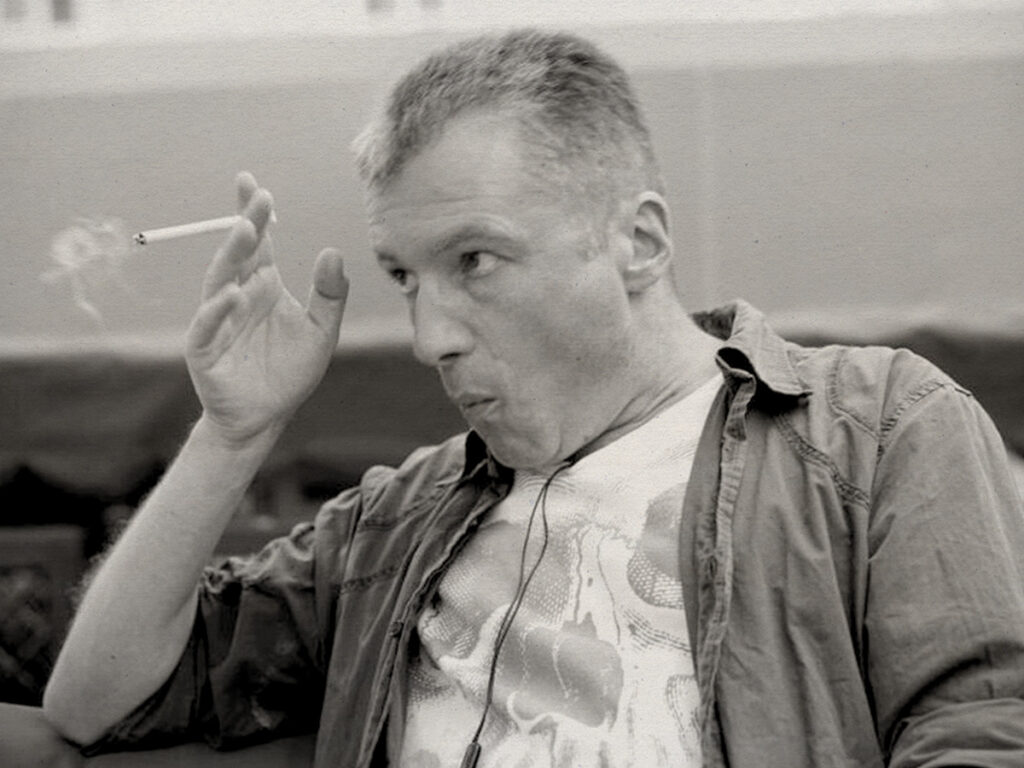
What did he do after visiting Chernobyl?
Incredibly, Palataiko wasn’t done.
He made his way back to Canada, hopefully under heavy guard and made sure he wasn’t putting people at risk after being irradiated by literal Chernobyl. Then, the work of performance art really began. Over the next 14 months, he began having his irradiated blood drawn, storing it in his own freezer until he had enough of it to fill up the majority of a decently sized bathtub.
The project was called Cradle and premiered in 1995. The blood that Palataiko had drawn over the past 14 months was placed in a nickel-plated bathtub, then covered with a lid and suspended from the ceiling with large, heavy chains. All of this was put in place to protect the audience from the fact that the blood inside that tub was dangerously radioactive.
This piece of performance art was put together to make a comment about biological mutation and the way that it reflects sociological and societal change. Suggesting that the disaster at Chernobyl, the one whose effect on the human body was still incredibly dangerous close to a decade after the disaster itself, sparked a chain of events that led to the downfall of the Soviet Union as a whole. Unlike Chernobyl, the story of Palataiko continues to this day.
Despite his risky stunt in his home nation, the man is still alive and well, still making art to this day.