


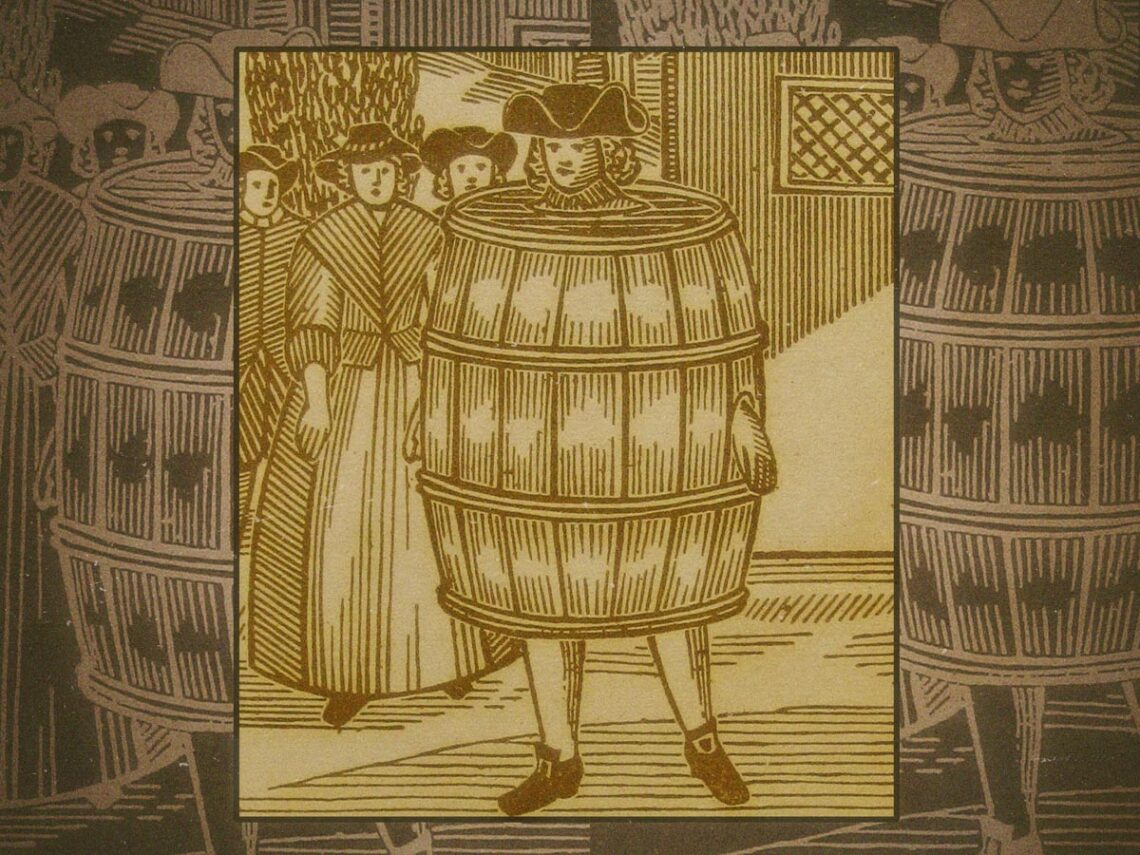
The Drunkard’s Cloak: the humiliating punishment for being drunk in public
Policing as an institution is a relatively new phenomenon. In England, the first official police force was, famously, Robert Peel’s Metropolitan Police operating out of London in 1829. Before then, outside of a few appointed constables and a few nightwatchmen, communities were generally encouraged to police each other.
This was especially the case in communities outside of major cities. Those nightwatchmen and patrolmen would have been operating in places like Birmingham and Manchester, but outside that, people were not officially tasked with upholding any kind of law and order. It was something everyone pitched in on, whether that was actually catching someone being a menace to their village, or turning up at town meetings where people would be put on trial for what they did.
Now if this sounds like mob justice…then that’s basically what it was, but for the most part, people weren’t interested in dishing out violence to those who stepped out of line. Never forget that’s not and has never been how normal people think. Sure, there would be the occasional crime that went one step beyond and drastic measures had to be taken, but for the most part, the “crimes” people were “standing trial” for were no more than being a public nuisance.
As anyone who’s walked home on a Friday night can attest, there are few more effective ways of being a public nuisance than being drunk. This is easy enough to deal with today, especially in big cities where the likelihood of bumping into the same person twice on consecutive weekends is fairly low. However, imagine villages small enough to fit in the tower block you live in twice over. Then imagine your ex’s new lad’s habit of getting naked whenever he’s pissed. Then imagine not being able to get away from him your entire life.
You’d want some consequences for that, wouldn’t you? While violence might be a bit much, a bit of public humiliation? Yeah, that might be just right.
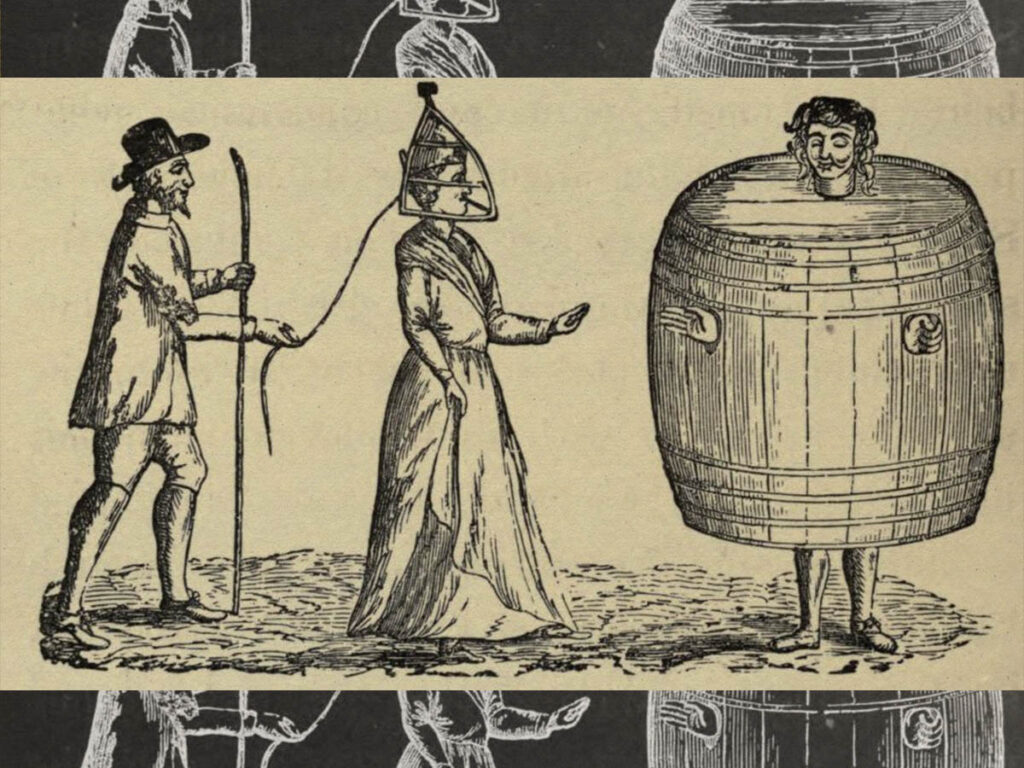
How did small communities handle drunk people?
Drunkenness was first made a civil offence in 1551 via the Ale Houses Act of the same year. As you can imagine, living in rural England at that time wasn’t exactly a laugh a minute, and many folks drowned their sorrows (of which there were loads) at the local ale house. This lead to public drunkenness becoming something of an issue, and in many cases, the punishment for being found drunk in public was to be given “the drunkard’s cloak”.
The drunkard’s cloak looked a hell of a lot like a barrel with holes for arms and legs cut out. This was because it was a barrel with holes for arms and legs cut out. Once said lush was fitted out with this fetching little number, they were paraded in front of the entire village in the cold light of day, probably still hungover from the night before. Letting the entire village see them for the inconsiderate pillock they were.
After being named Lord Protector of the country in 1653, Oliver Cromwell began a crackdown on public houses that saw the drunkard’s cloak become a commonplace punishment for anyone who’d been seen near an alehouse while looking a little unsteady. It became so commonplace that “the drunkard’s cloak” was only one name for it, however. There was another, equally pervasive name for this punishment, which stems from the part of England where the punishment seems to have originated from according to reports of the time.
That’s right, because some things never change, the other name for a punishment for public drunkenness became “The Newcastle Cloak”.
Sorry, Tom.