


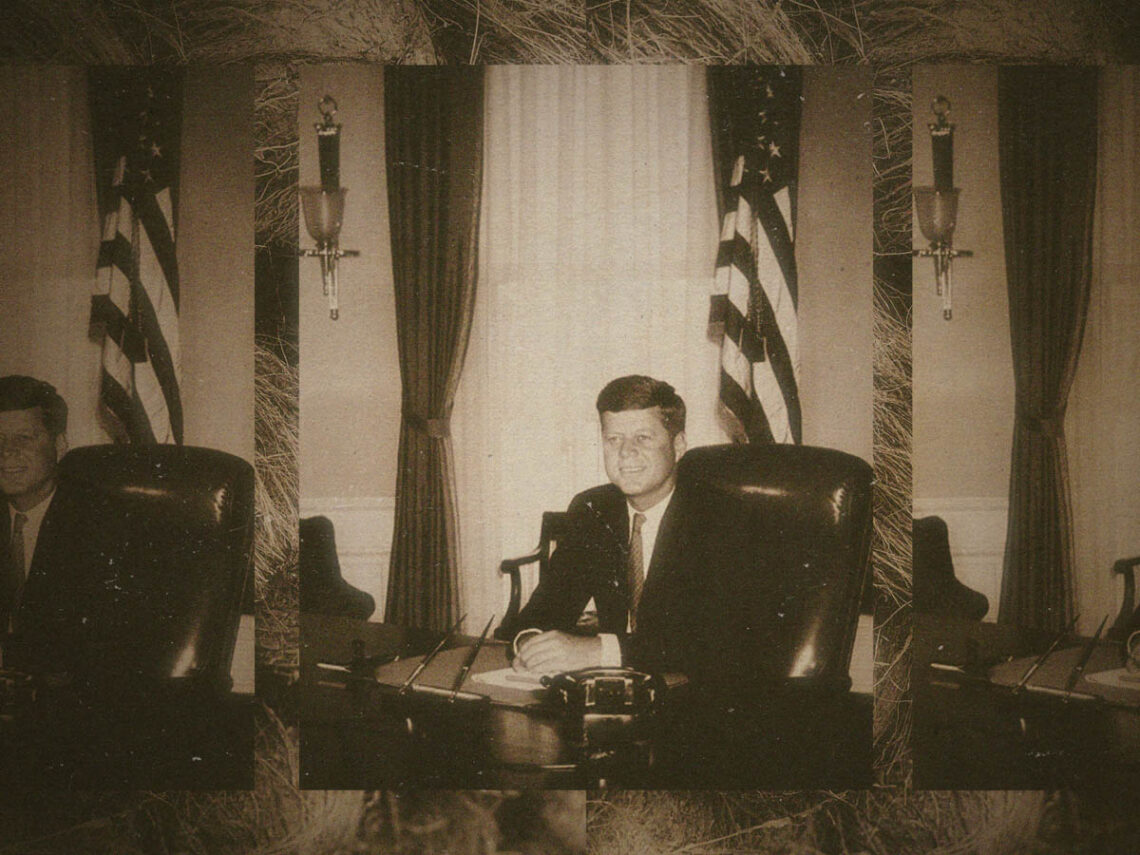
The insane reason John F Kennedy kept a coconut on his desk
If you’re lucky enough (perhaps that should be unlucky enough) to be elected President of the United States, whether you were Jack Kennedy, Ronald Reagan or Barack Obama, one would assume there would be several things on your mind before considering decorating the Oval Office.
Yet, in a strange way, I think the kind of person whose goals in life genuinely include taking the highest office in the land knows exactly what their office would look like. They’d have it planned out to a tee, exactly whose portraits they’d have. Exactly what gifts from what world leaders they’d leave out. Exactly what nik-naks they’d have on their desk. After all, as anyone who has worked a stressful desk job knows (and the president is a stressful-ass desk job), having something that sparks joy within arm’s reach is always a help.
Both Ronald Reagan and George HW Bush kept a statue of a cowboy being startled by a snake when they had control of the Resolute Desk. Lyndon B Johnson had a set of buttons installed that would bring him a soft drink of his choice on demand. Barack Obama had a plaque stating that “hard things are hard”. Words we could all live by, I guess. Joe Biden had one of the coolest additions to the Oval Office decor, requesting a piece of moon rock for his four-year stint as leader of the free world.
However, none of them had something on their desk as important to them as John F Kennedy. JFK had something that, on the surface, looked out of place to the point of being a joke. His favoured paperweight had half a coconut shell attached to the top of it, with a few words carved into the top. This was far from a curiosity, though, and instead something that Kennedy would argue saved his life while serving in the Second World War.
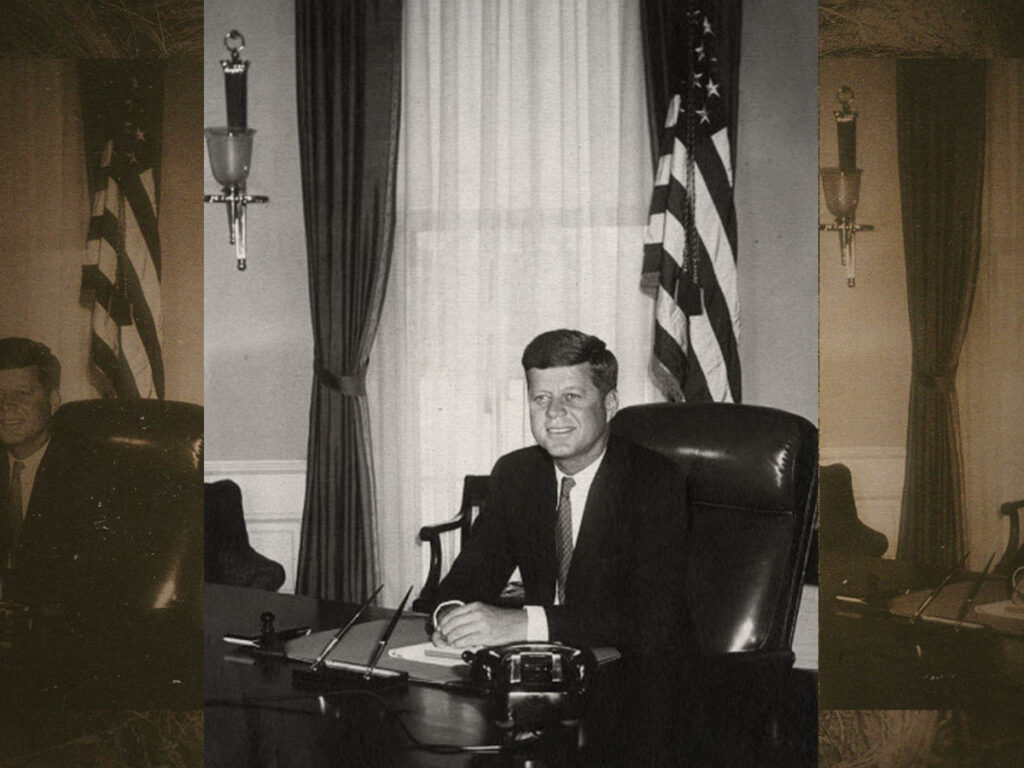
Why did Kennedy keep a coconut on the Resolute Desk?
The year was 1943. Jack Kennedy had graduated from Harvard three years prior and immediately joined the US Naval Reserve afterwards. Kennedy was quite possibly the only nepo baby in military history, using his familial connections to get him assigned command in places closer to the fighting.
So, by April 1943, Kennedy was in command of the Patrol torpedo boat PT-109 in the Solomon Islands. Kennedy might have been there because he had several high-ranking people advocating for him, but his actions on the nights of August 1st and 2nd proved that this was a man worthy of such high regard.
During a raid, PT-109 was rammed by the Japanese Destroyer Amagiri, killing two of 109’s crew. Rather than surrender, Kennedy ordered his crew to abandon ship, guiding them to Plum Pudding Island, a cool three and a half miles away, in the dead of night, an entire Japanese destroyer still on the lookout for them. If the reports are true, then Kennedy himself swam a wounded serviceman to that island, dragging him by a life jacket strap that he clutched in his teeth. If this isn’t presidential myth-making and actually happened? Then it’s comfortably one of the most badass things a world leader has ever done.
For the next seven days, Kennedy and a subordinate of his searched for a way off the island. It took them seven days, but after encountering Biuku Gasa and Eroni Kumana, two English-speaking natives with a canoe, they begged them to seek out help. Kennedy carved a message explaining the basics of their situation to whoever Gasa and Kumana could find, and they sailed off to find help. Kennedy and the crew of the 109 were rescued shortly after.
Kennedy kept the coconut shell that had saved his life with him the rest of his life. His intention was to pass it down to his son, and the tragedy is that he did. Far, far sooner than he should have.