


The manic attempt to reach the North Pole in a balloon
In the moment, pretty much all scientists look like heroes. Radical truth-seekers use their intellect to pursue the next great leap forward. It’s not until many years have passed that you can see just how misguided the vast majority of them were.
It’s one of the great risks you take as a scientist. The thing you commit your life to investigating might be pure hokum, and in that case, you can only hope that it’s the kind that comes across as really funny a few years down the line and not that it got anyone hurt or killed. Even then, sometimes the way that your experiments go wrong can be so embarrassing that no matter how tragic the circumstances are, you’ll still get chuds like me cocking a snook at them for the sake of a few yuks.
However, this particular story does take the cake for a few reasons. The first is that it concerns the race to reach the North Pole, something that the greatest scientific minds of their time were desperate to do in the late 1800s for the sake of national pride over what they could actually learn from it. One of the countries that was the most keen to have this particular feather in its cap was Sweden, since they had something of a head start on the entire rest of the world on account of being, y’know, Sweden.
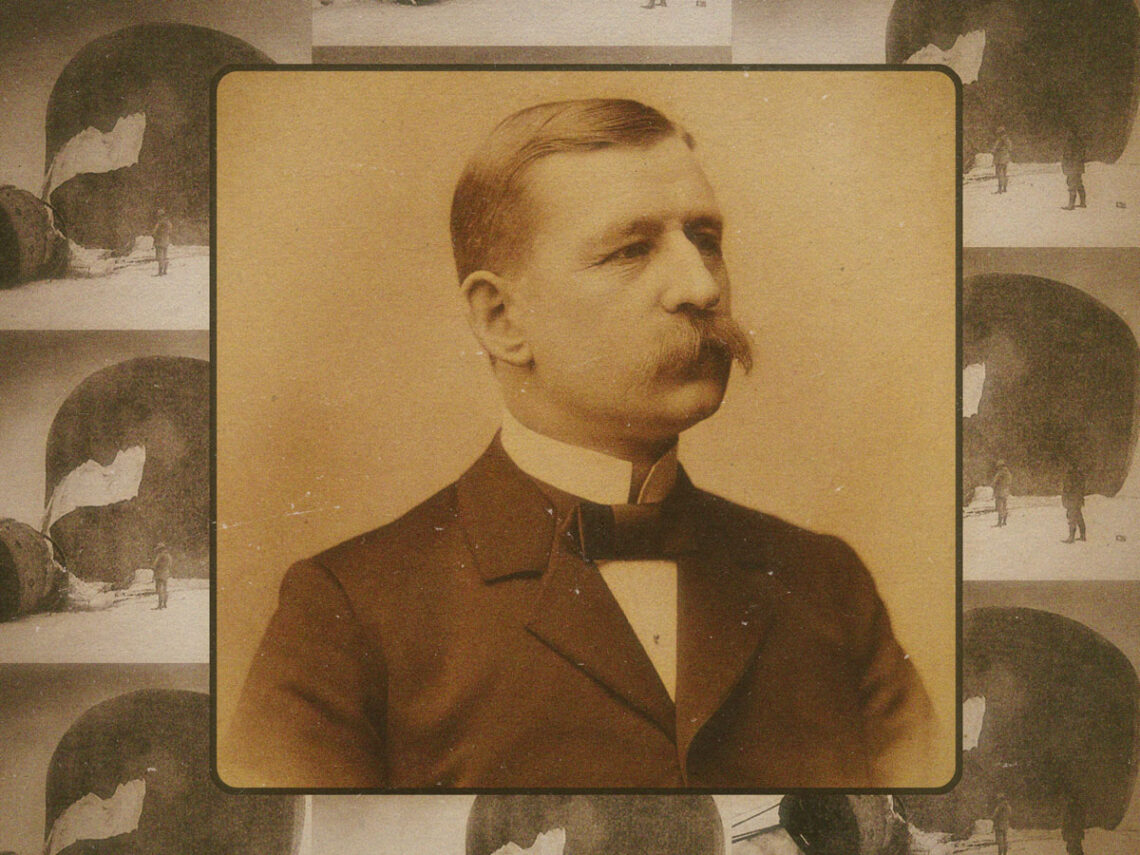
Yet, despite this advantage, the project was a lot harder than it seemed, and lots of expeditions to the pole failed, claiming the lives of dozens of brave men. As other countries got closer and closer to reaching a pole that the Swedes felt was more or less on their doorstep, desperate times called for desperate measures, and Salomon August Andrée was the (also desperate) man they called upon. He had an idea that, had it come up in fiction, might have been crazy enough to work.
As you may have noticed, though, this is not fiction.
Why did they think a balloon would work?
The truly seductive part of Andrée’s plan was its speed.
If his plan was funded in time, they could take the pole within days when other expeditions took months and even years. The plan was that Andrée, a keen balloonist, would lead a crew of three from Svalbard, where they could ride the northern winds over to Russia or Canada, and with any luck, they’d pass straight over the pole and by the first men to ever say that they were on top of the world.
You might notice that this plan relies heavily on luck. This didn’t matter in the face of the patriotic fervour Andrée swept up while getting the project funded. In fact, once the balloon the expedition would ride in was finished, Andrée didn’t bother taking it for a test run, so keen was he to take his chances, test his nerve and make the grab for death or glory. In reality, though, when you make that grab, you almost always grab death rather than the other option.
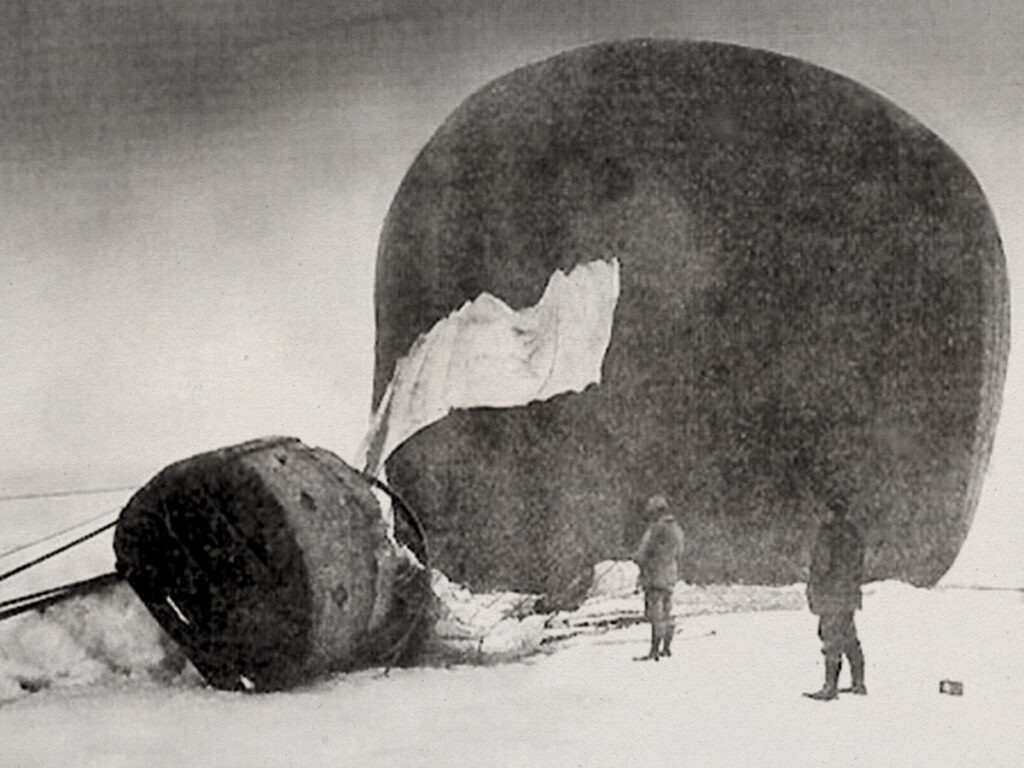
Andrée and his crew began the expedition in 1897 and promptly disappeared. The whereabouts of the expedition was an international mystery, and the crew might have preferred it to stay that way. In 1930, the remains of the expedition were found, and with it, proof that the balloon had remained in the air for two days before crashing into pack ice, nowhere near the North Pole. The crew had then died trying to return home, having not prepared for the possibility of a crash.
You never like to speak ill of the dead, but in this case, I think it’s justified. Andrée was a man who led a dangerously ill-thought-out expedition, so blinded by the promise of glory that he took all the shortcuts he could and got two men and himself killed as a direct result. Few men deserve to have their legacy be a ridiculous death, but this man is a seriously compelling argument for it.