


The Moberly-Jourdain incident: time slip or waste of time?
The commonly stated aim of historical sites is to bring the past to life. Whether it’s Versailles, the Houses of Parliament or John Lennon’s childhood home, it’s an admirable ambition.
After all, history gets a bad rap for being lifeless. It can be viewed as an endless series of important white men having power foisted upon them by birthright and making life miserable for everyone except them and their chums, who are most likely other important white men with power foisted upon them by birthright.
However, historical studies have led us to understand the world as it is now. Everything you read about in a history book was once as vital, scary, beautiful, or life-affirming as everything you see in the news today. While scary is the fairest word to use for the current state of things, it was also like that back then, too. Everyone was on edge and terrified, just like we are today, and understanding that can lead to feeling a little more secure about today.
Going to these historical sites is a major part of making history feel less like passages in a book and more like real things that happened to real people, just like us. There’s something about being in halls that were once controlled by entire empires that makes it feel more tangible than any book ever could. However, the level of realism that confronted Charlotte Annee Moberly and Eleanor Jourdain on a trip to Versailles is one that might have been a little too much, even for me.
Moberly and Jourdain were co-workers. The former was the principal of Oxford University’s first college for women, St. Hugh’s College, and the latter became her assistant in 1901. Before they began working together, they decided they should get to know each other first. At the time, Jourdain owned a flat in Paris, so Moberly went down to stay with her and plan a few days out in order for both women to get familiar with each other.
First on the itinerary was a trip to Versailles that neither woman would ever forget.
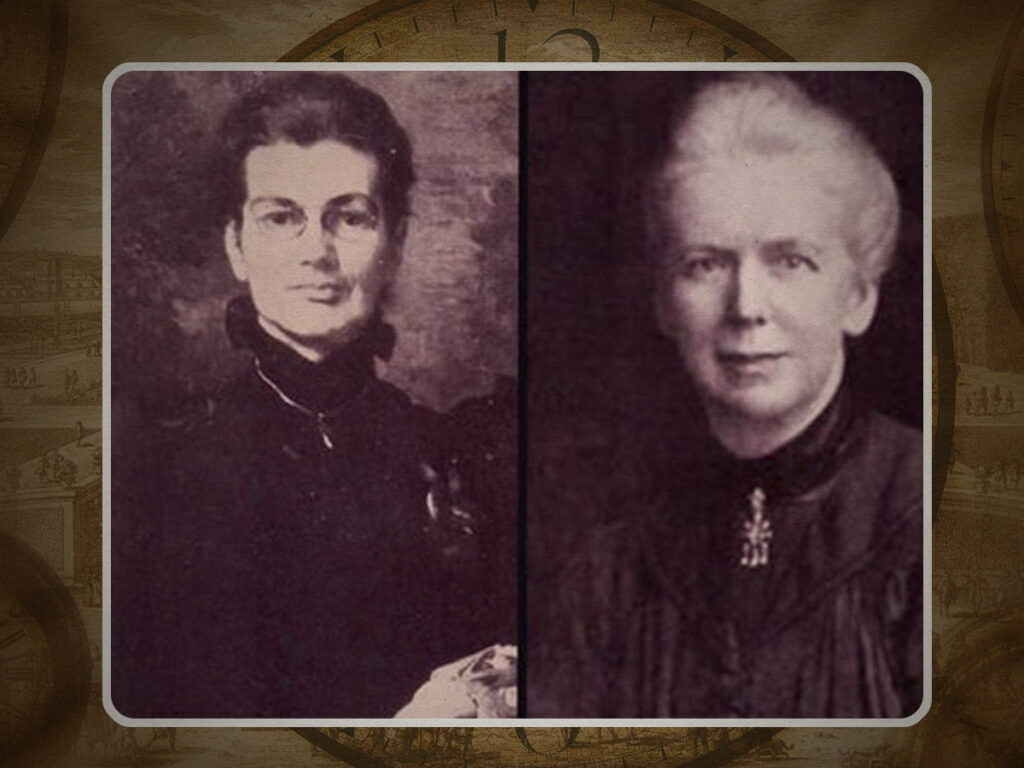
Why was this trip to Versailles so weird?
Moberly and Jourdain went on their outing to Versailles on August 10th, 1901 and were very much unimpressed by the palace. Thus, they decided to walk through the woods bordering the palace and visit the Petit Trianon, the château built as a royal holiday home for any of the Royal Family that wanted a break from courtly affairs. Then, just as Moberly and Jourdain thought their day out couldn’t get any worse, they arrived at the Trianon to find it closed.
Now, this is where things get weird. The two women began walking back to the main palace but got lost on the way. Then both of them started to see strange figures walking towards them, dressed in regency era French garb. Some even spoke to them, telling them to go straight ahead. Moberly wrote after the fact, “Everything suddenly looked unnatural, therefore unpleasant; even the trees seemed to become flat and lifeless, like wood worked in tapestry. There were no effects of light and shade, and no wind stirred the trees.”
Both women reported seeing and speaking to many more people in Regency-era clothes, including a few high-profile people like the Comte de Vaudreuil. Moberly swore that a woman drawing on the palace lawns in a light summer dress was Marie Antoinette herself. However, both of whom had died over a century earlier. In true English fashion, neither Moberly nor Jourdain spoke of what they’d seen that day for weeks afterwards, until both of them realised they hadn’t dreamed their experience and decided to turn their experience into a book.
The book, released a decade after that fateful trip, was titled An Adventure. The publication caused a sensation which lasted for many years afterwards until the French poet Robert de Montesquiou pointed out the obvious. At the time, many fancy dress parties were held on the grounds of Versailles that were essentially proto-immersive performances of what life during the time of Marie Antoinette was like.
Moberly and Jourdain probably didn’t fall through time; they just discovered a Renaissance fair.