


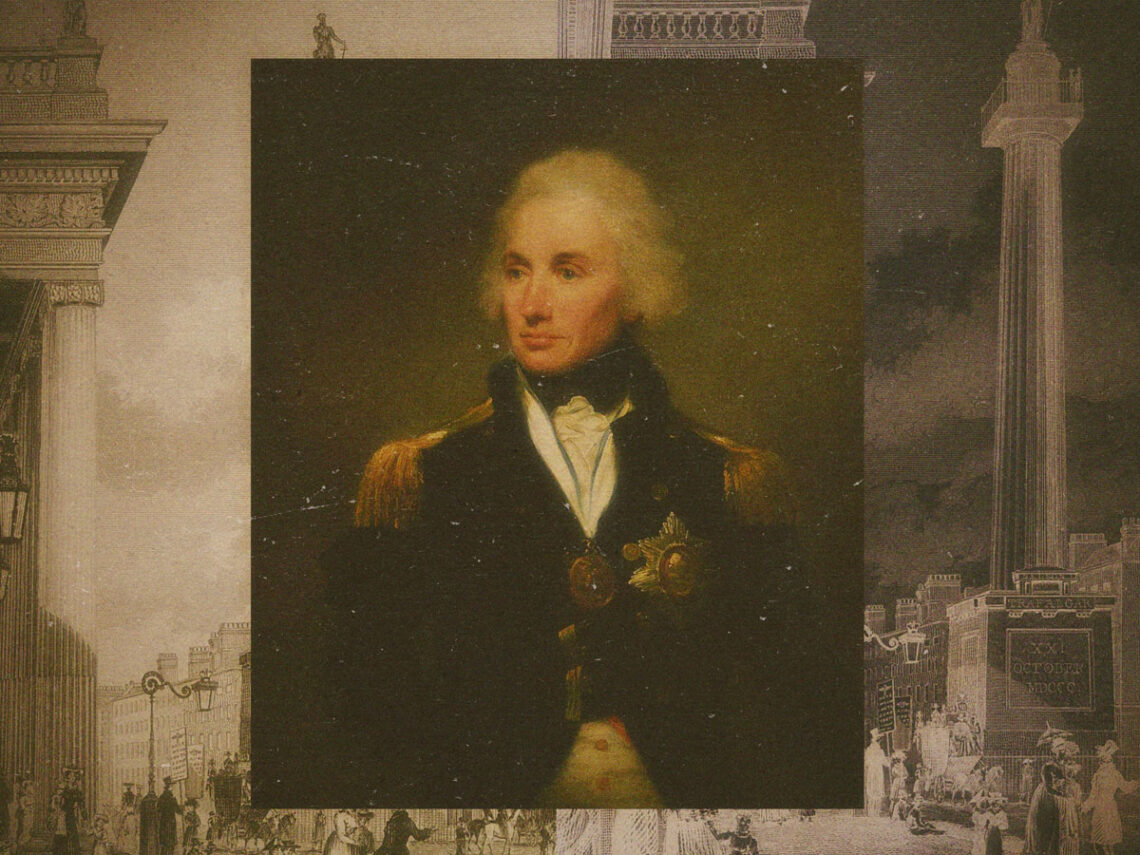
Nelson’s Pillar: the monument to the British Empire in the middle of Dublin
The idea of soft power is a strange one.
On the one hand, it makes perfect sense that in order to truly strengthen an invading force’s power over a foreign land that at least part of their project will be to make the people they’ve colonised respect and appreciate the same things they do. Hence why three whole decades before a similar column stood in Trafalgar Square, the first pillar commemorating the death of Admiral Lord Horatio Nelson stood in Dublin, on what we’d now call O’Connell Street.
The monument was known as Nelson’s Pillar, and right from the off, you don’t need to be a dyed-in-the-wool, fully paid-up member of the Irish Republican Army to feel like this is some deeply fucked up shit. This brings us to the other hand of why the idea of soft power is a strange one. No matter which way you swing it, you never see acts of soft power that aren’t in service to acts of hard power, read colonialism enforced by imperialist violence.
The pillar was erected as the infernal cherry on top of a redevelopment project north of Dublin’s River Liffey. In the 1740s, a narrow lane called Drogheda Street was demolished to make way for a large thoroughfare lined with large townhouses. This new street was named Sackville Street, after Lionel Sackville, the British aristocrat and politician who served as the Lord Lieutenant of Ireland for many years. Sackville Street became a symbol of the English occupation of Ireland all the way up to the Acts of Union 1800, where Great Britain was unified with Ireland.
Five years later, one of the great heroes of the British Empire, Admiral Lord Horatio Nelson, died during his finest hour, the Battle of Trafalgar. The British Empire, being the way it is, was always going to use one of the most inspiring moments of heroism in the history of English warfare to stamp down on its colonies, and Nelson’s death was no different.
Why did they put up Nelson’s Pillar in Dublin?
In 1809, the project to commemorate Nelson’s death was complete and in the middle of Sackville Street stood Nelson’s Pillar. 134 feet tall and made of black limestone and granite.
Shortly after its completion, a viewing platform was opened inside it, showing off one of the greatest views of Dublin available at the time. It’s a testimony to Nelson’s popularity at the time that most Dubliners were fairly happy with the monument, at least initially. This would not last.
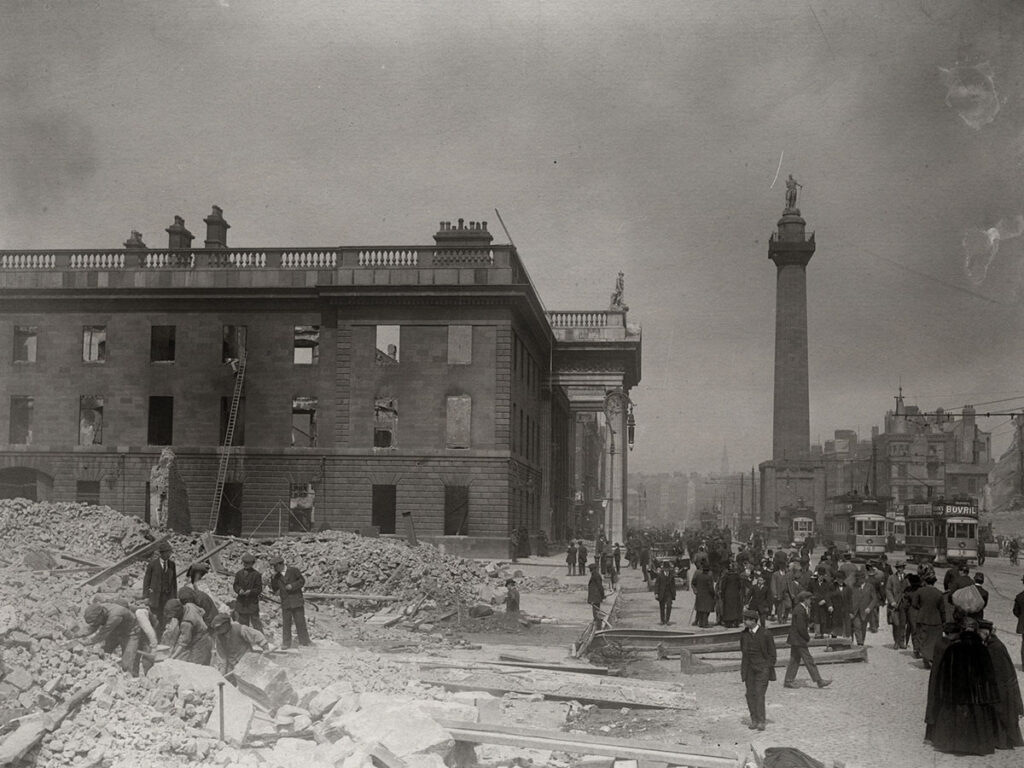
The 1800s were a turbulent time for English and Irish relations, and Nelson’s Pillar began to be seen as a symbol of the English occupation of the country. This came to a head in the Easter Rising of April 1916, when Sackville Street was captured in its entirety by Irish Republican fighters. The uprising was brutally subdued by the English, and for the next few decades, as the conflict that would later spiral into The Troubles began raging through Ireland, calls for the pillar to be removed began to get louder and louder.
The English, being the English, ignored these calls, and thus, the Irish took matters into their own hands. On the evening of March 8th, 1966, a massive explosion rocked the base of the pillar, bringing it crashing to the ground among tons of rubble. O’Connell Street was deserted at the time, so there were no casualties, and finally, the monument to English superiority over their colonised lands was no more. The English were scandalized and the Irish…well, put it this way.
Strong rumours ever since have said that the Irish president at the time, Éamon de Valera, called up The Irish Times to suggest a headline for their piece on the story. His suggestion?
“British Admiral Leaves Dublin By Air.”