


The Coin that Disappeared: The origin of the Men In Black myth
If the Men In Black are real, then the Will Smith movie from 1997 (one of the best movies of the decade, FYI) will go down as one of the biggest and most successful exercises of brand rejuvenation of all time.
Because who didn’t watch that film and immediately think that they were the coolest people on (and as it turns out, beyond) the planet?! The slick suits, the sunglasses, the Neuralyzer, the Noisy Cricket, the car (Christ, that car), the list goes on and on. It’s a collection of some of the most rad things ever committed to celluloid. One so effective that it keeps making Hollywood executives think that people actually want a new Men in Black picture.
While the box office receipts for new Men In Black movies point to diminishing returns, the cultural legacy of the original film is strong enough that it’s what people think of first when they think of the concept of Men In Black. Top secret government agents investigating alien threats and covering them up from the prying eyes of normal people like you and me. The further you go down the rabbit hole, the more you’ll find that the image of the Men In Black as cool, confident and charismatic Will Smith and formidable, intimidating Tommy Lee Jones couldn’t be further from the (supposed) truth.
One of the original stories that led to the Men In Black myth taking shape tells a different story. One that points to these people being the complete opposite of movie star cool. That shows them to be terrifying, barely human figures that won’t charm their way into your lives before Neuralyzing you with a pithy quip. Instead, they threaten you into silence with the promise of literally incomprehensible violence and torture.
This is the story of how Herbert Hopkins’ life was flipped upside down, and it all comes down to a single coin.
How do the Men In Black supposedly operate?
In September 1976, Hopkins was a doctor and hypnotist (really) living in Maine and acting as a consultant to an alleged case of UFO teleportation.
One night, he got a phone call from someone calling themselves the Vice-President of the New Jersey UFO Research Organization, who wanted to interview Dr Hopkins about the case. Having nothing else to do that night, Hopkins accepted the invitation and started preparing his house for a visitor. The moment he put the phone down, however, he noticed a figure on his front porch.
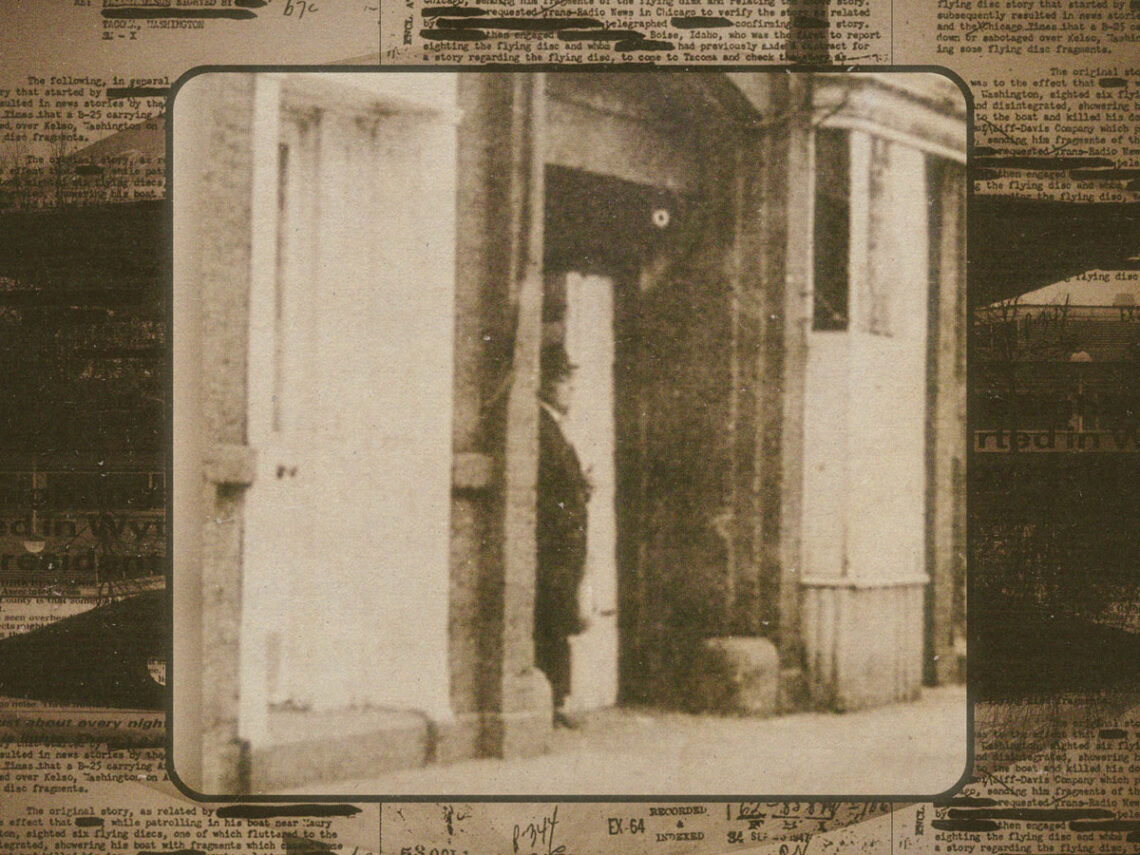
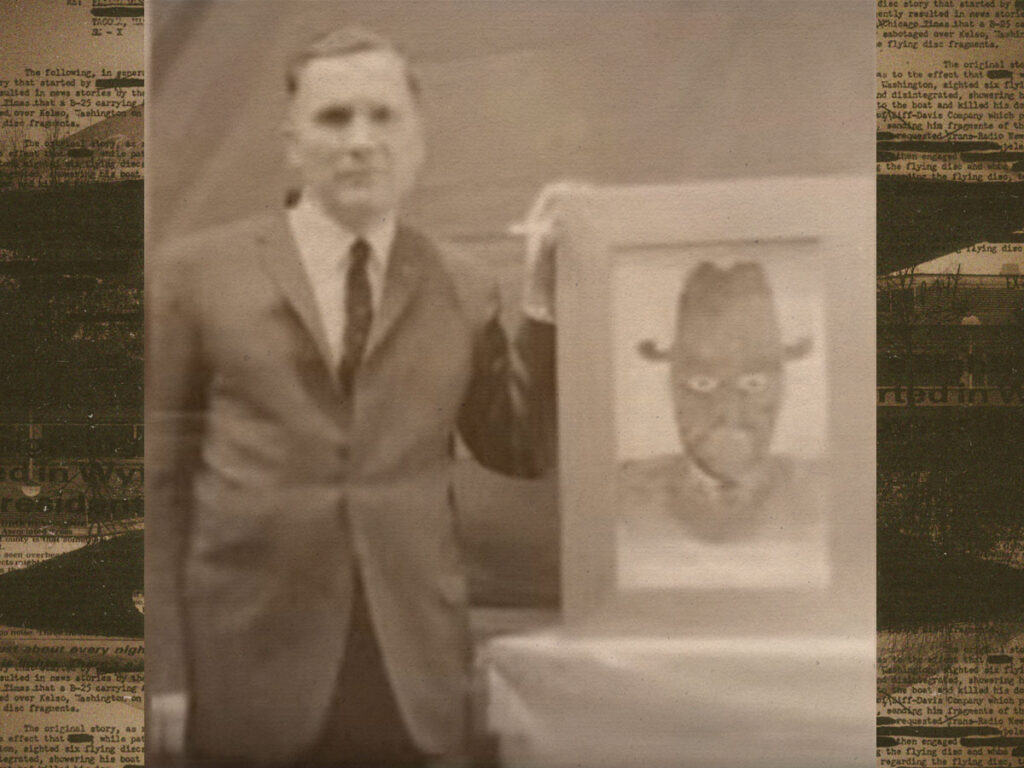
This was a man dressed immaculately. Black shoes, suit, tie and hat with a white shirt. When Hopkins opened the door, the man removed his hat to reveal not only a bald head but skin that was nearly as white as his shirt, save for scarlet lips. Presumably because his senses had left him for a moment, Hopkins invited the man in, reasoning that this had somehow been the man he had been talking to on the phone seconds earlier. The man walked in after a brief talk about the teleportation case, reached into his pocket to bring out two coins.
He told Hopkins to look at the coins and, slowly, one of them became fuzzy and disappeared. The visitor then reportedly said, “Neither you, nor anyone else on this planet will ever see that coin again”.
The stranger then began asking about the details of the teleportation case, referring to interview tapes and research about the case that he seemingly knew Hopkins had about it, without ever being told about it. After he’d asked a number of questions, he stated that Hopkins would destroy anything he had on the case and never speak of it again.
Afterwards, he got unsteadily to his feet and wiped his mouth with his gloved hand. A smear of bright red lipstick appeared on said glove and momentarily revealed to Hopkins that whatever his visitor was, he had no lips. Just a slit where his mouth should be. Slowly, the visitor left the house and seemingly disappeared after walking out of the light of a nearby streetlamp. Hopkins, wisely, did as the man said and destroyed all records he had of the UFO teleportation case. Reasoning that whatever happened to the coin could quite easily happen to him if he wasn’t careful.
There you have it, on the off-chance that Hopkins wasn’t lying for the sake of a good story (and let’s be real here, he was), the real-life Men In Black are less wisecracking movie stars and more Lovecraftian parodies of humanity.
Personally, I’ll stick with the movies.