


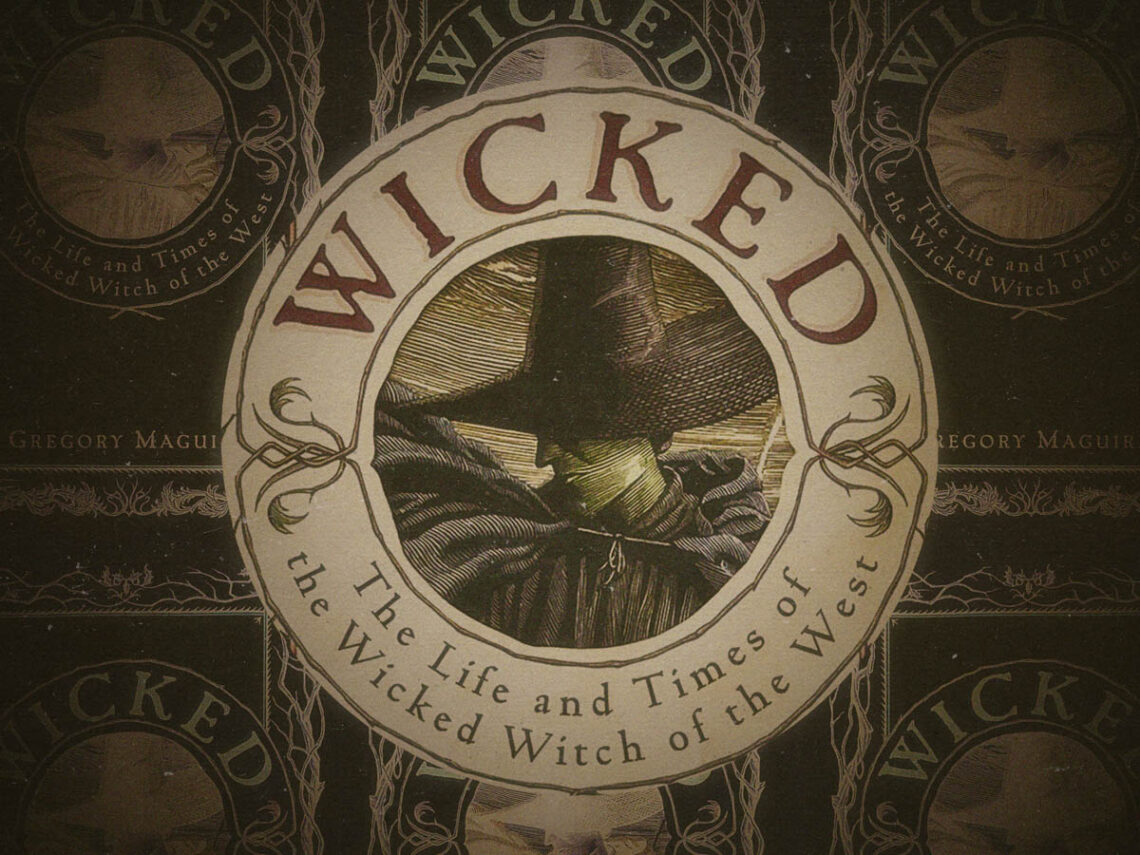
The real-life murder behind ‘Wicked’
The Wicked franchise being inspired by a murder sounds absurd on the surface. After all, this is one of the most commercially successful, most family-friendly musicals ever made.
A smash hit on Broadway and the West End, hugely popular with people young and old. Anyone with a passing interest in musical theatre can hum ‘Defying Gravity’, and it’s all based on a pretty dynamite pitch of “What if The Wizard of Oz was Frozen?“
Yes, I know Frozen was directly inspired by Wicked to the point of casting Idina Menzel to play a misunderstood magical girl who gets a massive power ballad about accepting yourself despite what people think of you, but the success of Frozen did lead to Wicked‘s current commercial dominance, so it does illustrate my point.
The success of the tale of Anna and Elsa showed how the tale of Glinda and Elphaba, the witches of The Wizard of Oz, could make the trip from stage to screen. Well over a billion dollars later, this has been a huge success with a similar kind of audience. A very mainstream, very family-oriented audience with tie-in deals for toys, fast food restaurants and merchandise abound. So how could this vast franchise, squarely aimed at the biggest possible audience, possibly have been inspired by the murder of a two-year-old child?
Well, the fact is that Wicked wasn’t always so family-friendly. As anyone who got very into the musical will tell you, the show is based on a novel. One that many a tween with ‘Popular’, ‘The Wizard and I’ and ‘No Good Deed’ on constant rotation has gone into looking for more frothy adventures with their favourite witches. They’ve then put down the book being shaken to their core by a tale of fascism, radicalisation and bestiality.
Wicked, the musical, is a fantasy story. Wicked: The Life and Times of the Wicked Witch of the West is something far, far darker. One inspired by a simple question, “What makes someone evil?”

So, how did a child’s murder inspire Wicked?
Gregory Maguire was an American novelist living in London in the early 1990s. A young adult novelist with some small successes to his name, he was still waiting for the novel that would make his name on the world’s stage to come to him. At the time, he had two things in the back of his mind. One was a lifelong obsession with The Wizard of Oz, and the other was his Catholic upbringing, one that constantly made him question whether evil was a state you were born into or something you chose to be.
Then, something happened that left a scar on the national conscience that can still be seen today. James Bulger was murdered in 1993 by two older boys. This would be bad enough if they were fully grown men, but the perpetrators were both ten. Bulger himself was two. I defy anyone to look at the perpetrators of that act and not feel like they’re dealing with someone truly evil. Seeking to process this news, Maguire turned to writing and found that he wasn’t just evil as personal acts but as a way that society framed people.
In an interview with Broadway World, Maguire said he thought about “What does make somebody wicked? What is evil, and how do we use it socially and culturally? How do we use the concept as a legitimization of our inclination toward greed and self-involvement and self-rationalization?”
His history in children’s fiction cause him to look for figures that embodied evil in children’s literature and, as he put it, “coming down from the sky on a cloud, approaching me in a heavenly vision, was not the Virgin Mary for whom I’ve been waiting for most of my adult life, but the Wicked Witch of the West, saying, ‘I’ll get you and you’re little dog!'”
Thus, Maguire took one of the most recognised symbols of villainy and evil in fiction and began looking at her as the same thing that every evil person is at their core. A human being, for ill and, fittingly enough, for good.