


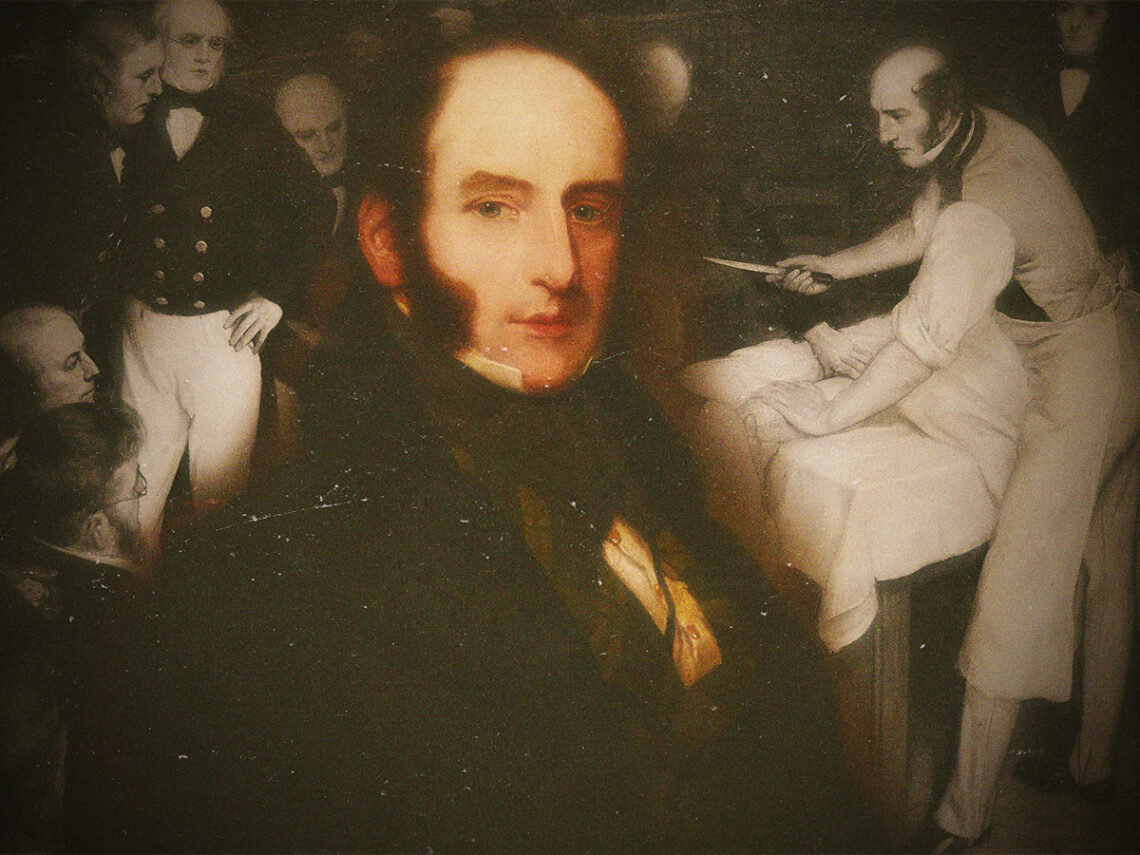
The harrowing surgery that killed the patient, nurse and an observer
This is a story that has spread far beyond the history of surgery and taken on a life of its own for all the wrong reasons.
Robert Liston was a Scottish surgeon whose skill and speed at surgeries made him a genuine celebrity in his heyday of the early to mid 1800s. To us today, speed seems like a dangerous and unnecessary aspect to any surgery rather than a cause for celebration. After all, when someone has to cut a living person open and poke around inside to save their life, you’d rather they were as methodical as possible about it, right?
Except you’re forgetting one important aspect to this, Liston worked in the early to mid 1800s. The closest thing that anyone had to anaesthetic was a double shot of whiskey and a leather belt to bite down on.
As a result, speed was absolutely of the essence. Otherwise, surgery was a death sentence if it took too long. If your surgeon hung about, not only was the patient going to be in the kind of pain that kills them eventually, but if that didn’t, the blood loss would get them first. Best case scenario, the first incision or bone break would cause the patient to pass out, and you could work as quickly as you could without your patient screaming the operating theatre blue.
The worst-case scenario was a case written about by Richard Gordon in his 1983 book, fittingly titled Great Medical Disasters. Gordon wrote about a surgery Liston performed on a patient whose leg was infected with gangrene. Now, this was already pretty much a death sentence back in Liston’s time, and it was no different here. Liston removed the leg successfully, but the patient died later in the ward after another flare-up of gangrene caused by the less-than-stellar hygiene of hospitals back in those days.
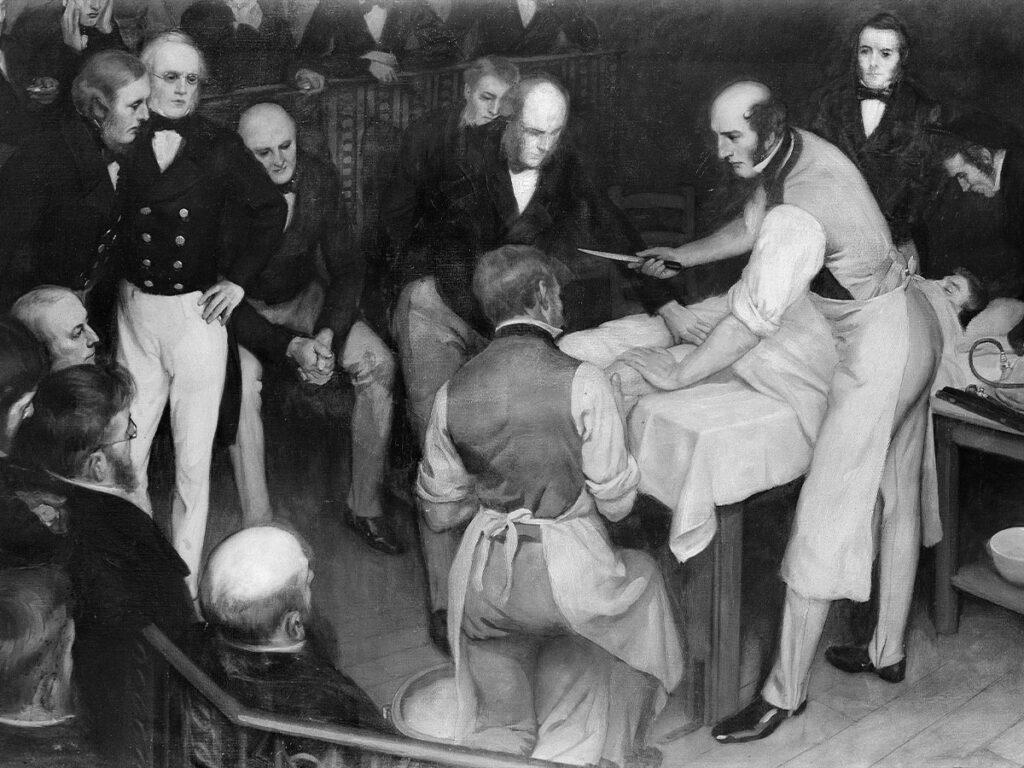
However, that’s not what made this surgery so famous. You see, Liston amputated the patient’s leg in just two-and-a-half minutes. For reference, put on ‘Tutti Frutti’ by Little Richard. That’s how long it took for Liston to remove a leg. That’s not what put this event in surgical folklore, though. No, instead it was reports that Liston’s scalpels moved so fast that they took the fingers of a nurse’s hand with them, who also died of hospital gangrene as a result of his injuries.
That would be bad enough, except that at the time, surgeries were essentially spectator sports. There’s a reason why they’re called operating theatres after all. These were cramped, claustrophobic spaces where the audience got up close and personal with the patient. In this case, one spectator got too close for comfort, and their coattails got slashed by an errant flick of Liston’s scalpels. He fainted from the shock and later, literally died of fright.
Thus, this is a surgery that went down in history as the only one in medical history to have a 300 per cent mortality rate.
A spectacular story, right? It would be amazing if it were true, but the only source we have for it actually happening is Gordon’s book, and as you can imagine, a book called Great Medical Disasters doesn’t spend much time citing its sources. No primary source of the time says that a surgery as disastrous as this ever happened, and considering Liston’s celebrity, it would be very easy to find articles saying so from the time if he had.
Honestly, this makes the story of Liston even more incredible to me. There are enough sources saying that he could get through surgeries in mere minutes from the time, so (knowing the Victorian press) that’s probably not entirely exaggerated. Yet still, as far as surgeons of the time were concerned, he was still considered one of the safest, most competent pairs of hands in the business. Admittedly, you probably wouldn’t want to go under his knife today.
Even with that in mind, Liston was still the first surgeon to ever use modern anaesthesia in his work, too, so even with his undeniable skill, he still moved with the times. Maybe we should remember that and not an (admittedly amazing) story of him accidentally killing two people in the middle of an unsuccessful surgery.