


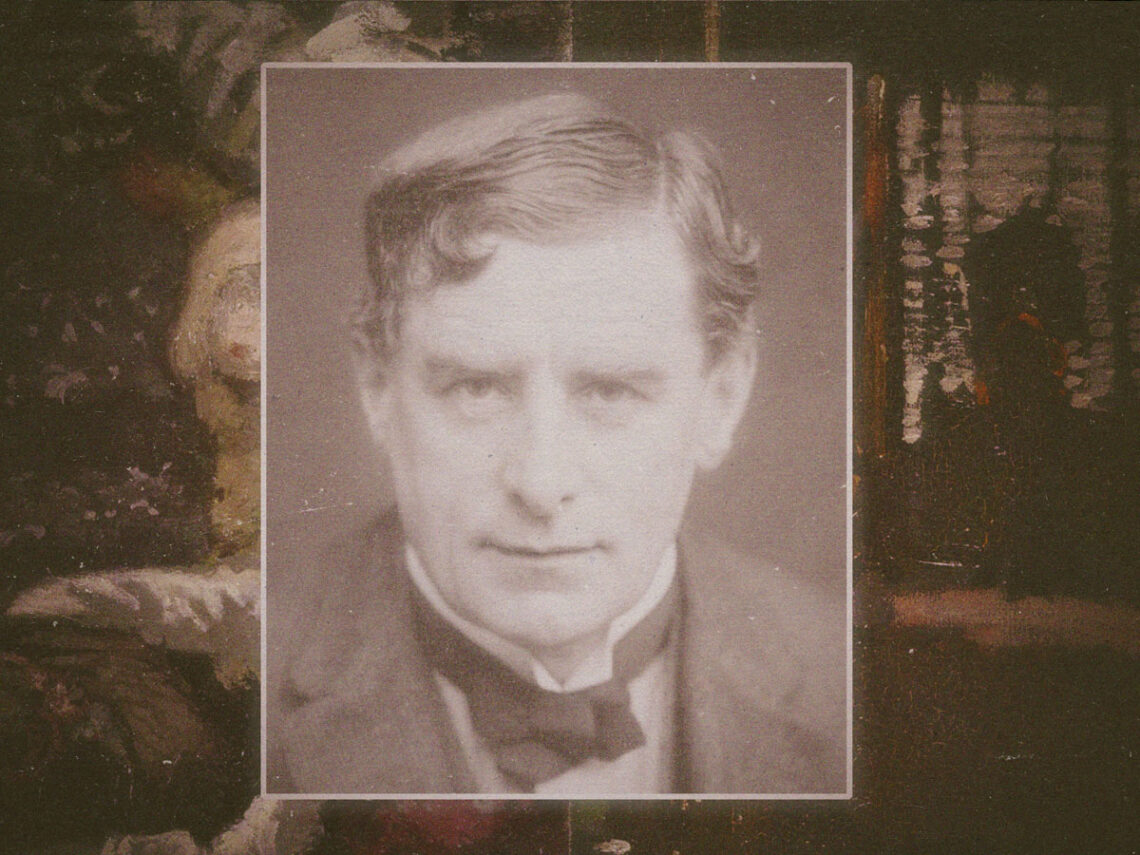
Walter Sickert: the man who painted murder
In the Victorian era, art had to have a point.
The reasons for this are myriad, far too many to get into in the confines of an online article, but the basics are as follows. The insane one-two punch of the Industrial Revolution occurring at the height of the British Empire meant that a truly absurd amount of money flowed into England.
Almost overnight, this mythical concept of “the middle class” sprang up. Newly moneyed families with money to burn. Suddenly, an economy of art sprang up among these newly minted upper and middle classes.
While this lead to an explosion of art in Victorian London, with whole movements of painting, theatre, music and literature happening at the centre of it, something else happened as well.
A number of artists, especially those not from noble or wealthy backgrounds, realised they could draw attention to the plight of those who were not benefiting from all this money going around. Which was a huge problem at the time. Economic disparity today is grotesque, and yet it still has absolutely nothing on the poverty levels of Victorian London.
Thus, it became paramount for art to have a message. It had to shine a light on harsh truths that rich folks of the day wouldn’t have been aware of, and have a moral message one way or the other. This was the driving force behind the Pre-Raphaelite Art movement, but one can only imagine the raised eyebrows confronting the work of Walter Sickert.
In many ways, he embodied the Pre-Raphaelite drive for unflinching realism, but where others sought to depict heart-rending visions of poverty, Sickert depicted far more gruesome things.
Who was Walter Sickert?
Born in Munich, Germany, in 1860, Walter Sickert and his family moved from his native country to England when he was eight years old. Despite initially training to be an actor, Sickert trained as a painter in his young adulthood and fell in with the counter-culture art scene in Paris in the early 1880s.
By the end of the decade, he’d produced his first major works, a series depicting scenes from London’s music halls. This would be controversial enough, as these were seen as hives on inequity and sin at the time, but Sickert really caused a storm by painting the well-known singer Katie Lawrence, an act akin to painting a sex worker at the time.
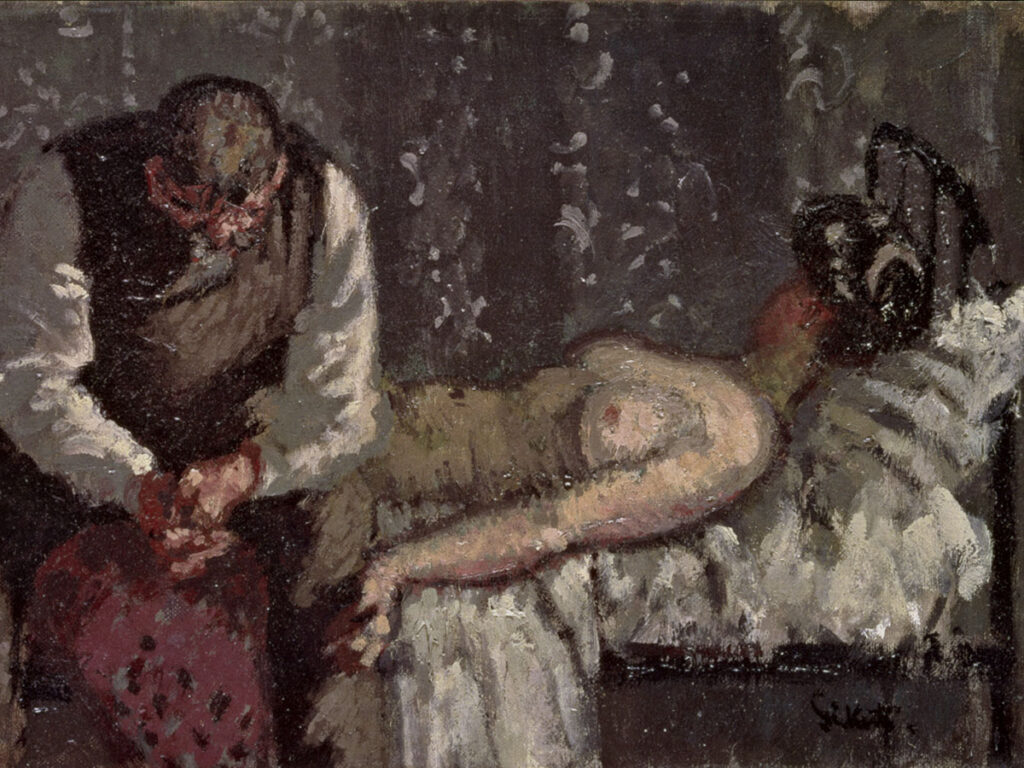
The controversy this caused was the making of Walter Sickert, who pursued his fascination with all things seedy and sleazy for the rest of his career. Many of the subjects of his paintings went from people who were viewed as little more than sex workers to actual sex workers. People who Sickert knew because he was a regular client of theirs. However, the painting that would truly scandalise the world of art wouldn’t come until 1908, when Sickert painted another sex worker, one who had been murdered the year before.
The Camden Town Murder is a set of four paintings depicting the events surrounding the real-life murder of Emily Dimmock, a sex worker murdered by her client on September 11th, 1907. Despite the controversy surrounding the paintings, they’re actually some of the least lurid in Sickert’s oeuvre. Showing something that not even the moralists harrumphing over the fact that Sickert was painting women could see. That Dimmock’s death was a tragedy, not a lesson in the dangers of breaking the law.