


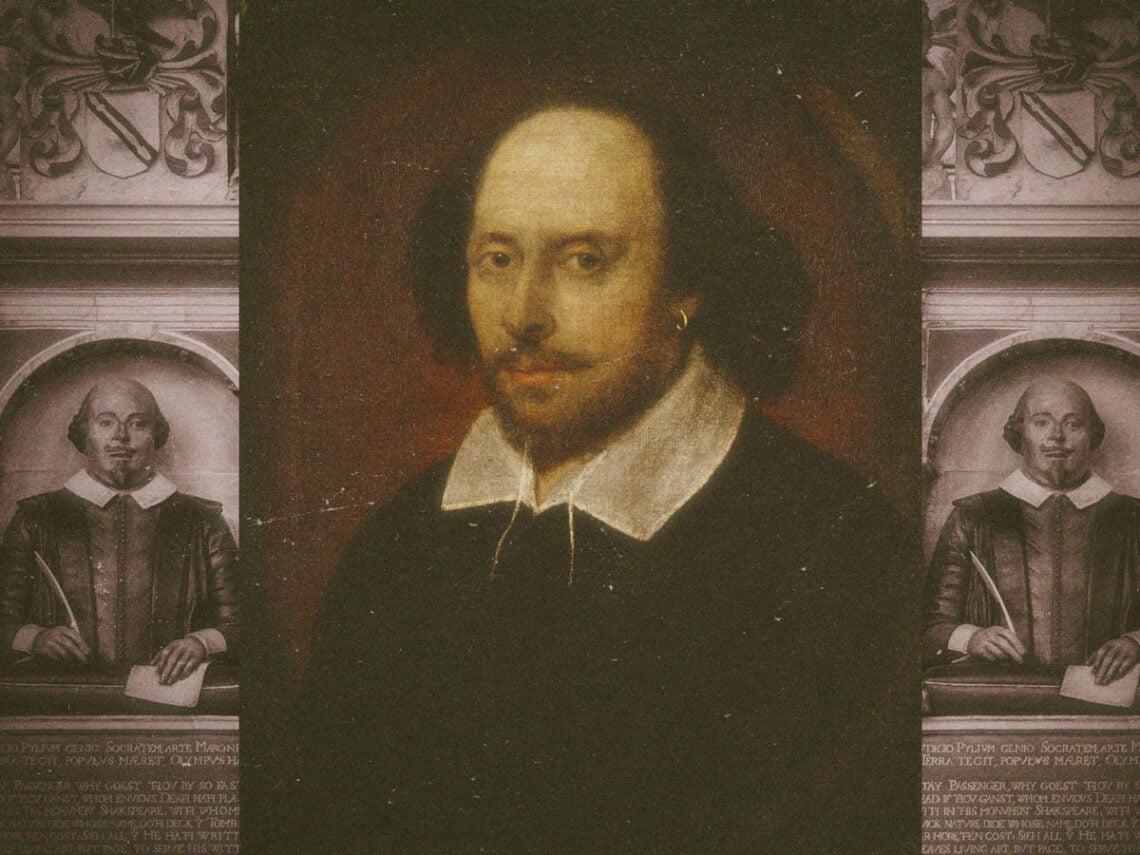
William Shakespeare’s mysterious death in 1616 and the curse placed on his grave
William Shakespeare, the most famous name in theatre, was just 52 years old at the time of his death. Yet, in Elizabethan England, that was the equivalent of reaching your 100s today.
Folks were expected to live until the mid-30s in the early 1600s, and while that life expectancy is somewhat skewed by the infant mortality rate of the time, people rarely lived beyond their 40s, nonetheless. Shakespeare, though, was something different. He lived to a ripe old age, and while that was probably down to being a celebrated playwright, he wasn’t widely accepted as the theatrical and literary deity that he is in the modern era.
That wouldn’t come until a few years after his death, with the publication of his first folio in 1623. Up until then, he was successful, but still a working playwright. The kind who was successful enough to make a career out of making art (a miracle to be celebrated no matter the year), but he still had to keep making art to survive. Maybe that’s what makes so many of the apocryphal stories about the death of Shakespeare so compelling.
The most commonly told story is that Shakespeare drank himself to death after a night out with fellow writers Ben Jonson and Michael Drayton. This is a lot more than merely an apocryphal story, as the Vicar of Stratford wrote about it in his diaries. However, said diary entries were written half a century after Old Bill’s death, so we should probably take that testimony with a fistful of salt. More intriguingly, if his death was so out of nowhere, why did he make his will barely a month previously?
Ah, yes, the infamous will that left poor Anne Hathaway their “second best bed”. However, at the time, families left their best bed to guests. He was leaving his wife their marital bed, which is pretty heartwarming all things considered. So, did Shakespeare know he was about to die? Probably not, as the will itself is pretty barebones. It looks for all the world like he wrote the skeleton of it out and then would return to it when his sun was really going down.
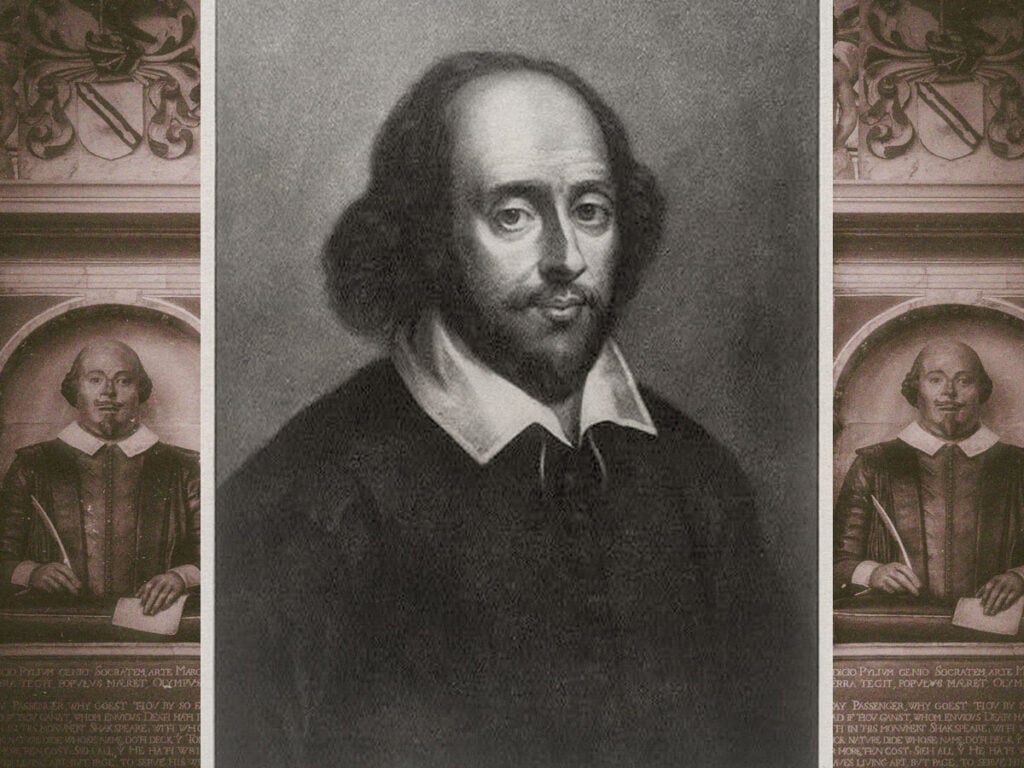
This is supported by the fact that all reports of his funeral were that it was pretty low-key. As previously mentioned, his death wouldn’t have been met with the national outcry that a similarly legendary figure’s passing would come with today, but he was a celebrity. A performer who had fans and patrons in generations of English royalty. Yet still, his funeral had little of the pomp and circumstance you’d expect around a figure of his calibre and, bizarrely, neither did his grave.
In fact, his grave was so understated that it didn’t have his very name attached to it.
It’s true, we’re kind of making an assumption that everyone who’s ever worked at Holy Trinity Church in Stratford-Upon-Avon has been telling the truth that Shakespeare was buried there in 1616. We can be fairly certain that they are, or else the huge sculpture of him directly above the grave is a little awkward. However, we can’t be sure if he’s still there, because his grave was scanned with radar in 2016 by scientists who found reason to believe that in the 400 years since his demise, his remains had been disturbed a few times.
This gives credence to an urban myth from the 1800s that Shakespeare’s grave had been robbed and his skull was being passed from collector to collector for centuries. Perhaps Shakespeare himself knew this would happen, because for years, the only thing that marked the grave of William Shakespeare was, for lack of a better term, a curse. One that read: “Good friend for Jesus sake forbeare, To digg the dust encloased heare, Blest by the man that spares these stones, And curst be he that moves my bones.”
Let’s hope that anyone who dared mess with the remains of William Shakespeare felt the wrath of that curse and then some.