


‘Lamb’: how a human-sheep hybrid put Icelandic cinema on the map
Back in 2021, Lamb had some of the most striking goddamn posters of all the movies released that year.
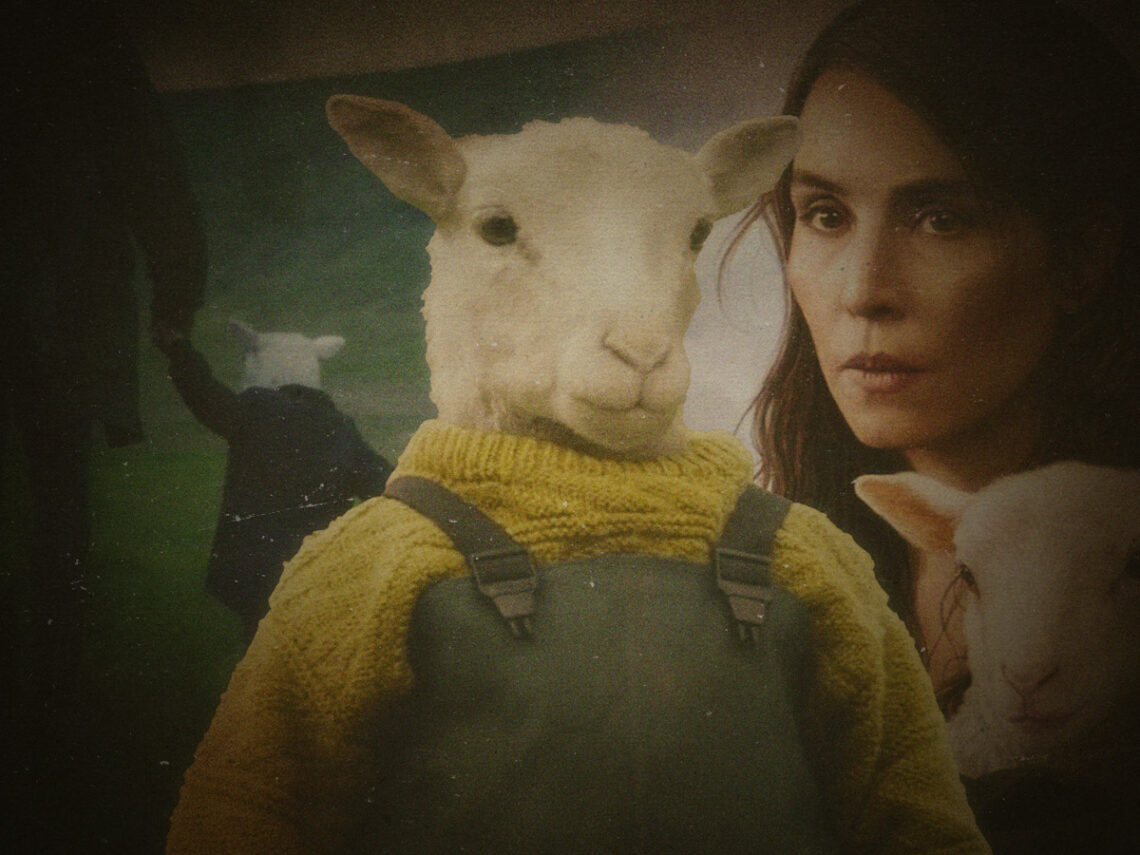
Stark, dour photography of the lush Icelandic countryside, with two people clad in modern farmers’ clothes pictured from behind, walking uphill. On the left was someone dragging a dead fucking sheep. On the right, something truly bizarre. They were hand in hand with a toddler-sized humanoid, up on two legs and clad in the same style of clothes, except their head was that of a lamb. A seriously cute one at that.
Some of the other posters proved that. With headline star, The Girl With The Dragon Tattoo, Prometheus and Alien: Covenant‘s Noomi Rapace looking impassively out into the middle distance, holding the little tyke in a bundle of blankets. Butter wouldn’t melt in the little thing’s mouth, and if you were to look at him in a vacuum, one could almost assume this was a charming family comedy.
Perhaps one that, through the medium of comedic mishaps and extended set pieces, teaches you that family comes in all shapes and sizes. One with a trailer set to The Troggs’ ‘Wild Thing’. The tagline is “Ewe ain’t seen nothin’ yet!” While I may have talked myself into wanting to see that movie, Lamb is not that movie. Unfortunately.
In fact, the posters and trailer do a damn good job in showing, rather than telling, what kind of movie this is. A chilly, haunting and desperately bleak A24 horror film about what makes someone a human and, even more pertinently, what makes someone an animal.
How was Lamb born?
Lamb is the directorial debut of Valdimar Jóhannsson, who also co-wrote the screenplay with poet, novelist and frequent Björk collaborator, Sjón. If this sounds like a goofy exploitation flick on the surface, then you’re sorely mistaken. Principally because this is a story that Jóhannsson has said on a number of occasions lies quite close to his heart, as he elaborated about in an interview with FilmHounds.
When asked about the personal nature of the strange goddamn story, Jóhannsson responded, “There are lots of things I relate to; my grandparents were sheep farmers, and I spent a lot of my childhood with them at the farm. I also grew up in a very small village close to the farm, I know this farm life very well.” One can see this in the way the film deals with the day-to-day realities of farm life, with Rapace actually delivering real-life lambs on screen.
Just as the film delves into the not-so twee realities of life on a farm, it also gets into the dark corners of family life. Rapace’s Maria and her husband, Hilmir Snær Guðnason’s Ingvar, face serious questions about the hole in their life that this human/lamb hybrid is filling, whether that hole can be filled and what it means when their actual family begins to make themselves known.
Lamb was, obviously, a huge hit in its native Iceland. One so big it was picked up for international distribution despite how out there the premise is. A sign, now that one is desperately needed, that genuinely out-there ideas do turn up in modern movies, so long as you know where to look.