


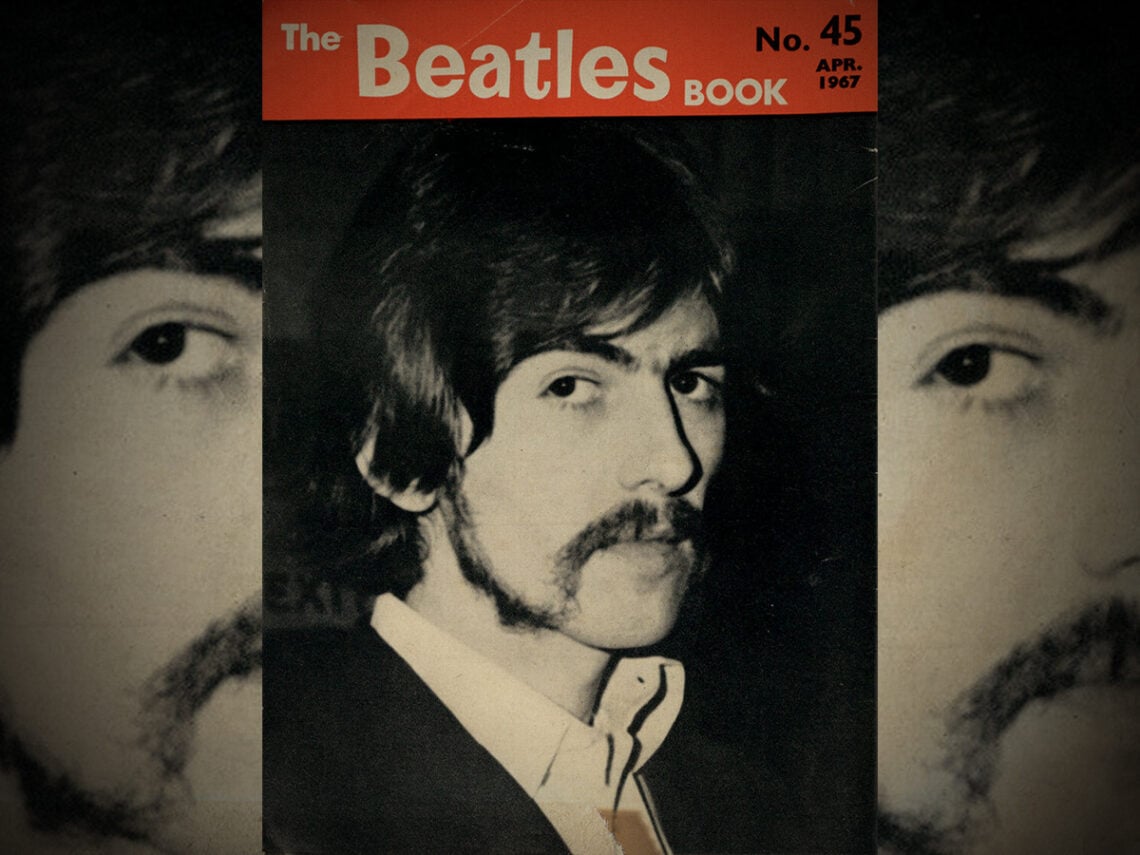
“My God…so fruity”: George Harrison’s delightfully bitchy Beatles memories
By the end of 1976, George Harrison had something to prove.
The years immediately following the extraordinary success of All Things Must Pass had been uneven, and critics who had once hailed him as the Beatle with the brightest future had become increasingly dismissive. Then came Thirty Three & 1/3, an album that felt like a genuine comeback. Even perennial curmudgeon Robert Christgau was forced to admit that Harrison seemed to have rediscovered his footing.
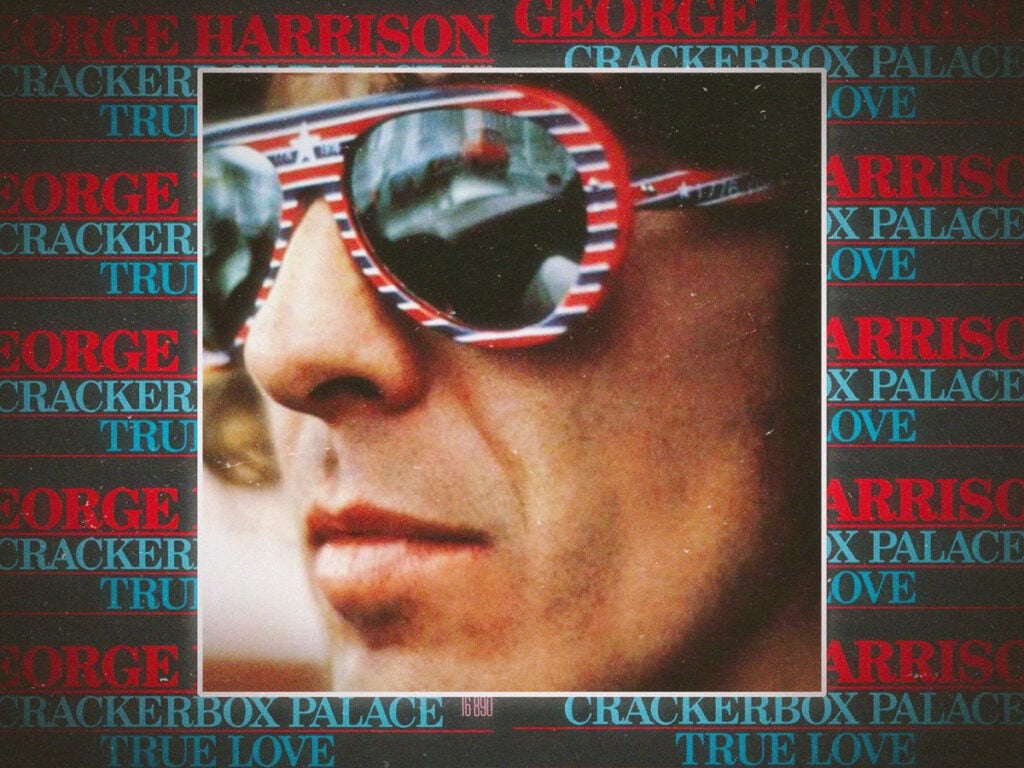
Harrison himself certainly seemed revitalised. He promoted the album enthusiastically, making three promotional films more than half a decade before MTV transformed music videos into an industry unto themselves. One of them, ‘This Song’, was a sly and self-deprecating response to the copyright lawsuit surrounding ‘My Sweet Lord’. Two others, ‘Crackerbox Palace’ and ‘True Love’, were directed by his friend Eric Idle, whose Python absurdity proved a natural fit for Harrison’s increasingly playful outlook.
The release of Thirty Three & 1/3 also gave Harrison an excuse to do something he had never seemed entirely comfortable with, namely talking at length about himself in public. His nine-page conversation with Mitchell Glazer for the February 1977 issue of Crawdaddy, titled “The Quiet Beatle Finally Talks”, turned out to be much more than a promotional exercise. Astonishingly little of the interview dealt with the new album. Instead, Harrison found himself looking backwards, revisiting Beatle history and opening up about frustrations that had clearly never entirely gone away.
The picture that emerges is of a musician who had spent years feeling squeezed between John Lennon and Paul McCartney. By the time the sessions for Let It Be began, Harrison had already tasted life outside the group through collaborations with Bob Dylan and The Band, and he admitted that returning to the Beatles felt strangely claustrophobic.
“I got back to England for Christmas and then on January the first we were to start on the thing which turned into Let It Be,” Harrison said. “And straightaway again, it was just weird vibes. I found I was starting to be able to enjoy being a musician, but the moment I got back with the Beatles, it was just too difficult. There were too many limitations based on our being together for so long. Everybody was sort of pigeonholed. It was frustrating.”
By 1969, Harrison was no longer the kid tagging along behind Lennon and McCartney. He had developed into a formidable songwriter in his own right, but inside the Beatles old habits died hard. Lennon and McCartney still dominated proceedings, often without even realising it.
“The problem was that John and Paul had written songs for so long it was difficult,” he said. “First of all because they had such a lot of tunes and they automatically thought that theirs should be the priority, so for me I’d always have to wait through ten of their songs before they’d even listen to one of mine.”
Harrison’s description of the backlog that became All Things Must Pass remains one of the great George Harrison quotes.
“That’s why All Things Must Pass had so many songs, because it was like I’d been constipated.”
For all the mythology surrounding the Beatles as a democratic brotherhood, Harrison’s memories suggest something far more complicated. He recalled receiving little encouragement and doubting his own abilities because Lennon and McCartney rarely praised his songs. Even ‘While My Guitar Gently Weeps’, now regarded as one of the masterpieces in the Beatles catalogue, initially met with indifference.
“When we got into things like ‘Guitar Gently Weeps,’ we recorded it one night and there was such a lack of enthusiasm,” Harrison explained. “So I went home really disappointed because I knew the song was good.”
And then there was Paul.
Harrison never quite lost his affection for McCartney, but even years after the split, there was still plenty of irritation bubbling beneath the surface. Harrison acknowledged that Paul would help when it came time to record one of his songs, but he also accused him of dominating sessions and forcing the group to indulge ideas that nobody else particularly liked.
“Paul would always help along when you’d done his ten songs. Then when he got around to doing one of my songs, he would help. It was very selfish actually.”
And then came the line that practically leaps off the page nearly 50 years later:
“Sometimes Paul would make us do these really fruity songs. I mean, my God, ‘Maxwell’s Silver Hammer’ was so fruity.”
History, of course, has a funny way of working. The very song Harrison dismissed has acquired a strange cult following, while McCartney himself has cheerfully embraced his reputation for granny music. Even so, Harrison’s complaint speaks to a larger issue. By the end of the Beatles, four men who had once shared a common vision were increasingly pulling in different directions. Lennon wanted rawness, Harrison was pursuing spiritual and musical growth, Ringo sought simplicity, and McCartney’s perfectionism could sometimes drive everybody else up the wall.
What makes the Crawdaddy interview so fascinating is that Harrison never sounds bitter so much as relieved. The years since the split had allowed him to rediscover the joy of being a musician. Reading the interview today, you get the sense that he had finally stopped trying to compete with Lennon and McCartney and started appreciating his own voice.
Ironically, that’s exactly what millions of listeners had been waiting for all along.
Below are the promotional films for Thirty Three & 1/3. Harrison directed ‘This Song’ himself, while Eric Idle handled the wonderfully surreal clips for ‘Crackerbox Palace’ and ‘True Love’.