


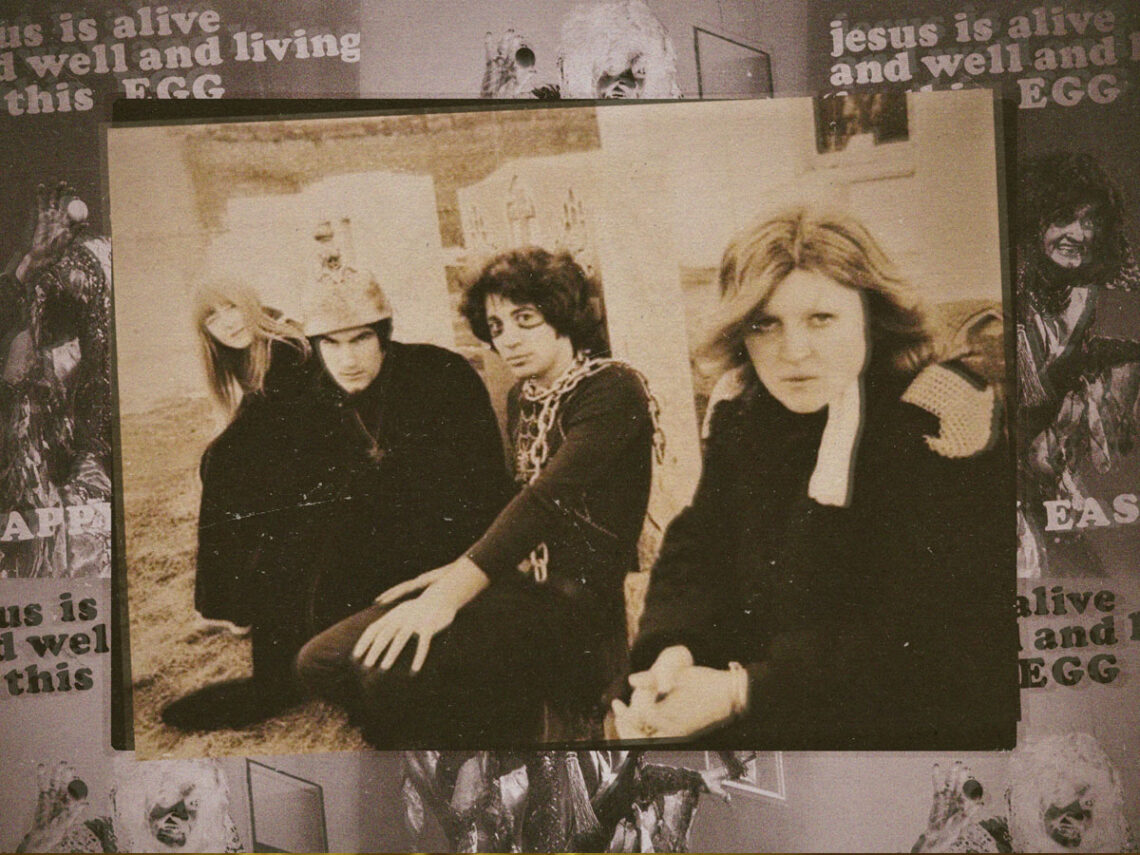
Kongress: The lost occult punk legends of 1970s New York
When some magicians die, they simply vanish. Their work is finished, their infernal ceremonies extinguished and, before long, it’s as though they never existed at all. That almost happened to Geoffrey Crozier, the self-appointed high priest of rock magick whose brief but spectacular reign over New York’s underground left remarkably little behind.
Almost, I say, because Dangerous Minds pal Otto von Ruggins has generously opened his archive and allowed us to share some extraordinary footage and documents from one of the most outrageous bands ever to emerge from the city’s mid-1970s rock scene.
If you’re partial to the kind of gloriously unhinged music made by the MC5, the New York Dolls, early Alice Cooper or any of that beautifully transgressive racket championed by people like Julian Cope and Thurston Moore, then settle in. This story is for you.
Every underground music scene seems to produce one act that becomes more legend than band. Not because they sold millions of records or conquered the charts, but because the handful of people who witnessed them never stopped talking about them afterwards. Kongress belonged firmly in that category. They existed somewhere between punk rock, performance art, occult ritual and complete nervous breakdown, occupying a space that almost nobody else dared venture into.
Geoffrey Crozier was an enigmatic Australian magician and rock performer who became something of a myth among New York’s downtown cognoscenti between 1975 and 1978. Crozier was the lead singer, although “lead shaman” is probably closer to the truth, of Kongress, whose line-up at various points included pith helmet-wearing synthesiser player Otto von Ruggins, “anti-social” guitar destroyer Rudolph Grey, later author of Nightmare of Ecstasy, the definitive Ed Wood biography, and the wonderfully unhinged Von LMO, who attacked his drums with chains as though they had personally offended him.
James Wolcott, writing in The Village Voice, attempted to describe a Kongress performance like this:
“A rowdy bottle smashing night… earlier in the evening there had been an altercation with a satanic occult band named Kongress that played music that sounded like a Concorde drone with Aleister Crowley lyrics. They abandoned the stage only after threats of violence were unfurled like vampirish cape flourishes.”
Frankly, that’s about as accurate a description as anyone has managed.
Looking back now, it’s difficult to think of another performer quite like Crozier. Alice Cooper built elaborate stage shows, Genesis P-Orridge blurred the lines between ritual and performance art, and the Cramps turned horror movies into rock ‘n’ roll, but Crozier seemed to approach every performance as though he were conducting an actual ceremony. Whether anyone in the audience believed any of it was almost beside the point. He certainly appeared to.
His stage act, if that’s even the right phrase, bordered on the deranged. Live rats and chickens wandered across the stage. Smoky Catholic incense mixed with foul-smelling potions. Glitter, fire, flash powder, exploding props and decomposing birds all became part of the spectacle. Watching the surviving footage today, there are moments when Crozier appears less like somebody pretending to be possessed than someone genuinely disappearing into whatever world he’d created for himself.
Apparently, this wasn’t something he invented after arriving in New York. Footage survives of a much younger Crozier performing an early version of the same ritualistic act in Phillip Noyce’s 1971 documentary Good Afternoon, filmed during Canberra’s Aquarius Arts Festival. Even then, he was staging bizarre magical ceremonies complete with coffins, theatrical props and occult imagery. It seems fairly obvious that Crozier wasn’t chasing fame or commercial success. He was following an obsession.
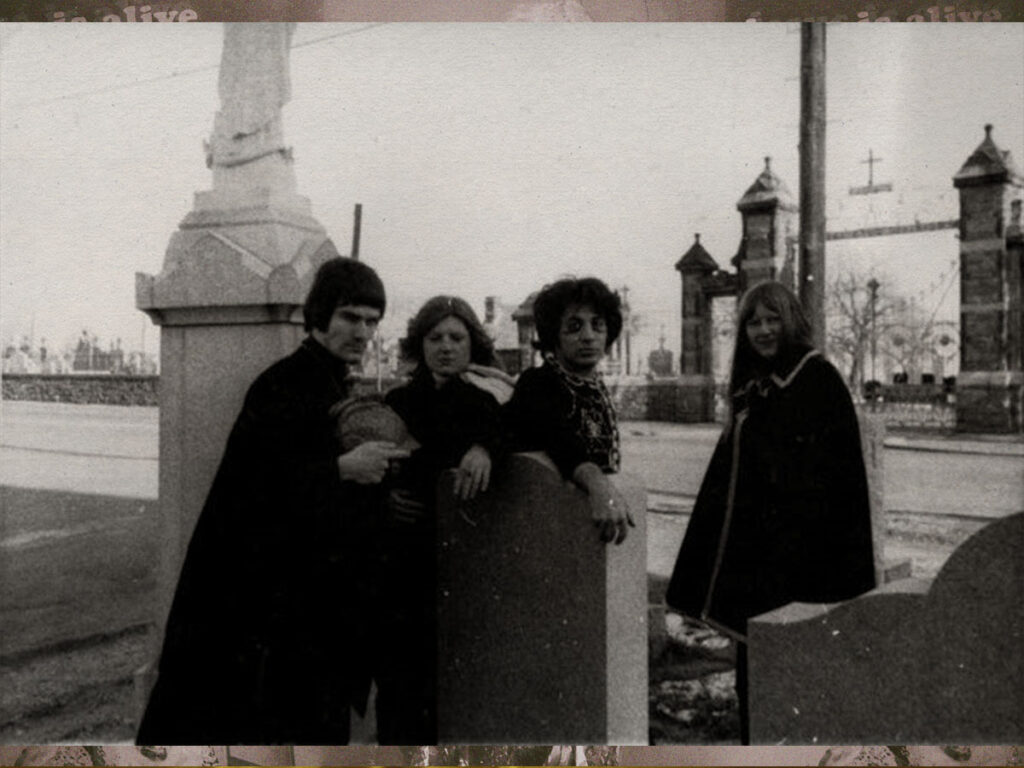
He also fronted groups with names like The Magic Word, The Rainbow Generator and Shanghai Side Show. The musicians weren’t really there to perform songs in the conventional sense. Their job was simply to create noise while Crozier transformed the stage into something resembling a pagan ceremony, séance and punk gig simultaneously.
The remarkable live footage collected here comes from several different sources. The black-and-white material was filmed by legendary rock photographer Bob Gruen during Kongress’ Halloween appearance at Max’s Kansas City in 1976.
The colour footage was shot by Rod Swenson, later manager of the Plasmatics, during another Halloween show at Max’s the following year. Think about that for a second. Max’s Kansas City, a venue famous for hosting everyone from Iggy Pop and Lou Reed to Alice Cooper and the New York Dolls, invited Kongress back on Halloween two years running purely because they were guaranteed to completely unsettle the audience. That’s saying something.
Additional ceremonial footage, featuring Crozier performing Crowley-inspired incantations around a smoking altar while calmly puffing on a joint, was probably filmed after he returned to Australia in the early 1980s.
One of the best contemporary descriptions of Kongress appeared in the Soho Weekly News, and it captures the sheer sensory overload of seeing them live better than I ever could:
“When Geoffrey Crozier charged toward the stage at the opening of the set, replete with shimmering robes and flaming spear, he parted the unsuspecting loiterers like Moses at the Red Sea.”
The article went on to describe Kongress as “the soundtrack for a screamie”, recounting Crozier releasing a live rat onto the stage, mock-sodomising the bass player and eventually climbing into an electric chair that erupted with smoke, sparks and flames before violently throwing him onto the floor, all while the drummer enthusiastically beat his kit with chains.
Its conclusion remains perfect: “Kongress was Rock and Roll Hell.”
Geoffrey Crozier left this plane of existence exactly one year after Ian Curtis, and by the same tragic method. Had Otto von Ruggins not preserved these extraordinary films, Kongress might easily have disappeared altogether, surviving only as half-remembered stories traded between ageing New York musicians who happened to be there.
Instead, we can finally see for ourselves that some legends really are true.