


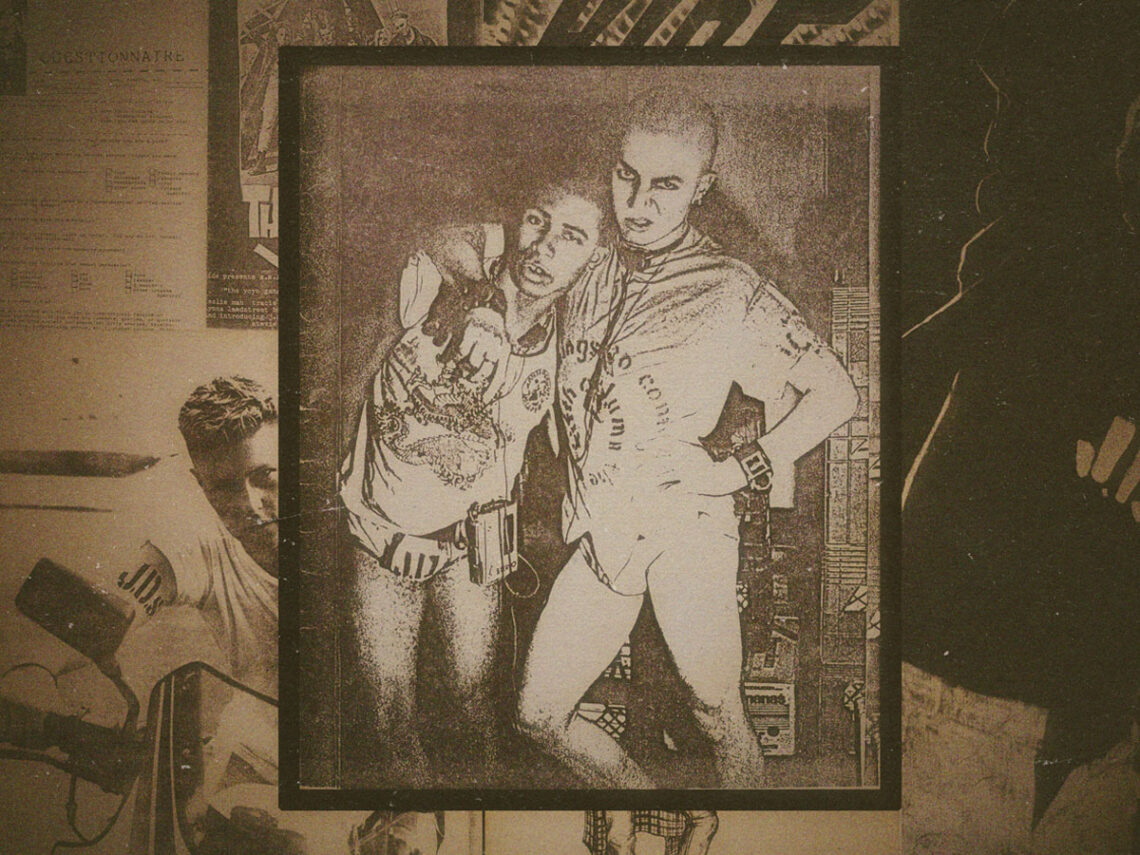
Underground Love: Understanding the rise of queercore
No matter how progressive the politics were, few spaces seemed less queer-friendly than the American hardcore scene of the 1980s.
After all, this was a scene made up of extremely angry men cutting their hair short and trying to enact physical violence on each other in the name of “emotional release and catharsis”. All the while listening to extremely loud music that matched its target audience for aggressiveness and, let’s be real here, emotional maturity.
Take it from a queer person, we don’t need to look that hard for places where extremely angry men enact physical violence on us. Just because a place does that “in a good way” doesn’t mean we’ll have much interest in it.
Or so you would think. The truth is, we belong anywhere we please to be, and queers are just as likely to be into the heaviest hardcore punk imaginable as we are the new Robyn record. What’s more, any hardcore punk who actually understands punk would agree with this a hundred per cent and be fighting to make their scene as inclusive as possible. People understood this at the time, which led to one of the most progressive and wonderful subcultures within punk rock, the world of queercore.
The first signs of this movement began with the very beginning of the hardcore scene. While they didn’t make a splash in the… well, semi-mainstream the way that the Dead Kennedys and Black Flag did, bands fronted by queer men were as much a part of the birth of hardcore as anyone else. Gary Floyd of The Dicks and Randy Turner of Big Boys were both openly gay (if you couldn’t tell from the band names). The moment that this became a scene, however, was the publication of its first zine.

How did the queercore scene form?
Interestingly, this was a zine published far away from the hardcore scene’s spiritual home of California, DC, or New York.
Founded by Bruce LaBruce and GB Jones, J.D.s was first published in Toronto, Ontario, Canada, where LaBruce was studying. Its title standing for Juvenile Delinquents, LaBruce and Jones created the zine because they each felt like outcasts from the city’s respective punk scenes and queer scene, so they decided to combine the two.
Over the next five years, the queercore scene was resolutely underground, just the way that LaBruce, Jones and everyone involved liked it. Once the punk underground was poised to go mainstream in the early 1990s, LaBruce and Jones decided to join them above the parapet, writing a manifesto for their scene in Maximumrocknroll with the absolutely spectacular title ‘Don’t Be Gay, or How I Learned to Stop Worrying and Fuck Punk up the Ass’. This took the scene into the national spotlight, the same way that the riot grrl movement was having a national moment as well.
The year afterwards, queercore record labels started springing up in the form of Matt Wobensmith’s Outpunk. Bands like Anti Scrunti Function, God Is My Co-Pilot and Tribe 8 managed to get national attention as well. However, the ultimate queercore band is absolutely Pansy Division, who seemed for a moment like they could step into the mainstream as they signed to Lookout! Records and regularly toured with Green Day. The movement also went worldwide, with queercore scenes starting up in England, Argentina and Berlin.
The best part about it all is that with such a spectacular rise, no fall has come just yet. The scene still goes strong to this day; it is, after all, very hard to keep a good queen down.