‘The Side Effects of the Cocaine’: The comic exploring David Bowie’s paranoid, coked-up years
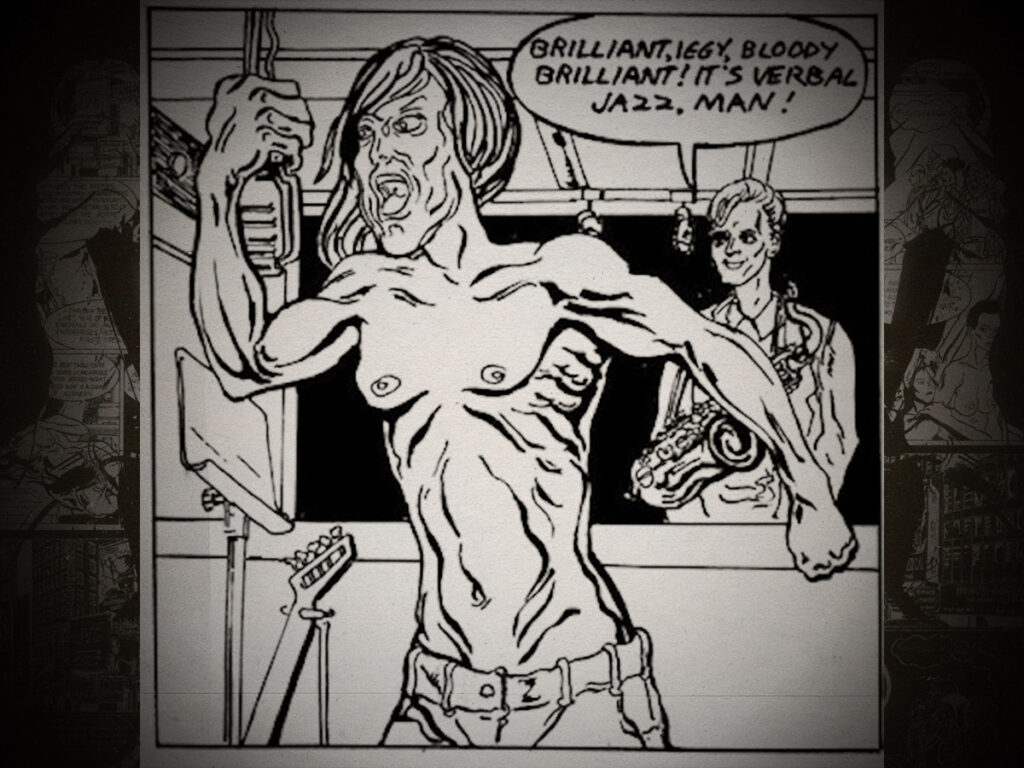
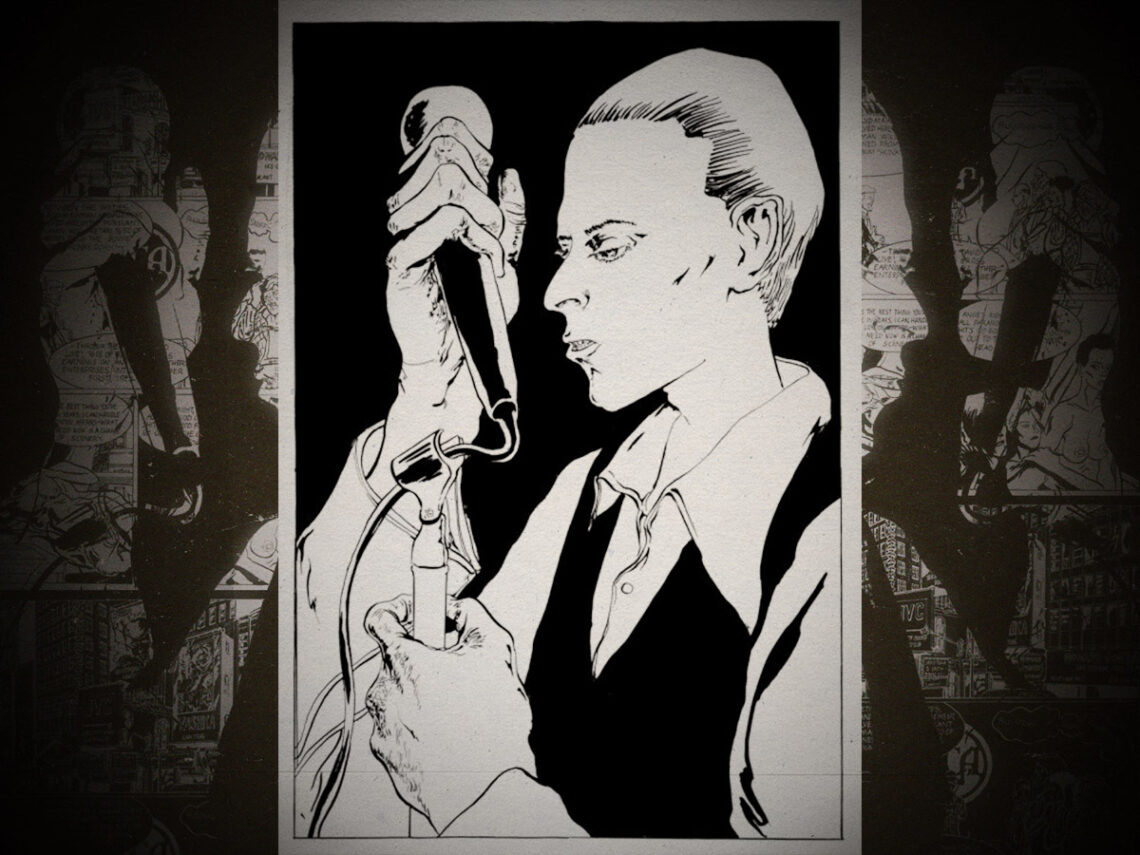
In August of 2010, writer Sean T Collins and artist Isaac Moylan posted ‘The Side Effects of the Cocaine’ on a Tumblr dedicated to a purpose.
It had as a subtitle, ‘David Bowie 01 April 1975-02 February 1976’, which puts us squarely in the Thin White Duke era, of course, covering Station to Station (the title of the comic comes the title track of that album), Nicolas Roeg’s The Man Who Fell to Earth, Bowie’s appearance on Soul Train, Bowie’s Playboy interview, conducted by Cameron Crowe, who also wrote ‘Ground Control to Davy Jones’, a profile on Bowie for Rolling Stone that appeared in February 1976.
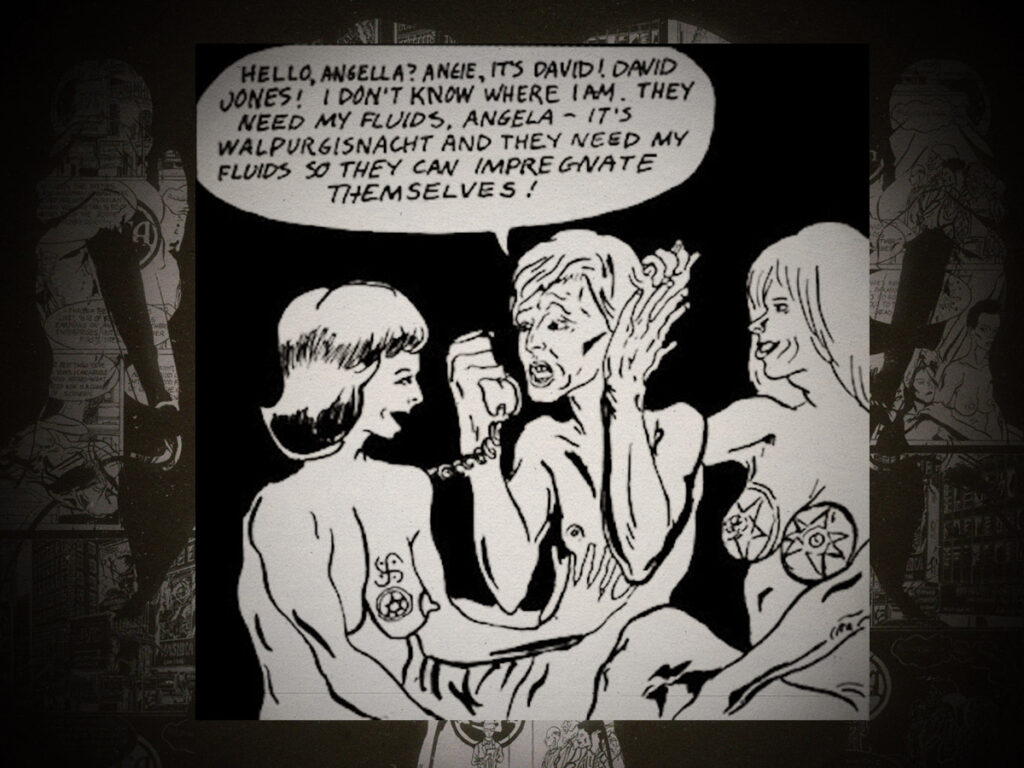
As Peter Bebergal wrote in his excellent book Season of the Witch: How the Occult Saved Rock and Roll, “When a nineteen-year-old Cameron Crowe visited David Bowie for a Rolling Stone magazine interview in 1975, he found a coked-out Bowie lighting black candles to protect himself from unseen supernatural forces outside his window” of his home in Hollywood.
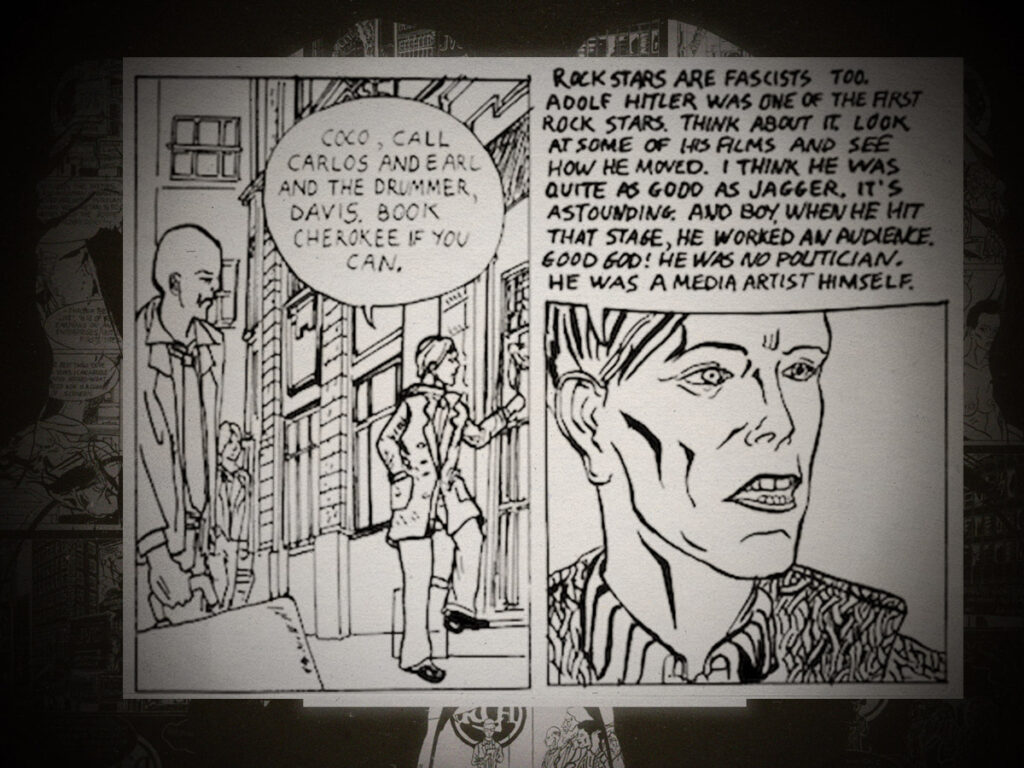
In that now infamous Playboy interview, Bowie made some comments about the appeal of fascism that would get him into trouble.
He said: “Television is the most successful fascist, needless to say. Rock stars are fascists, too. Adolf Hitler was one of the first rock stars. … Look at some of his films and see how he moved. I think he was quite as good as Jagger. It’s astounding. And, boy, when he hit that stage, he worked an audience. Good God! He was no politician. He was a media artist himself. He used politics and theatrics and created this thing that governed and controlled the show for those 12 years. The world will never see his like. He staged a country”.
Bowie’s diet during this period was famously red peppers, milk, and cocaine, with more than a soupçon of fame and paranoia.

Despite all the trappings, it remains one of Bowie’s best and most interesting periods—Station to Station is my ffavouriteBowie album—and in ‘The Side Effects of the Cocaine’, Collins and Moylan take a peek at the romantic/fucked-up mythos of that period.
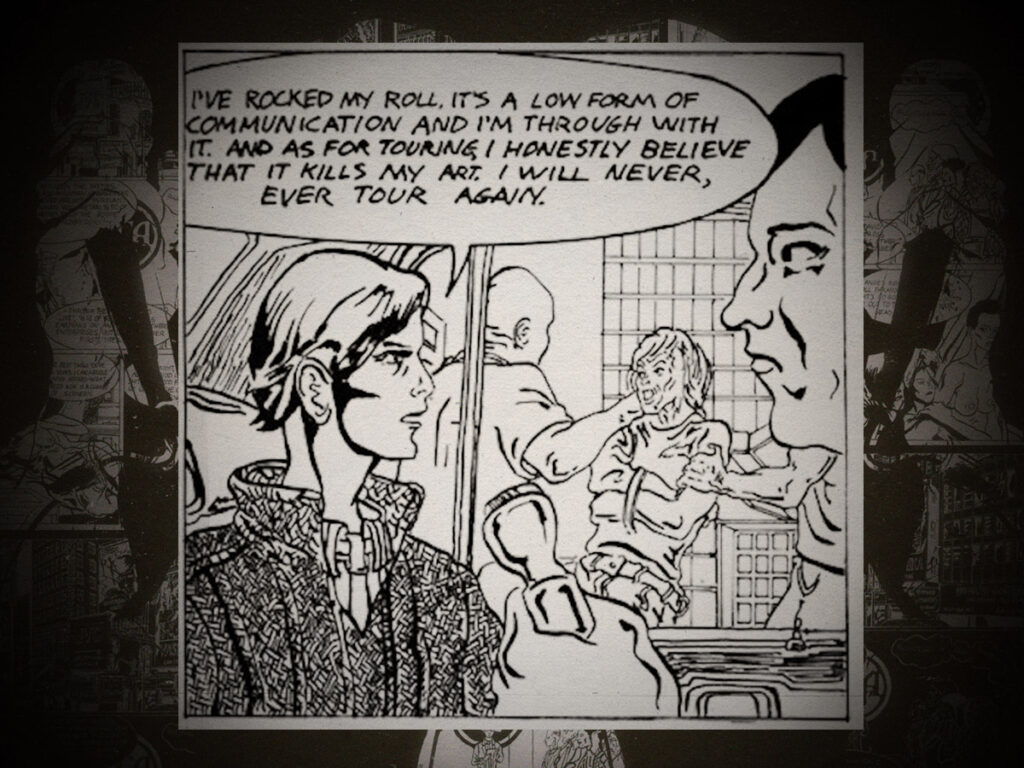
What is the significance of the dates April 1st,1975, and February 2nd, 1976? Well, April 1st, 19,75 was the date that Bowie severed ties with MainMan, Tony Defries’ management company, and it’s that scene that kicks us off in the comic. On February 2nd, 1976, was the start of his Isolar tour, in Vancouver, British Columbia, which ends the comic.
You can read an account of that show by Jeani Read under the title ‘Sinatra Having a Bad Dream’, which presumably ran in the Vancouver Sun the next day: “Bowie performances are-have been-legendary for being massively orchestrated orgies of visual and musical sensationalism. Which makes the current offering the biggest no-show of his career. And possibly the best. The thing was absolutely brilliant, maybe for its sheer audacity than anything else, but brilliant nonetheless”.
Dressed in a black 1940s-style vest and pants, a white French-cuff shirt, and the edge of a blue Gitanes cigarette pack sneaking out of his vest pocket. Posturing-a naked kind of elegance now, brittle and brave-in front of a bare essential band of guitars, keyboards, drums and bass, on a bare black stage in the bare glare of white-only stage and spots. Looking about as comfortable as Frank might fill in as lead singer for Led Zeppelin, and even within that, assuming total control over the proceedings. Bowie has always said that on stage, he felt like an actor playing the part of the rock star.
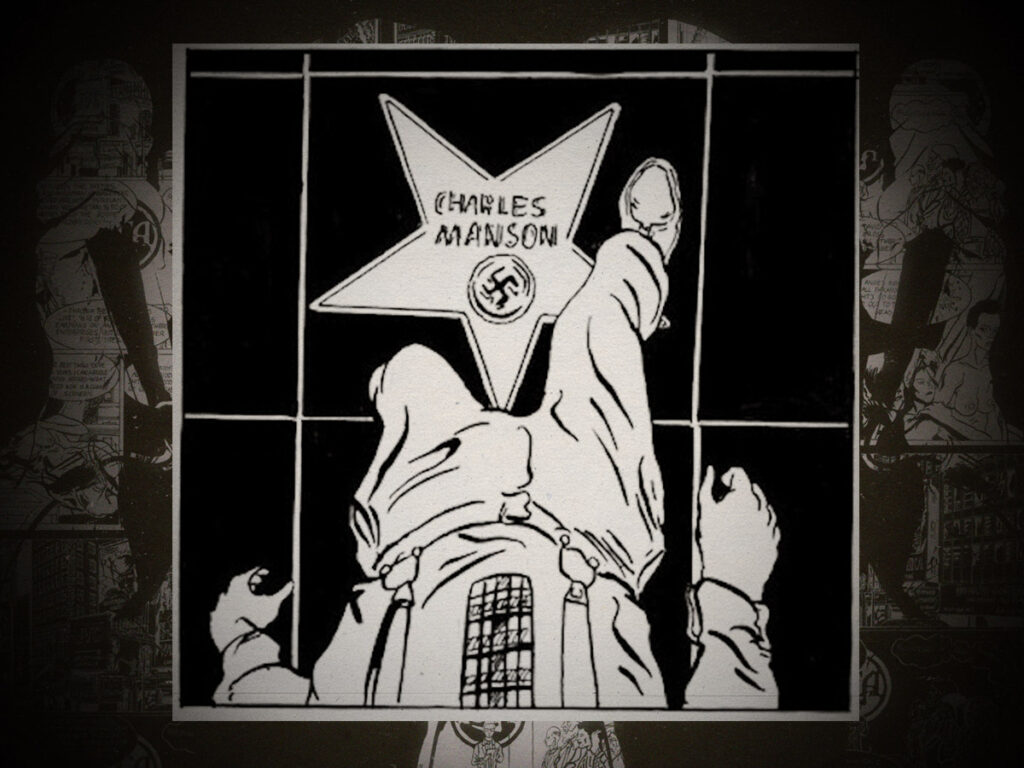
Collins and Moylan take a slice-of-life approach with Bowie’s life, with the proviso that his life wasn’t anything like a normal person’s at this time. Towards the end, some of the panels feature Bowie making utterances from his Playboy interview.
See ‘The Side Effects of the Cocaine’ below.