


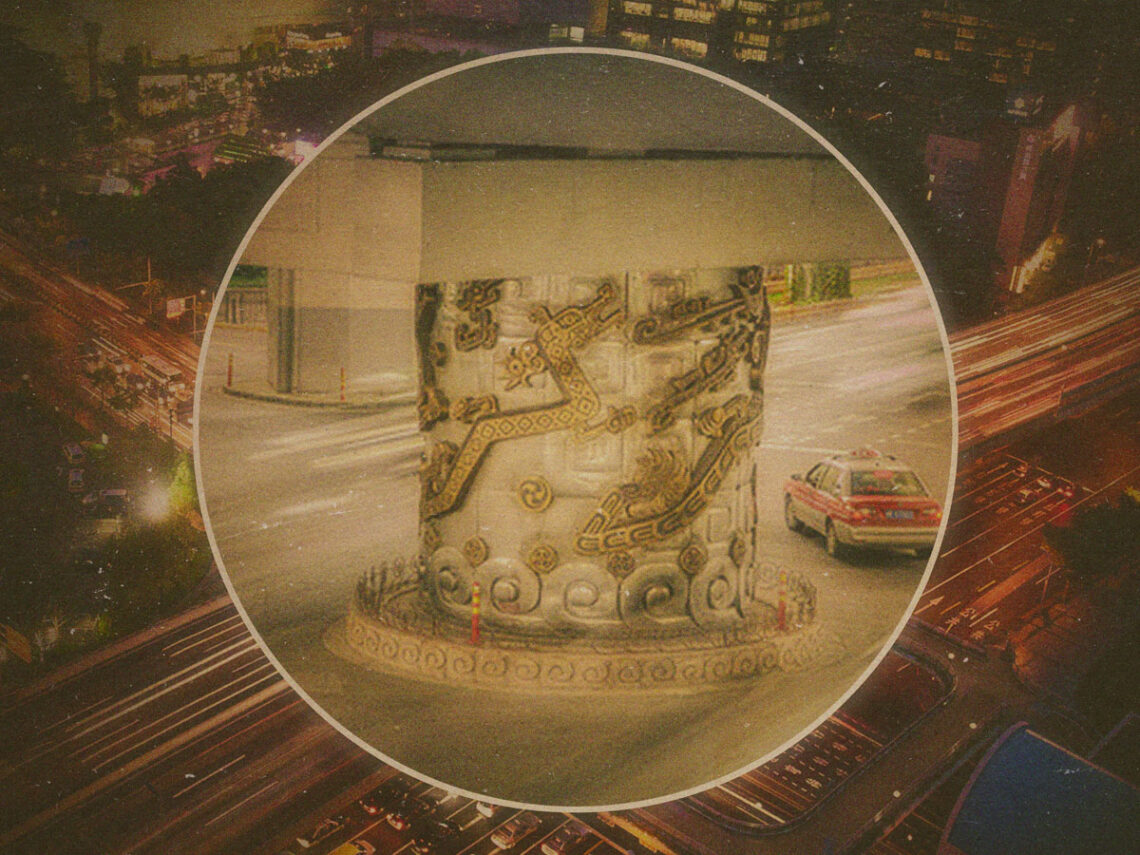
Legendary foundations: the Dragon Pillar of Shanghai
From London to Shanghai, citizens of cities like to go on about how unique their home is and how every one of them in the world has its own distinct flavour that nowhere else in the world can replicate. However, the truth is that once you get past the tourist spots, a lot of them look depressingly similar.
There are many reasons for this. The globalisation of brands is making sure that you can’t walk a block anywhere in the world without spotting a Starbucks. Governments are making pedestrian-friendly zones a rare occurrence, so everywhere is choked up with cars. However, there is a practical reason for this, which is infrastructure. Everything needs to be held up, and most places in the world use the same grey, concrete architecture for this.
This makes one expressway in Shanghai stand out above all others. For the most part, the Yan’an Elevated Road (or Yan’an Gaojia) could be any other inner-city expressway in the world. Just over nine miles of greyish concrete, street lamps and a road. That’s it. Some of it has some snazzy blue neon lighting that was featured in the James Bond picture Skyfall, but on the surface, that’s the only aesthetic treat you’re going to get. At least until you look a little closer.
The expressway is held up with a series of concrete pillars. You might miss that one of these is substantially thicker than the others. What you won’t miss is the fact that this particular pillar is decorated with a breathtaking design of nine bronze dragons snaking their way all the way up the pillar through multiple layers of roads. It would be enough for that to be a wonderful feat of urban design, but there’s more.
A (probably apocryphal) urban legend that makes this piece of engineering something very special indeed.
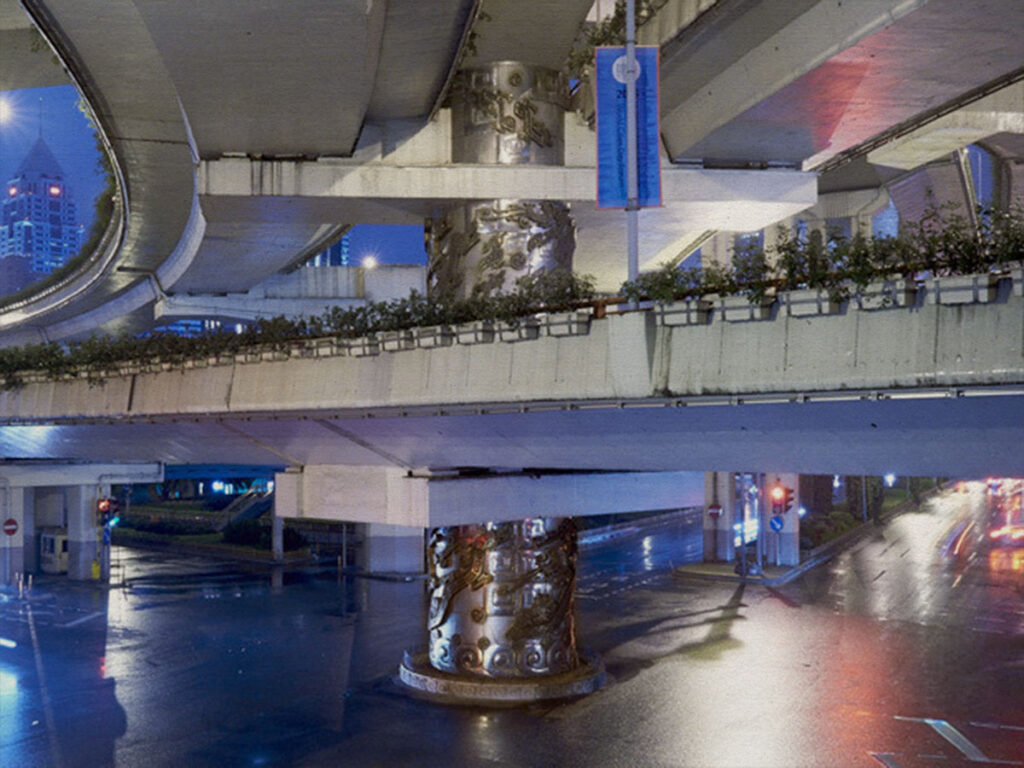
What’s the story behind the Dragon Pillar of Shanghai?
The story goes that in 1995, when the Elevated Road was being constructed, the workers building the road suddenly began having trouble drilling down in one specific location to make space for a support pillar.
None of their drills could penetrate the ground deep enough for what the project needed, and eventually, it led to a full-on halt in construction. Bad news for so many reasons, not least the ballooning budget of the project and its managers breathing down their necks.
The team brought in several construction experts to help, but none of them could work out why the surface there was so much tougher and why their drills couldn’t breach it. This was until, as a last resort, the team brought in a monk from the Longhua temple to bless the area. In his work, the monk said that they were trying to drill into the resting place of Shanghai’s guardian dragon, and that they could only continue if the resulting piece was a monument to said dragon.
The team agreed to build the pillar in his honour and, lo and behold, the team were suddenly able to drill in the area. When the pillar was completed, they did as the monk had told, decorating the pillar with nine bronze dragons as a tribute to their resting guardian. A lovely story, one that does explain why so much care would be put into this pillar over any of the others, yet the question remains: Is any of it true?
I mean, most likely not, but hey, if you can put some mystery and wonder into urban planning, why the hell shouldn’t you?