


First of 10,000 missing black holes found in deep space
The first of 10,000 missing black holes in the Omega Centauri globular cluster has been found in deep space, holding together a galaxy, scientists have reported.
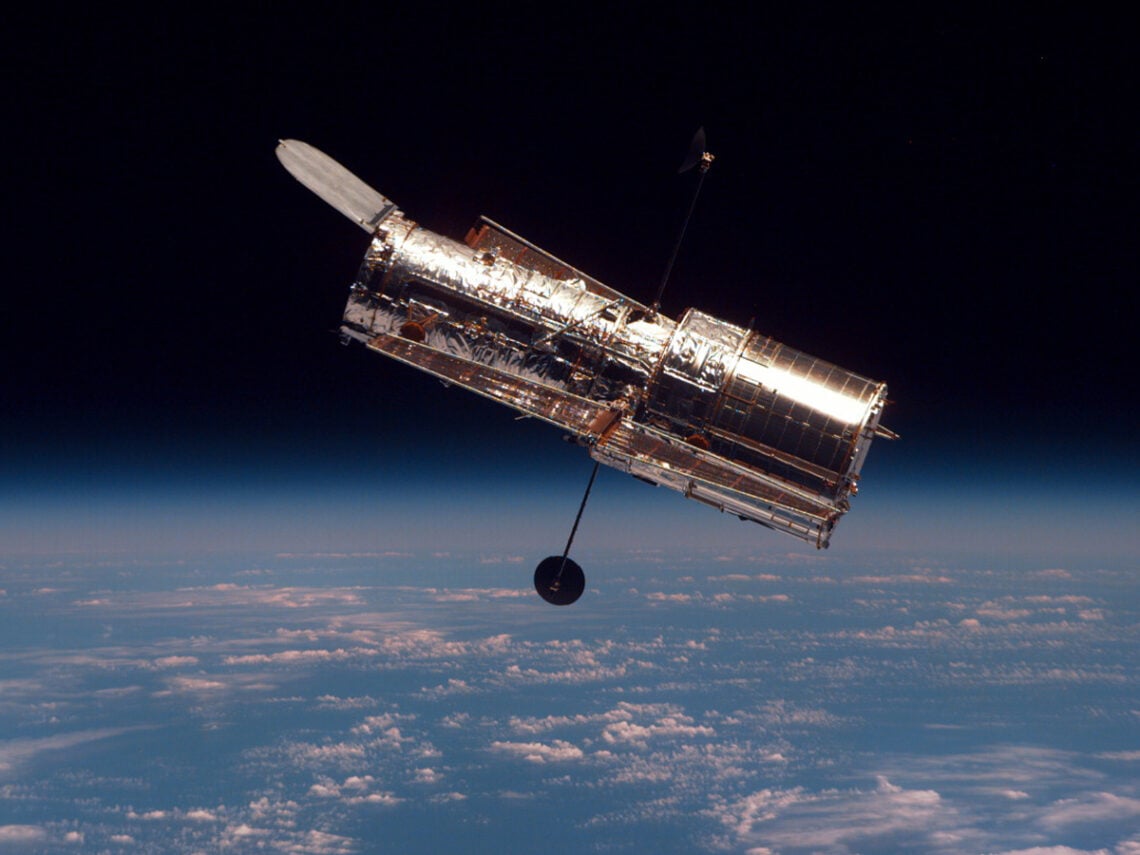
The breakthrough came after the astronomers studied images from NASA’s Hubble Space Telescope and lined them up with new observations from the James Webb Space Telescope, which is the largest and most powerful space observatory ever built.
When the astronomers combined over 20 years of records, they were able to identify a black hole in the huge, sprawling Omega Centauri star cluster for the very first time.
The exact location of the black hole was discovered after the astronomers noticed a star orbiting around something dark and dense.
The obstacle could not be seen. Therefore, despite previous studies that had suggested it was a neutron star, the new research concluded that this, in fact, was a black star.
This is an incredible feat, given that Omega Centauri is one of the largest globular clusters in the Milky Way. It contains approximately 10 million stars, which are held together by gravity.
Because of its size, scientists had predicted that the galaxy should contain thousands of stellar-mass black holes left behind by the explosions of stars, but previous research had drawn little evidence to support this theory.
The newly sighted black hole has been named oMEGACat BH-2, christening it as the first confirmed stellar-mass black hole found in Omega Centauri.
The space matter, alongside the star orbiting it, forms the longest-period black hole binary system known to date.
“With Hubble and Webb data, we were able to see the motion of the visible main-sequence star that is part of this binary, which is about 18,000 light-years away in the dense environment of Omega Centauri,” explained Matthew Whitaker of the University of Utah, who acts as lead author of the paper.
He continued excitedly, “The precision of these measurements is incredible, down to a fraction of a pixel on Hubble and Webb’s detectors. It would not have been possible to find this black hole without these two space telescopes.”