


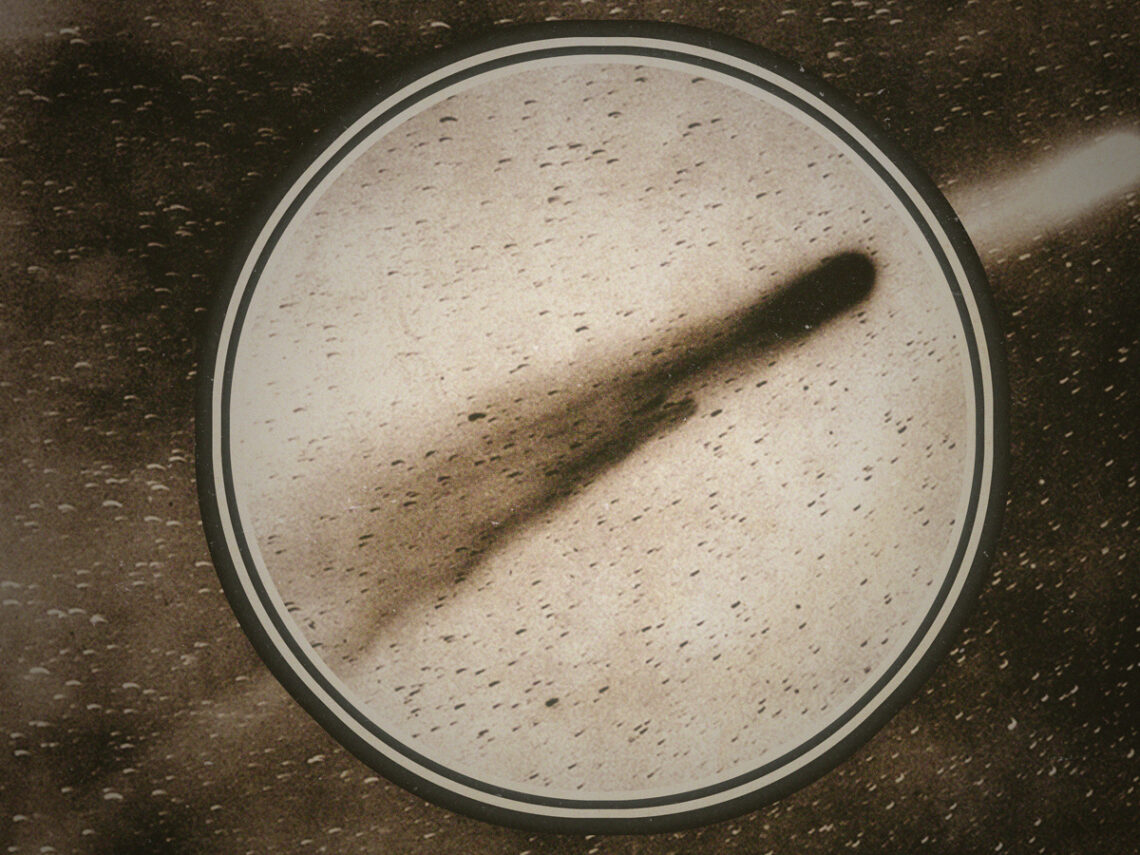
The Great Comet of 1910: the bizarre belief that Halley’s Comet would destroy the world
In Leo Tolstoy’s masterpiece War and Peace, the novel’s main character, Pierre Bezukhov, witnesses the Great Comet of 1811 on the most important night of his life – Tolstoy, through Pierre, muses that the comet was said to portend untold horrors and the end of the world, but it seems as though he was a century off, as people thought that Halley’s Comet was going to bring exactly that in 1910.
Which isn’t as hysterical as it sounds today. Historically, comets were bad omens to most people. It may seem strange today, when people organise entire months of their lives around witnessing these once-in-a-lifetime cosmic happenings. However, put yourself in the mindset of people who didn’t have the understanding of these events that we do. One night, you look up and see a boiling, burning ball of fire in the sky, hanging there sometimes for months at a time. One not bright enough to illuminate the world like our friendly sun, but still fierce enough to hang there, menacingly.
That, combined with the fact that great periods of destruction and death were fairly common in ancient times, meant that people began to associate these awe-inspiring and terrifying sights with bad omens. Before you go thinking this was the superstition of ill-informed people of yore, however, it’s always worth bearing in mind that people are exactly as superstitious and scared now as they’ve ever been. For proof of this, look no further than the furore of 1910.
By the turn of the 20th century, most people had a very vague conception of what a comet was. Mass media had been active for over a century in its own right, so people were far more scientifically informed than they were previously. One would assume this would mean that when it was announced that Halley’s Comet would return in 1910, people would be overjoyed. Not so much. This time, it wasn’t because of superstitions that it was a bad omen, though.
No, instead, a mass panic was created not despite people’s scientific knowledge, but because of it. The irony of all this was that this panic came from one of the most respected and beloved scientific minds of the era. Camille Flammarion was the Carl Sagan of his day, and when the return of Halley’s Comet was announced, the Parisian edition of the New York Herald commissioned him to write an article on the comet. Flammarion obliged, but what he delivered was quite a bit more alarming than anyone on the Herald’s editing staff was prepared for.
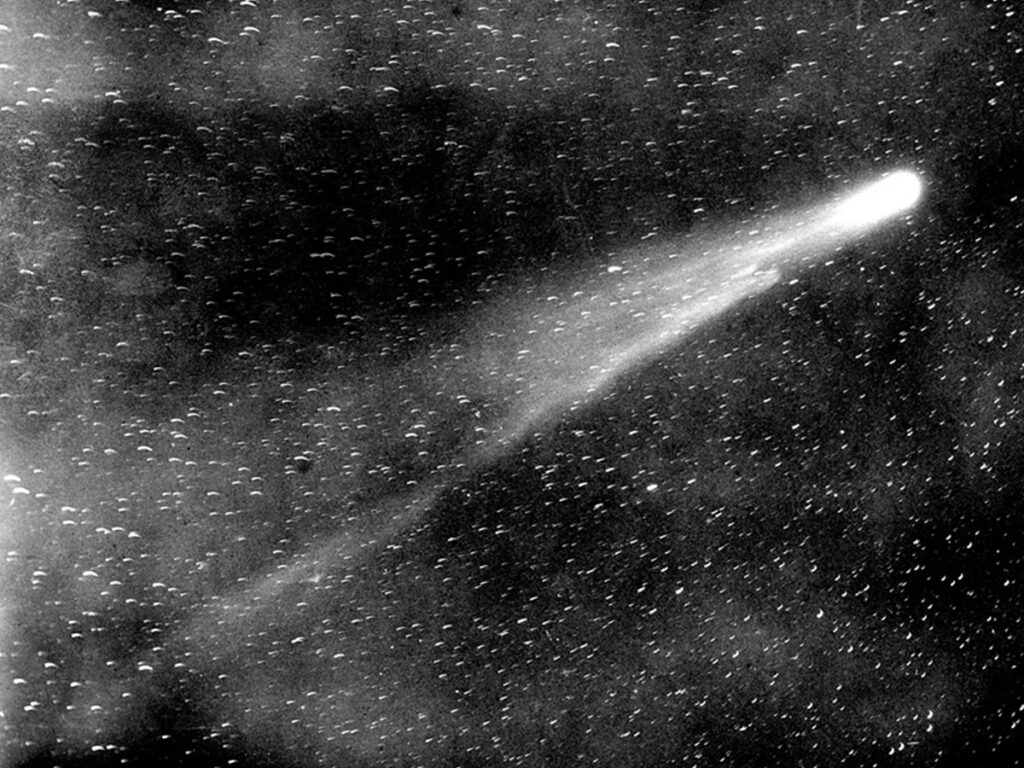
This panic wasn’t even caused by Flammarion saying that the Earth was about to be hit by Halley’s Comet, as he made it clear that the comet was going to fly harmlessly by… but the planet would drift through the comet’s tail – now, he says up front that the comet’s tail is lighter than a cloud and would dissipate harmlessly in our atmosphere… Then everything starts getting a little weird, flammarion starts saying that the hydrogen-rich tail could combine with the oxygen in our atmosphere and strip us of everything we need to breathe.
He doesn’t end there. He says that the comet’s tail also contains carbonic acid, and that in our desperation to breathe, we’re instead inhaling that acid, melting our lungs within our chests. Flammarion wasn’t alone in this either. Another French astronomer stated that the comet’s tail would bombard the Earth with x-rays (somehow) and condense all the water molecules in the atmosphere, leading to catastrophic floods that would wipe out all life on Earth.
The press took this and ran with it. It didn’t matter that this was baseless speculation that had absolutely no scientific value; it sounded real, and it sounded scary, and people freaked out. For the most part, this is shown by fairly amusing attempts to get in on the con, like a broker in Los Angeles selling “comet insurance” and a Washington DC chancer charging multiple people who were as scared as they were wealthy a dollar a week for updates on the comet situation.
It’s not all fun and games, though. There was a spike in the suicide rate of multiple countries that many attribute to the mass panic caused by spurious and irresponsible speculation on the comet’s tail. All these people knew full well that nothing of this sort would happen; they were speculating on the more lurid things that could happen for the sake of a good story. The public, only slightly better informed about space than they had been throughout history, heard a bunch of people smarter than them say some really scary shit and, as normal people do, only really listened to the scary part.
At the very least, it’s nice to know that at one point, people spread misinformation by mistake. Nowadays, it’s entirely on purpose. Maybe Hayley’s Comet was a bad omen after all.