


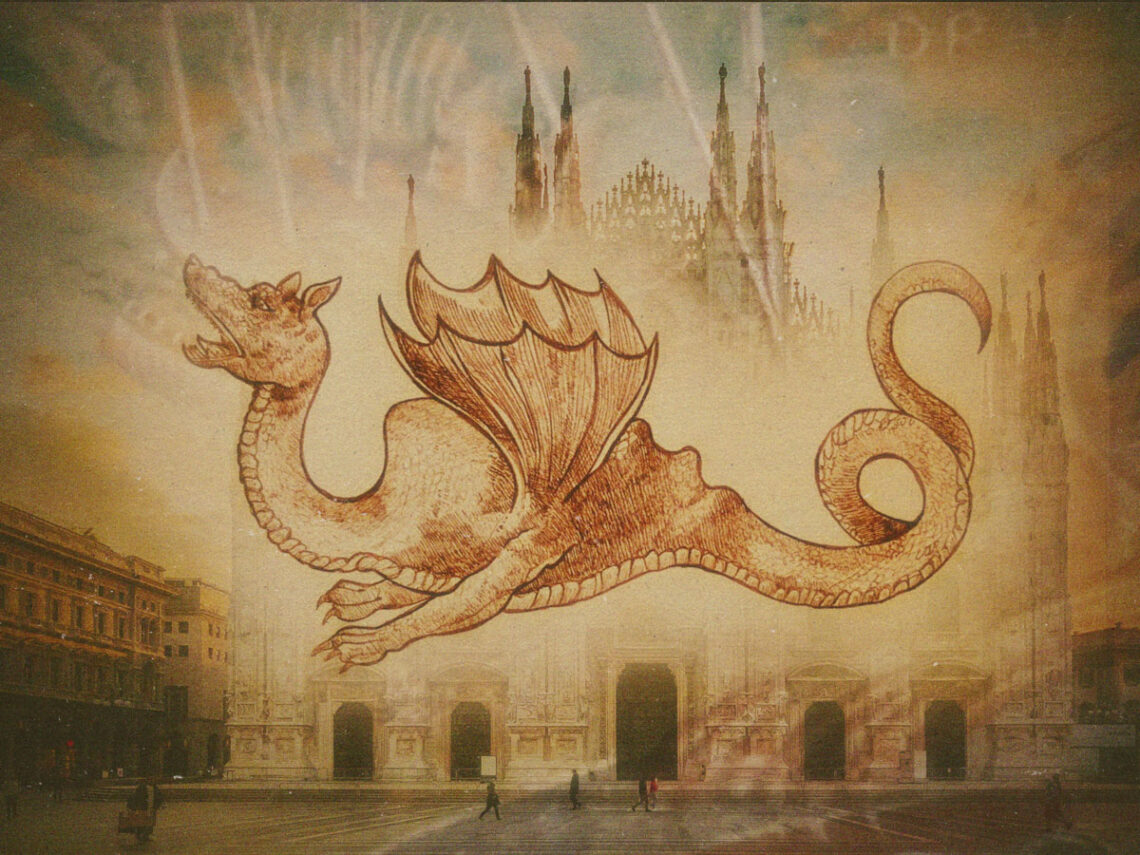
Tarantasio: the infamous dragon of Milan
Long ago in the darkest depths of history, there was a lake in Lombardy, Italy called Garundo Lake. One that lay in the Po Valley, almost directly between the provinces of Bergamo, Lodi, Cremona and most notably, Milan.
The Romans built drainage channels into it, initially for agricultural purposes, but by the 13th century, the lake was no longer there – considering this was a lake that stretched 50 by 25 kilometres, that’s quite an achievement.
However, in the history of Europe and especially in the history of Italy, the 13th century is fairly recent. There were centuries of history before that, and in that time, there was a specific legend associated with the lake. One that grew from a local myth to a symbol of Lombardy, Milan and Northern Italy as a whole. That legend was that the lake was guarded by a creature of enormous, terrifying power, a dragon by the name of Tarantasio.
According to legend, Tarantasio was the scourge of all the Po Valley, swooping into the settlements that tried to set up shop there and terrorising the poor people just trying to make a life for themselves. The lucky ones survived, but there were a few lucky souls who didn’t find themselves at the mercy of his razor-sharp teeth. Anyone would do, Tarantasio was far from picky, but he seemed to take a particular delight in children.
If you have images of the gallant, fire-breathing beasts of Game of Thrones or How to Train Your Dragon, Tarantosio was a far cry from them, he had more in common with an enormous, winged snake than he had with anything else, and rather than fire, he breathed a putrid, poisonous gas – one so potent that if his teeth didn’t get you, it would surely finish you off, nothing could stand against his wrath, and for centuries, no one could settle in the Po Valley.
That is, until an intrepid hero came along and slew the dragon like the heroes of old.
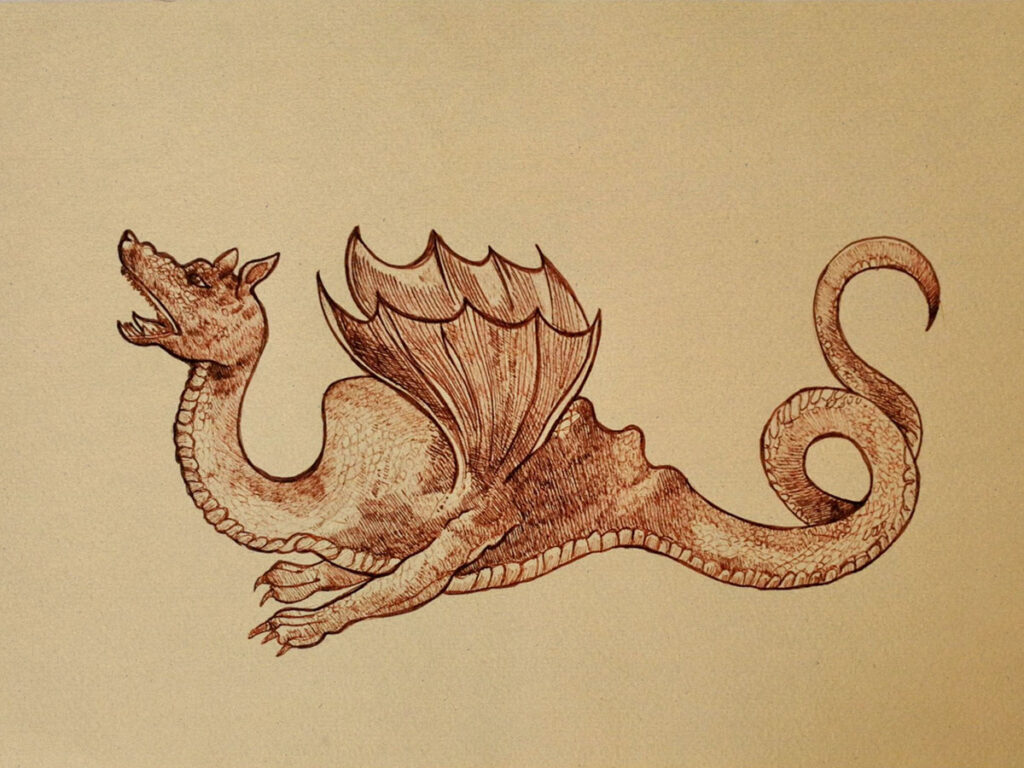
Who slew Tarantasio, the dragon of Milan?
Well, that’s just it, no one’s really worked out that side of the story. I mean, let’s be real here, the story hardly needs a fleshed-out hero to come storming in and save the day, Tarantasio is more than enough to satisfy any dyed-in-the-wool fan of mythological monsters. If anything, the presence of someone murdering the poor beast might just ruin it. Perhaps it makes it better to know that the pestilent fog was very much a real part of the Po Valley for centuries.
Yeah, in real life, the story of Tarantasio was probably spread to explain the fact that Garundo Lake was more like Garundo Swamp. A fetid, stagnant fen coated with a foul-smelling blanket of rotten air. Once it was cleared, that’s when the names who slew Tarantasio started popping out of the woodwork. Some said it was Saint Christopher, some say it was Federico Barbossa, the most commonly told version of the story tells of a real-life knight swanning in to save the day.
It’s true, none other than Uberto Visconti is credited with not only slaying Tarantasio but taking so much pride in ridding the valley of the beast that he added its likeness to the Visconti family crest – the Visconti went on to rule Milan for centuries, and the dragon that decorated their family crest became a symbol not only of the Viscontis but of Milan as a whole, so this folk tale, one made up to explain why a lake had gotten so rank, became the icon of one of the most famous cities in the world.
Or so it would seem. If you head down to the Church of San Bassiano in Pizzighettone, Italy, you will find a gigantic bone that the parishioners swear blind came straight from the corpse of Tarantasio. So, who knows? Perhaps the stories were true all along?