


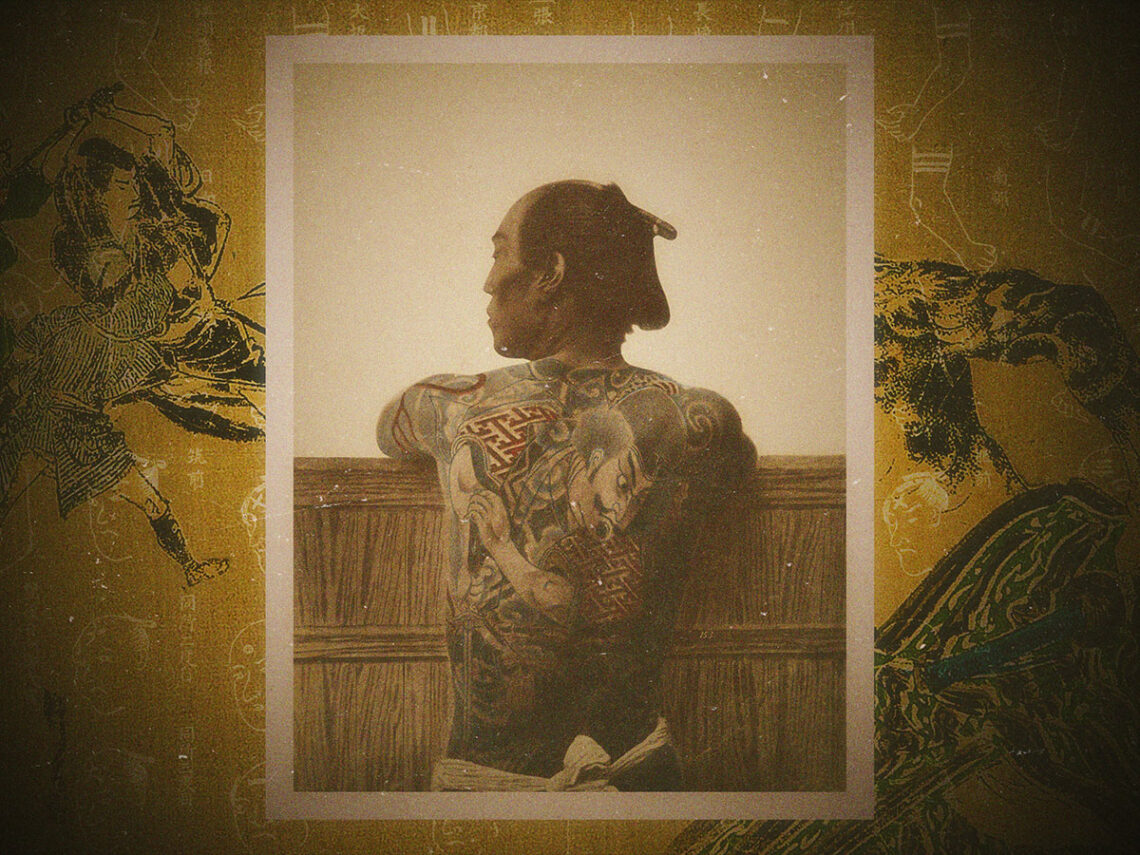
Irezumi: Is the tattoo culture of Japan really linked to the Yakuza?
It feels like recalling a bygone era of history when you talk about the social stigma of the humble tattoo.
Nowadays, school teachers can have entire sleeves with the one caveat being to possibly keep the gore-soaked skulls covered up unless your class is really, really misbehaving. It wasn’t so long ago, however, that the very presence of even the most innocuous ink would have struck you from that job in the interview stage.
The reason for this in my native England is, like all the worst parts of this country, inherently tied to colonialism. Colonists would kidnap tattooed people from countries they’d just invaded, transport them back to England and literally install them as sideshows. That, along with those sailors themselves often getting tattooed on their travels, made body art associated with the two worst things you can be in the eyes of British culture. Poor and not white.
However, that’s only one cultural opinion on them. Throw a dart at a world map, and you’ll find a country with a different take on them, but historically speaking, the only country with even more of a grudge against the ancient art form than my own is Japan. Any person who’s gone to Japan and found themselves unable to enter an establishment like a sauna or a leisure centre because of their tattoos has found this out the hard way.
Yet, the country has a storied, centuries-old history of body art in a way that England absolutely doesn’t. However, the reason for their culture’s hatred of the tradition has gone down in its own form of folklore. You see, whereas tattoos were looked down upon for their associations with other kinds of culture and, y’know, having a job, in Japan, it was associated with a very specific profession. One of the oldest professions you could possibly have.
Over there, so the story goes, tattoos mean you’re part of the Yakuza, the infamous Japanese equivalent of the Mafia. However, is that really the case?
Is the tattoo still associated with the Yakuza in Japan?
This is an association that goes back centuries. Tattoos were a common form of corporal punishment in the 17th Century – thus, they really were a sign of criminality at the time. However, all this meant practically was that people with tattoos were shunned from ordinary society. They found that the only people who’d accept them, or more plainly, work with them, were other criminals. Turns out, when you get a bunch of hardened criminals together and give them a reason to resent the system, they’ll work against it.
Thus, tattooing isn’t just a sign of their allegiance to the crime gang, but is intertwined in the organisation’s very formation. From then on, tattooing became a way of displaying one’s allegiance for those in the know. It was rare that they would be displayed on the hands or face the way that the punishment tattoos were applied centuries ago, but everywhere else on a gang member’s body was fair game. Even a new arrival to their specific gang would be covered in a tailored (no doubt agonisingly painful) work of art that tied them to each other for life. Or else.
The restrictions placed upon people with tattoos have gotten slightly more lax in modern times, but only due to the influence of Western culture on that of Japan. There are still conservative voices who really will die on the hill that tattoos are a sign of cultural decay, and as recently as 2012, then-mayor of Osaka Tōru Hashimoto threatened to fire any government employee with them. Slowly but surely, though, this is an attitude that’s dying out.
Considering the whole reason the Yakuza became such a fearsome force was due to Japanese culture shunning criminals, perhaps those softening attitudes will, ironically enough, have a damaging effect on them too.