


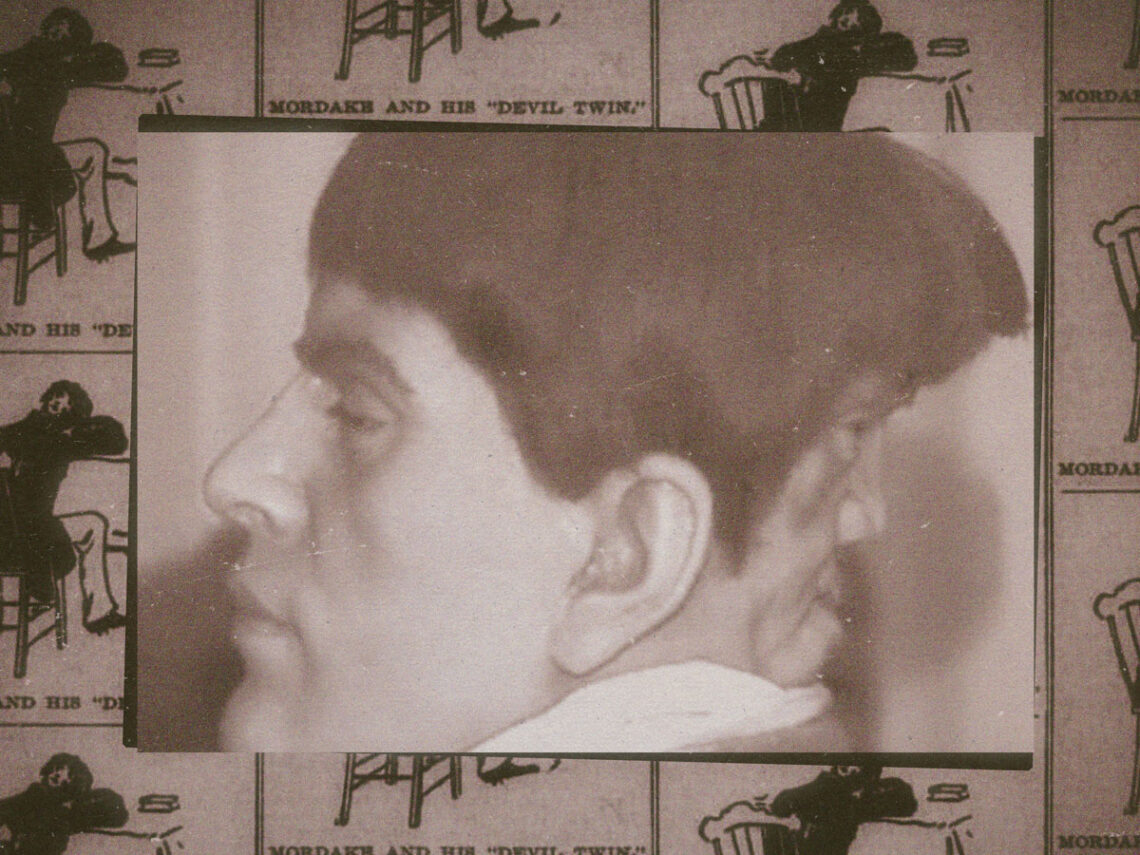
A demon on the back of your head: The true story of Edward Mordrake
If you’ve had any interest in the macabre or the grim side of science, it’s a photo of a man’s head that is indelibly burned into your memory.
That of a handsome young man with two faces. One normal face and another seemingly plastered to the back of his head. A mishapen, slightly deformed-looking extra face that cuts into where the poor lad’s brain is supposed to be. This is Edward Mordrake, and the story only gets more distressing from there. As reported in the December 8th, 1865 edition of the Boston Sunday Post, Mordrake (or Mordake as he was originally reported as), the face had a “malignant” kind of personality.
The face on the back of his head couldn’t talk, but it could sneer, leer and laugh quietly whenever Mordrake cried. As a sensitive, articulate and intelligent young man possessed of a truly unique musical talent, that seemed to be quite a lot. It gets worse.
While no one else could hear the voice of this second face on the back of his head, Mordrake could. He would be kept up at night hearing the cursed whisperings of his unwanted companion, so much so that he would take his life at the tender age of 23.
A horrific story. One that to this day gets talked about as if it’s true. It’s the kind of thing you see shared on social media, and it’s a testament to the power of its story that people are still affected by it. So much, in fact, that they think it’s real.
The truth is that if you think fake news is anything new, then newspapers of the late 1800s have a beach house in Leicester to sell you, because they would put any old shit in the papers if it meant shifting copies. Or do you really think anyone thought there were winged beasts living on the moon back then?
No, the story from the Boston Sunday Post was based on interviews with scientists from “the Royal Scientific Society” (that doesn’t exist) – more importantly, the author of that story, Charles Lotin Hildreth, was a science fiction author and a poet… He was literally just spewing some spooky-sounding nonsense about an evil second face on the back of someone’s head that wouldn’t sound out of place in The Island of Doctor Moreau.
Despite this, the story of Mordrake was taken and published in a separate book called Anomalies and Curiosities of Medicine. This gave his story an authority that other freaky stories of the time just didn’t have. Combine that with several convincing waxwork models of the character (yes, the photos you’ve seen are all of waxwork models), and you get a pretty interesting look at the power of misinformation.
A jobbing sci-fi writer got the chance to put some of his notebook entries into a lesser-spotted Boston newspaper, and over a century later, people still think it’s a true story. One wonders what piece of fake news from today people will swear blind is true a hundred years from now?