


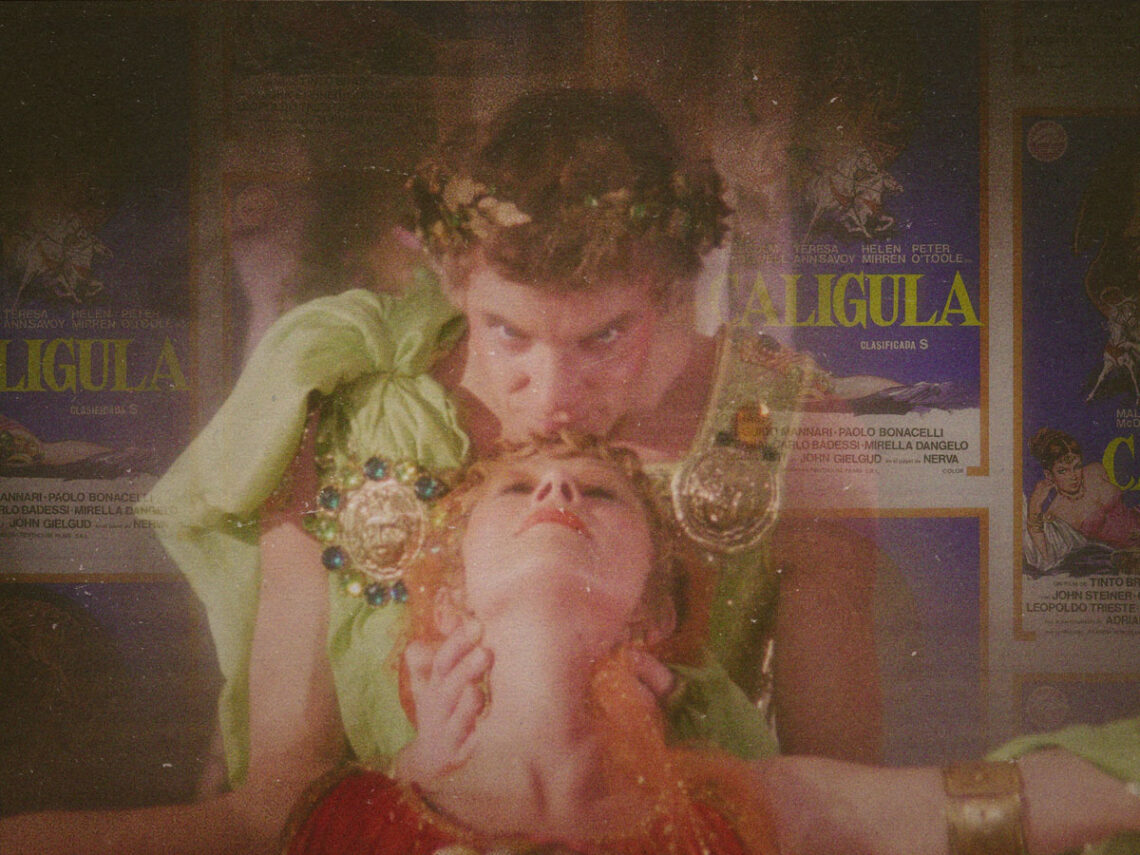
‘Caligula’: How a porn baron turned a 1979 prestige film into a joke
There’s a strange belief held by incredibly rich people that if they can make money in a very specific line of work, this makes them qualified to basically do anything. The one industry that has seen strange phenomena happen more than any other is the movies.
It turns out that making films is its own very specific line of work that you also need to put your 10,000 hours into before you’re any good at it. Fortunately, the majority of the time when people from outside the film industry try to disrupt Hollywood, it doesn’t work. After all, film-making is impossibly hard, costs a fortune and rarely returns your investment.
Of course, people are interested in the film industry due to the potential financial rewards, forgetting that you’ll get paid a whole lot better as an investment banker for a lot less work, though. Typically, people work in film production because they’re genuinely passionate about the medium. Which a lot of people think they are, get involved in movie production, then reassess. People like Penthouse magazine founder Bob Guccione. His softcore porn mag turned his publishing house into an empire in the 1970s, and at the height of his success, he turned his supposed magic touch to the world of cinema.
Bafflingly enough, his work actually started out pretty well. He contributed so much to Roman Polanski’s Chinatown that the end credits call it a “Paramount-Penthouse Presentation”. He also helped fund the production of The Day of the Locust, and really, that’s where his involvement in films should have begun and ended. He should have been a money tap that actually talented people turn to fund their visions. Alas, that wasn’t enough for Guccione.
Like so many jumped-up moneymen before him, he saw himself as an artist.
How did he get involved in Caligula?
In 1976, Guccione decided that he wanted to get his own film made. With $17million of his own money, he tapped up screenwriter Gore Vidal and director Tinto Brass to make a biopic about the Roman emperor Caligula. Guccione’s vision was for Caligula to be half a prestige historical drama about the politics of ancient Rome, and half a sleazy, shocking exploitation picture with gory assassinations, suicide, incest, and all the sex a red-blooded American audience could possibly want.
However, Vidal and Brass then went and did what artists do, which is take the ramblings of money-obsessed suits and make something actually good. After seeing the original rushes of what Vidal and Brass had produced, Guccione was disgusted. He found it boring, overly focused on homosexuality (in ancient Rome?! Well, I never) and, fittingly for a man who made his fortune as the founder of a smut mag, it had nowhere near enough sex for his liking.
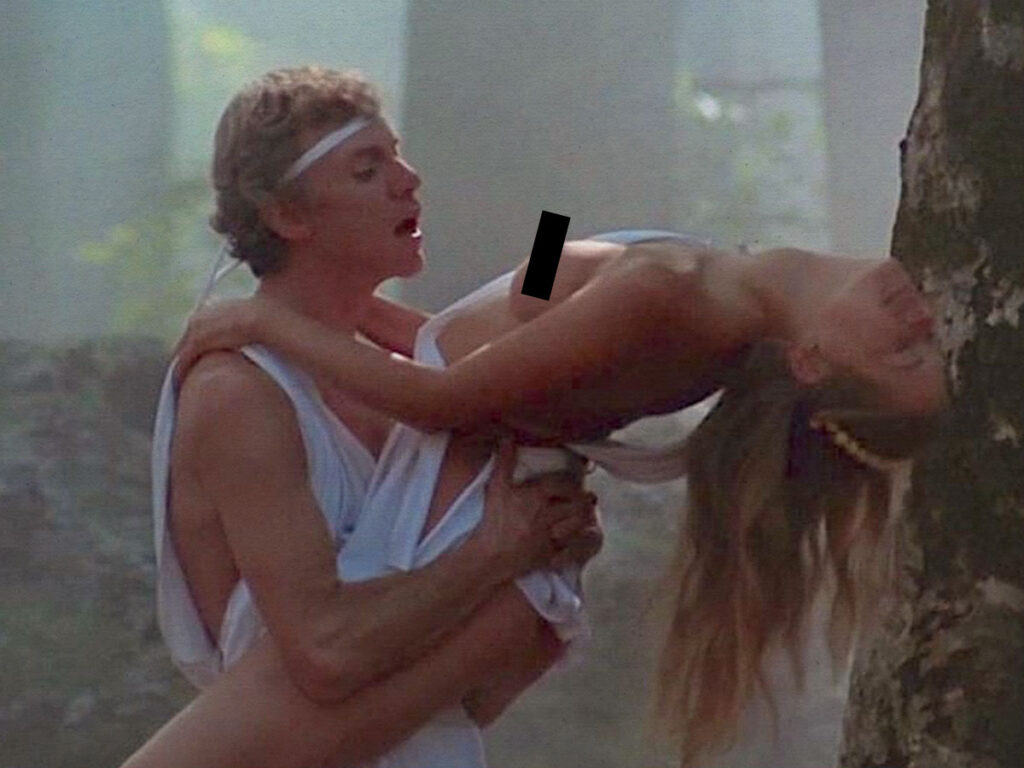
Thus, he fired Brass and oversaw extensive reshoots that added in a truly hilarious amount of hardcore sex. This made what was otherwise a thoughtful, grim drama about ancient Rome into a film made by the founder of Penthouse. This gave it a truly ludicrous two-and-a-half-hour running time, added another couple of million to the already bloated budget, then, when the film actually came out, everyone hated it from the cast downwards.
The two stars, Malcolm McDowell and Helen Mirren, felt like they’d done some of their best work on the picture and from time to time, their great work was visible. Then, almost immediately, it was smothered under another gratuitous, exploitative sex scene featuring a model picked from its producer’s porn magazine. Brass and Vidal disavowed the film entirely, the former refusing to be credited as the picture’s director, instead demanding that he be credited as merely the person responsible for its principal photography.
What’s more, all the sex scenes had been added to spice the film up and make some more money, and the movie ended up being a colossal flop. Yet still, it might actually be fair to call Caligula one of the great lost movies ever. Vidal’s original script is out there, and it’s masterful, from all reports. He was one of the leading lights of the Italian film industry, and clearly a talented guy. Between them and having a literal Helen Mirren leading the picture, there was a great film desperate to be made.
The problem was that money can make men like Guccione convinced of their own genius. That just because they can sell magazines of naked women to men at a time before the internet, they’re some kind of marketing savant that knows exactly what the world wants to see. The really depressing part is that the failure of Caligula probably did nothing to convince him otherwise. After all, the ego of the rich never truly goes away, does it?