


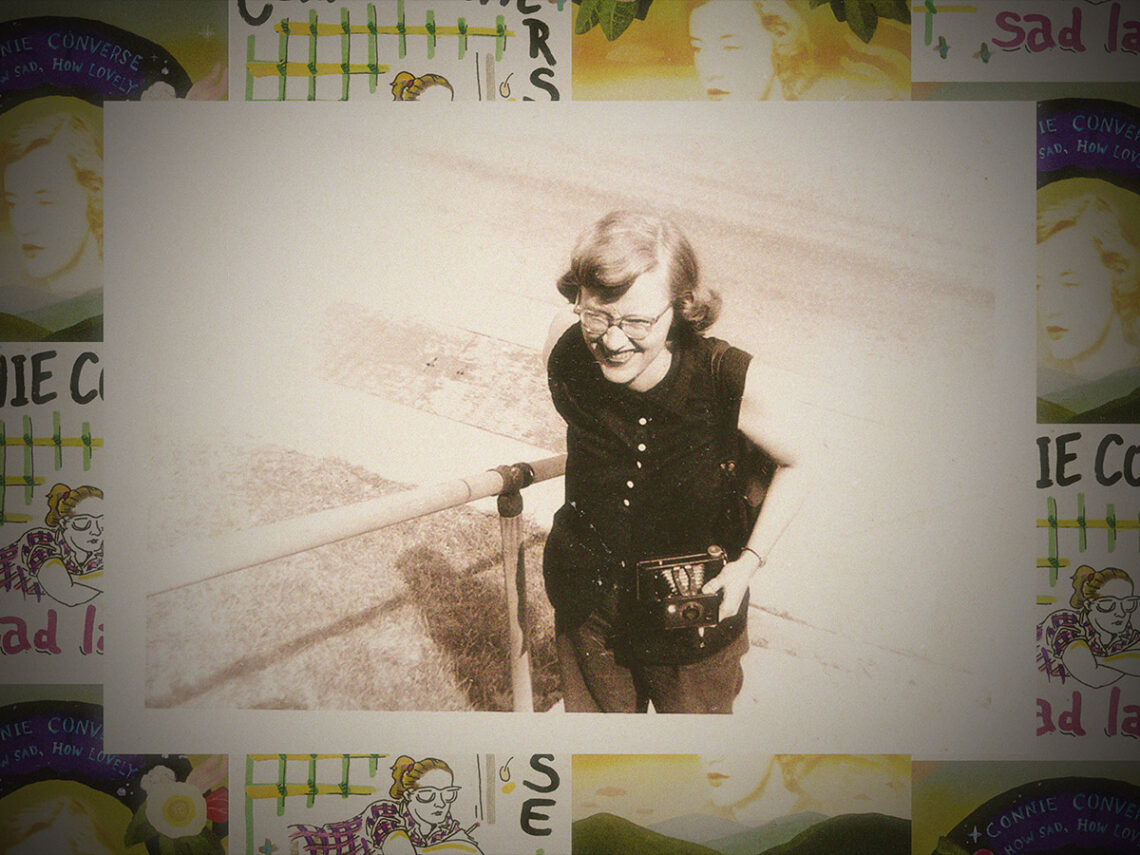
Connie Converse: The mysterious disappearance of a folk icon
Unless you lived through it, it’s difficult to understand the scale of how cool folk music was throughout the 1950s and ’60s.
The leading lights of that movement, like Bob Dylan and Paul Simon, have ascended into legendary status, no matter how much the infamously cantankerous Dylan would despise that fact. On the other hand, there are plenty of also-rans, like Dave Van Ronk, who are better known for torpedoing their careers with drink and bad behaviour than they are for any of their actual songs.
Then you get Connie Converse. Smart, literate and confessional folk music sang by a genuine musician’s musician, who wrote frank and funny peans to the scant joys and many more hardships of modern-day womanhood. Both the kind that come straight from the patriarchy and from things she considered her own personal failures.
If you deemed Joan Baez too holier-than-thou and had issues with Dylan’s lack of vocal skills, then Connie Converse represented a happy medium between the two. Lyrics like, “Don’t see why they always do it / Can’t be vanity; must be sheer humanity / When some kind soul remarks with great urbanity / Lady let me take you home,” carry the kind of self-deprecating eye roll that any 2020s singer-songwriter would kill for, and if you’re wondering why she wasn’t a bigger deal, there’s a reason for that.
Sadly, the title of that song, ‘Roving Woman’, would turn out to be depressingly prescient.
What happened to Connie Converse?
Born Elizabeth Converse in 1924, everything about her upbringing pointed to her achieving great things. The middle child of a strict Baptist family, Converse was the valedictorian of her high school and graduated with an academic scholarship to Mount Holyoke College in Massachusetts. A degree she dropped out of to follow the well-trodden path of moving to New York City, and disappointing her parents.
She took up smoking and drinking while she was in New York, but also began making music. Converse probably would have found some serious success if she hadn’t found the act of selling and promoting her music repulsive. After spending the ’50s making records, she gave up music for a career in activism in the ’60s, taking a job as the editor of the Journal of Conflict Resolution for a decade until it was auctioned off without her knowledge.
By this time, she was a depressed and barely functioning alcoholic. Burnt out from the stress of her career and the pressure put on her by her family. Days after her 50th birthday in 1974, her family and friends received a letter where she stated that she was grateful for all that they’d done for her, but she needed to move on from them. Then, she packed up her belongings, and hasn’t been seen since.
Fans of her music brought her music back into the public consciousness in the early 2000s, but one can imagine that, were she alive to see it, that’s nothing that she would have wanted.
Still, her legacy is very much alive to this day. Whether she would have wanted that or not, she deserves all the flowers she can possibly get for it.