


Dixie Lee Carney: the punk scenester tragically murdered by her boyfriend
It’s a sad state of affairs when a young woman is murdered by her partner, and the best the media of the time could do was label her a “groupie”.
That was how most people heard of the tragic story of Dixie Lee Carney, a New York native who’d upped sticks to California and fallen in with the thriving punk rock scene of the time.
Now, something you’ve got to understand about punk at the time is that it didn’t have the reputation it has now. Punk today is something that BBC 6Music dads are into. Turnstile sell out arenas these days, and Knocked Loose isn’t far behind them. Punk’s a bit of harmless, silly fun to work out your issues to. This is a very, very recent development.
When people talk about how “dangerous” punk felt at the peak of its notoriety, they’re usually talking about the glamorous side of that statement. Of how cool it was to pin your colours to the mast of something radically counterculture, that your parents definitely didn’t approve of. The other side of this was that people genuinely thought punks weren’t just going to kill them, but radicalise their kids into doing the same to others.
If you want a good example of just how petrified people were, don’t think about the way people talk about punk rock nowadays. It’s more like the way people talked about Drill music a couple of years back. As if the very music itself was an infection that would corrupt the minds of anyone who heard it. That the music itself was responsible for the actions some of its creators were responsible for. That was the way that punk was treated in the 1980s, like a genuine threat to the fabric of society.
Thus, the media leapt on stories like that of Dixie Lee Carney to prove it.
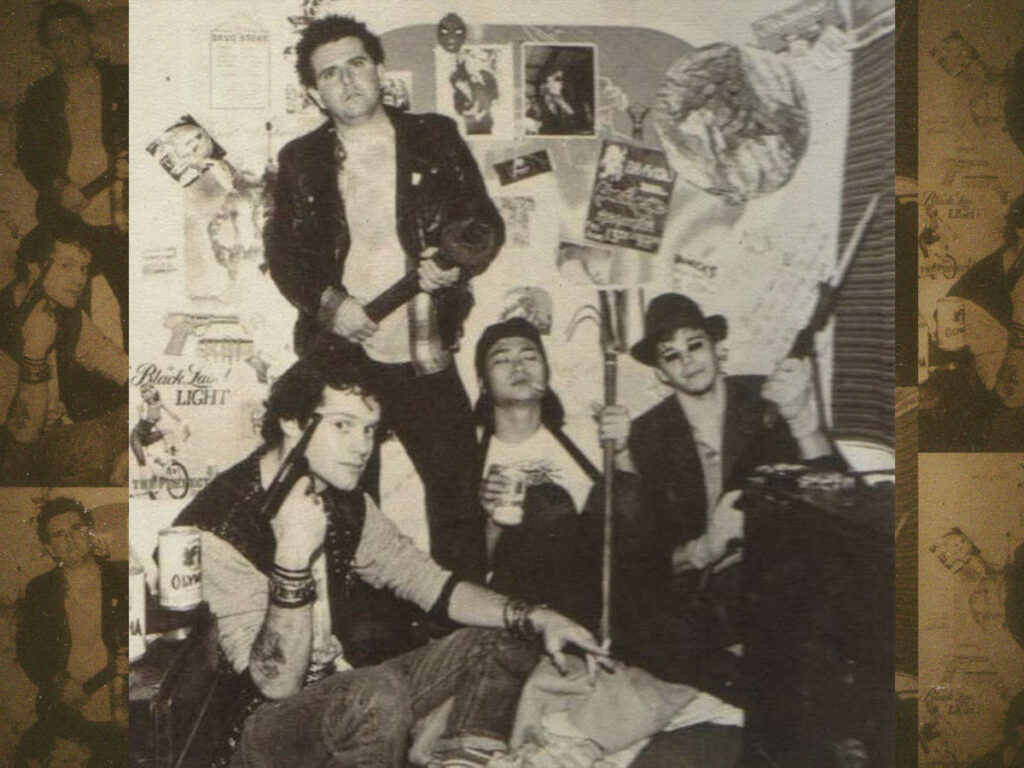
So, what happened to Dixie Lee Carney?
After a few years hanging around the punk scene, Carney fell into the orbit of the celebrated Berkeley hardcore band Fang, starting a relationship with the band’s lead singer, Sam ‘Sammytown’ McBride.
The relationship was a tortured one from the start as McBride was hopelessly addicted to alcohol and drugs, heroin in particular. Most of the time, an addiction that deep would make McBride a danger to himself most of all, but not in this case.
Unbeknownst to all but those closest to the band, McBride dealt acid to stay afloat while not working with the band. One night in 1989, in a drug-fuelled rage, he became convinced that Carney was working with a rival dealer to steal his business. While out of his mind on heroin, McBride strangled Carney to death. She was 24 years old. When McBride came to his senses and found out what he’d done, he went on the run for six months before being finally captured.
McBride confessed while in custody and was eventually charged with voluntary manslaughter, serving a mere six years of an 11-year prison sentence before being released for good behaviour. Not much more is known about the life of Dixie Lee Carney before meeting McBride, though. After all, she was a mere “groupie” to most when the story broke, rather than an actual human being.
A casualty to push through a culture war narrative and not someone with a family who loved her who didn’t deserve to die at the hands of a drugged-up maniac.