


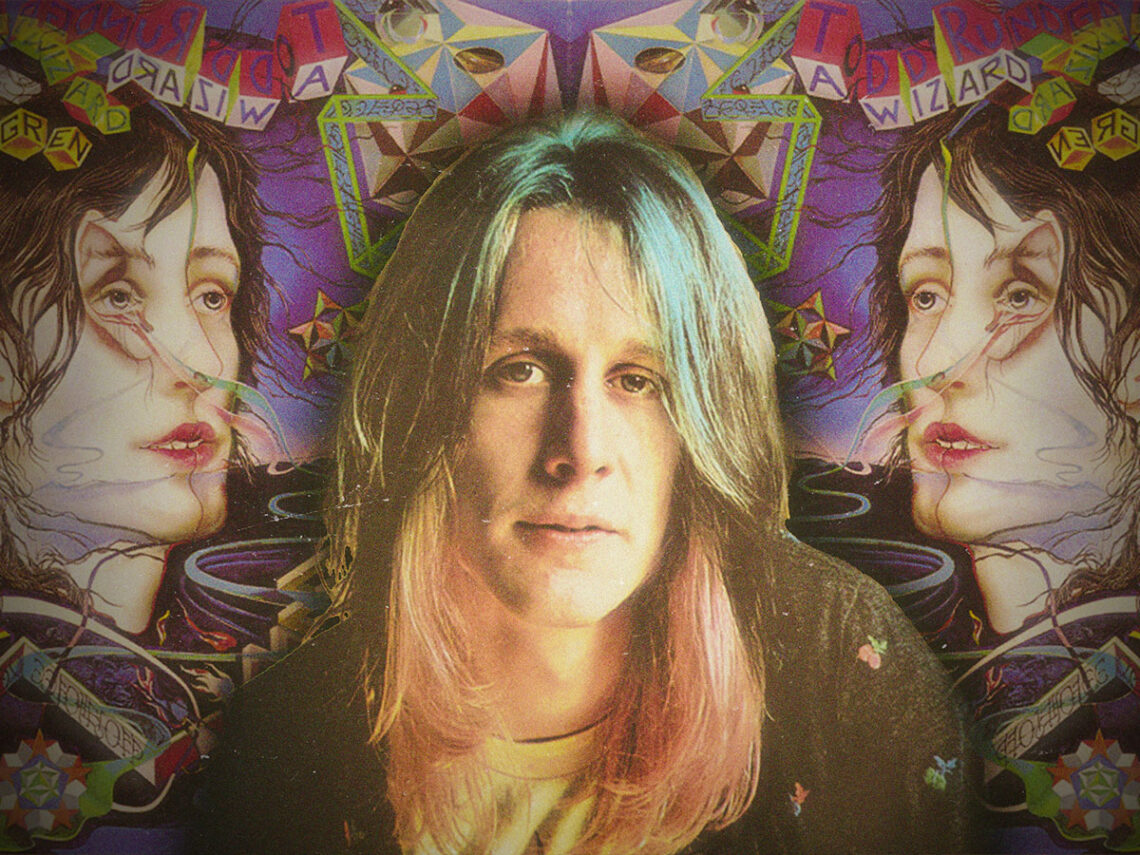
‘A Wizard, A True Star’: Todd Rundgren’s tragically overlooked masterpiece
When I was a kid first discovering music, Todd Rundgren was one of the very first artists I stumbled across.
‘Hello It’s Me’ seemed to come drifting out of my mother’s kitchen radio at least once a day, and because FM radio in the 1970s still had enough freedom to play album tracks that weren’t obvious singles, I was also hearing stranger, more adventurous Rundgren songs without really knowing where they came from.
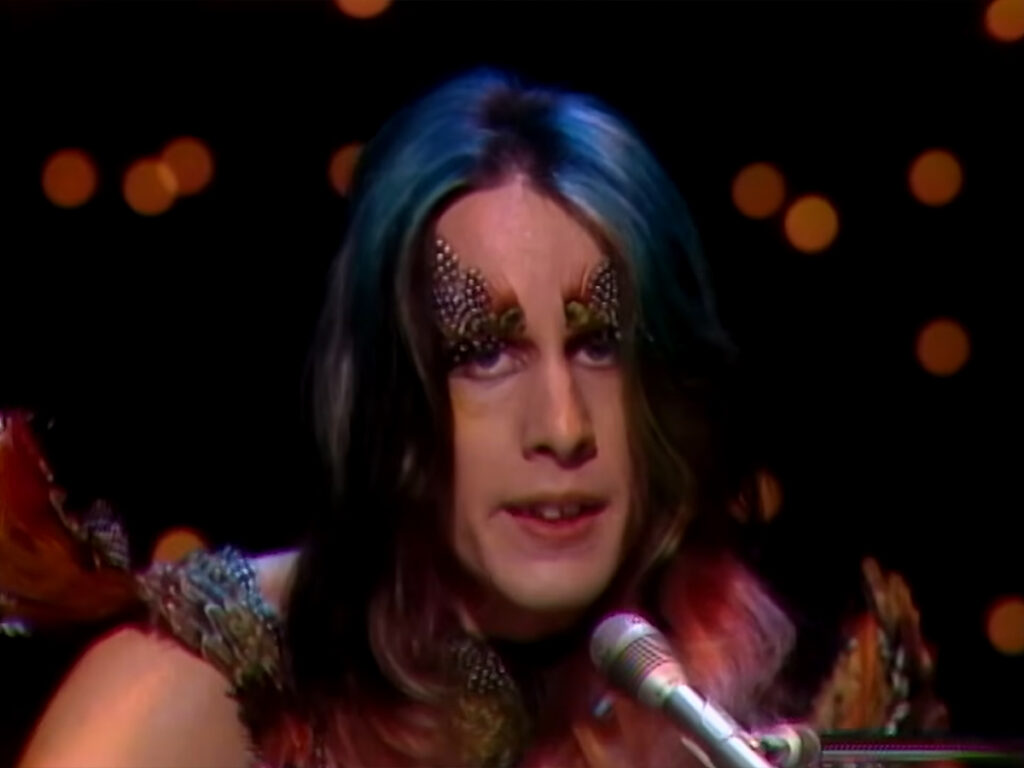
I remember seeing him on one of the earliest episodes of The Midnight Special I was allowed to stay up and watch, and even then, he struck me as somebody operating on a different wavelength. He played all the instruments himself, produced records for other people, looked like a rock star but talked like the smartest kid in the class, and always seemed to be photographed with impossibly glamorous women. To an impressionable kid, he seemed to possess a kind of musical superpower.
When my parents finally bought me a cheap stereo for Christmas, Todd Rundgren records were among the very first albums I purchased. Something/Anything? and Todd were both sprawling double albums that sold for the same price as a single LP, which made them an especially attractive proposition when your record-buying budget consisted mainly of whatever had accumulated in your piggy bank. I loved those records, although my Todd obsession never quite reached the fever pitch of my David Bowie fixation or my devotion to Sweet. Once punk, post-punk and new wave arrived, Rundgren quietly drifted into the background of my musical life.
Oddly enough, the one classic Todd Rundgren album I never owned was A Wizard, A True Star.
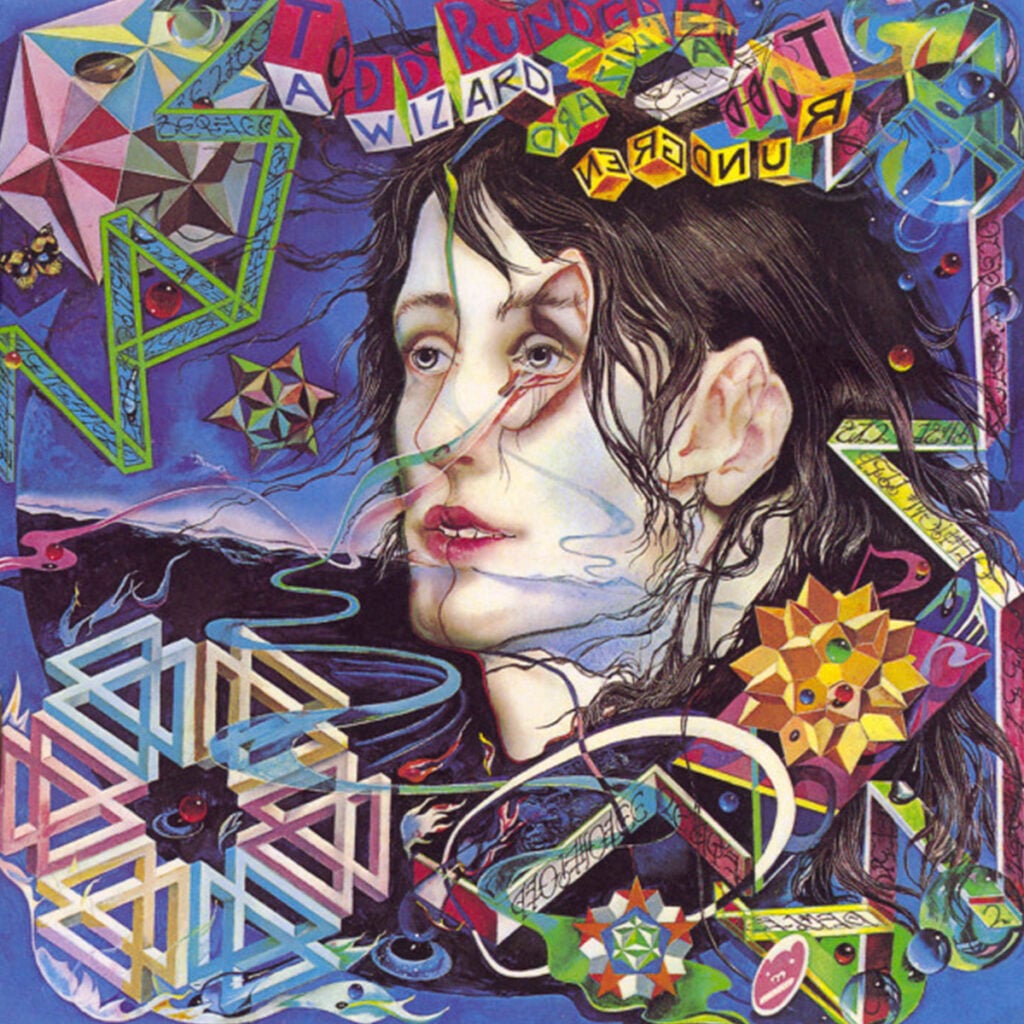
I distinctly remember reading a review when it came out that absolutely savaged the album, and given the choice between buying Todd or this supposedly self-indulgent psychedelic mess, my younger self chose the safer option. It would take me decades to discover just how spectacularly wrong that decision had been.
Years later, I happened to mention Todd Rundgren to a friend whose taste in music I trust almost without question. He’s one of those wonderfully difficult people whose standards are so impossibly high that genuine enthusiasm from him is almost shocking. When I brought up Rundgren, he looked at me and casually announced that A Wizard, A True Star was his favourite album of all time.
Not just favourite Todd Rundgren album.
Favourite album.
Period.
That was enough to make me sit up.
What makes A Wizard, A True Star so astonishing is that it almost seems determined to alienate anyone expecting another Something/Anything?. Having established himself as a master craftsman of immaculate pop songs, Rundgren promptly disappeared into the studio and emerged with 40-odd minutes of musical free association that veers between blue-eyed soul, psychedelic collage, hard rock, musique concrète, tape experiments, Broadway melodies and fragments of songs that arrive, dazzle you for 30 seconds and disappear before you’ve quite worked out what just happened. It doesn’t feel like an album assembled according to any conventional rules, but instead feels like somebody emptied the contents of a brilliant musician’s subconscious directly onto tape.
The first time I heard it properly, I honestly couldn’t believe I’d managed to avoid it for so long.
Several of Rundgren’s classic 1970s albums suffered sonically because he insisted on squeezing extraordinary amounts of music onto each side of an LP. In fact, Initiation even included a wonderfully apologetic note explaining that if the record sounded a little quiet, listeners might consider recording it onto cassette. That’s Todd in a nutshell. Rather than remove a few songs, he’d rather ask you to rewire your stereo.
Then I finally put A Wizard, A True Star on.
Holy shit.
How had I managed to miss this thing for the better part of 40 years?
I happened to be gloriously drunk the first time I really listened to it. In retrospect, that probably wasn’t the worst possible state in which to encounter an album that seems to reinvent itself every 90 seconds. The songs collide, dissolve, mutate and reappear in different forms, creating the sensation that you’re listening to somebody dreaming with the volume turned all the way up. By the time it finished, I was completely floored. It instantly joined the very small handful of records I would describe as life-changing.
Apparently, I wasn’t the only one.
Patti Smith reviewed the album for Creem, and while I’m not entirely certain anybody has ever fully understood what Patti Smith was trying to say in some of her reviews, she absolutely recognised that something extraordinary had happened.
She described Rundgren as “magi chef” before writing: “Each album he vomits like a diary. Each page closer to the stars. Process is the point. A kaleidoscoping view. Blasphemy even the gods smile on. Rock and roll for the skull. A very noble concept. Past present and tomorrow in one glance. Understanding through musical sensation”.
“Todd Rundgren is preparing us for a generation of frenzied children who will dream in animation.”
Patti Smith
I nodded enthusiastically while reading every word, despite having only the vaguest idea what any of it actually meant.
Barney Hoskyns was rather more direct when writing in Mojo. His opening line remains one of my favourite pieces of rock criticism ever written: “‘Sometimes’, Todd Rundgren sang, ‘I don’t know what to feel’. But sometimes you do know what to feel. And right now I feel like saying what I’ve contended for many years, which is that Todd Rundgren’s A Wizard, A True Star is simply the greatest album ever made.”
Hoskyns then proceeded to claim it was better than Pet Sounds, better than OK Computer and, in one particularly memorable flourish, better than “Sgt. Pepper’s Lonely Farts Dub Band.”
It’s an outrageous claim, but it’s also one I understand far better now than I ever thought I would.
The strange thing about Todd Rundgren is that he never really became the towering cultural figure his talent probably deserved. He possessed the melodic instincts of Paul McCartney, the studio curiosity of Brian Wilson, the technical confidence of Prince before Prince existed and enough restless creativity to reinvent himself every couple of years. The problem was that just as audiences figured out one version of Todd Rundgren, he’d already become somebody else. He was simply too curious to spend his career making the same record over and over again.
Perhaps that’s why A Wizard, A True Star has endured so remarkably well. It refuses to settle into one genre or one mood for long enough to become dated. More than 50 years later, it still sounds less like a relic of 1973 than a transmission from some alternate musical universe where every good idea, however strange, deserved to be squeezed onto tape.
You don’t have to take my word for it. You don’t even have to take Patti Smith’s or Barney Hoskyns’ word for it.
Just do yourself a favour. Put on A Wizard, A True Star, turn the volume up until your neighbours begin to worry, and give yourself 40 uninterrupted minutes. If it doesn’t completely rearrange the furniture inside your head, I’d be very surprised.