


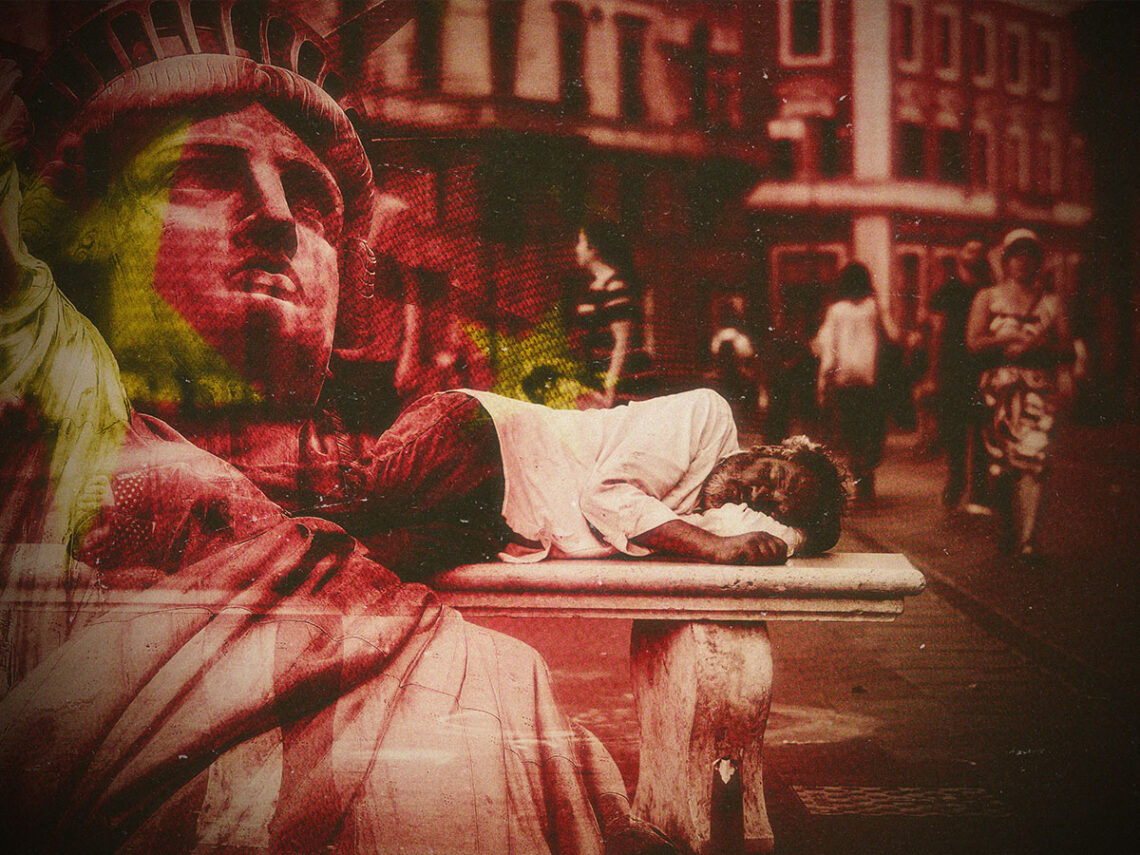
The Kill Line: A true takedown of American culture or propaganda?
Seeing your home country depicted by a film or TV show through the lens of another country is an absolutely wild sensation.
It gets especially strange when you’re from a major nation that often produces its own mass media, because then you’re suddenly feeling it from the other side. Take one look at the way a Bollywood movie depicts an American, then compare it with how Hollywood pictures depict literally every other country in the entire world.
While it can be funny, this changes when it picks up an aspect of your country you don’t like and plays it for laughs. At which point, suddenly, it becomes an incredibly uncomfortable feeling.
On the one hand, nobody wants their country to be defined by its worst aspects. On the other hand, it’s completely undeniable that your country is guilty of it. All countries in the world deserve to have their worst aspects pointed out, but the line between cultural critique and bad-faith propaganda is very slim indeed. Nowhere is this more apparent than in the idea of the kill line, one of the most cutting criticisms of American culture you’ll find anywhere.
The concept’s name comes from a term commonly used in Chinese gaming culture. When your character’s health is so low that it only takes one attack from an enemy to kill them, that character is considered at “the kill line”. More and more, the life of an average American citizen is said to be lived at the kill line, where the slightest inconvenience can leave them destitute.
A freak accident leads to a hospital trip? Savings out the window, unable to work, can’t pay rent, living on the street. A misunderstanding causes you to lose your job? Now you’ve got a firing on your record, no one’ll hire you. Livelihood? Family? Safety? All up in smoke. One way or another, you’re dead before you hit the floor.
No one would argue that this isn’t a reality facing millions of Americans. However, is it entirely fair to judge the entirety of American culture on its most vulnerable citizens? Maybe it is, maybe it isn’t, but it’s also worth analysing who exactly is asking you to view the country that way.

Who came up with the concept of the kill line?
It’s no accident that this concept came from Chinese gaming culture because ‘the kill line’ is a work of Chinese propaganda. One that stemmed from the work of a Chinese biology student who claimed to work at a morgue in Seattle. In a series of streams on the video-blogging app Bilibili, he claimed that the morgue he worked in had to turn the corpses of frozen homeless people and shot gang members away as it was too full on a daily basis.
The graphic, shocking nature of his streams meant that his streams went viral on Chinese social media, as did claims of the societal inequality of American culture. They talked of the 770,000 homeless people on American streets, and the 37 per cent of American adults who can’t cover a $400 emergency expense with their savings.
However, you also need to take into account the context it’s being deployed in. These statistics were being deployed not to make America look at itself, but to massage China’s own image on the world’s stage. Even a leading Communist Party journal wrote of the concept of the kill line, saying it was indicative of “institutional arrangements that systematically place capital security and returns ahead of workers’ survival and dignity.” As if there aren’t gaps in their own system that people fall through all the time.
American capitalism, western capitalism, whatever you want to call it, is predatory. In most cases, by design. Good faith discussions about the ways countries fail their people will always be necessary. However, one should always be wary of people telling you how bad another country is to make their own look good.
There is no such thing as a good or bad country. Each of them victimises their own people, and hopefully that’s by mistake. In that case, shining a spotlight on those most in need can be a real help to them.
If not, then we’ve all got a much, much bigger problem on our hands.