A song of praise to the future: John Butler’s new speculative animation ‘Acrohym’

myhorcanhojreltub.jpg
 
For twenty-years, artist John Butler has been the driving talent behind an incredible array of short animated films and science-fiction series. As one half of the Butler Brothers, John has produced, written and animated original, speculative fictions that examine the nature of our relationship with Government, Military and Corporations through technology.

Animations such as Eden, The Ethical Governor, T.R.I.A.G.E. and Unmanned have reinforced John’s dystopian view of the world, where technology is primarily developed as a means of control, war and exploitation.

The future being shaped by computer technology tends more towards a world of anonymous depots, owned by companies like Amazon, where whey-faced workers trudge endless miles through giant product mazes, being told what to do and how long they have to do it by their own personal navigational computer—rather than the much vaunted promise of personal liberation.

‘I don’t think we’re doomed,’ says Butler, ‘But we are stuck with it. I think the self checkouts in supermarkets indicate where we are going, towards a cybernetic transaction space. They should give us a discount since we’re doing all the work now.’

Butler’s latest animation Acrohym is a satirical ‘song of praise’ to DARPA (Defense Advanced Research Projects Agency):

...the most exciting arts commissioning agency in the world today.

Acrohym stands for ‘Advanced, Central, Research, Organization, High-Yield, Markets.’ The kind of buzz words promoted by PR reps and technocrats, who are currently destroying language and democracy.

Butler is fascinated by this and the way in which organizations like DARPA, have become like art/science patrons developing new technologies for the military, while at the same time creating their own language.

‘I liked the idea that DARPA seemed to think of cool acronyms first and work backwards from that. Things like the FANG (Fast, Adaptble, Next-Generation Ground vehicle) challenge, the Triple Target Terminator (T3) and the Magneto Hydrodynamic Explosive Munition ( MAHEM). They ruthlessly torture language to create a new form of technocratic poetry.

‘I think weapons design attracts the brightest minds and can draw on limitless funding, so it’s no wonder they make such fascinating stuff. It is an art form of sorts, increasingly so, as the systems become more baroque and dysfunctional, like architectural follies.

‘Form Follows Funding is the first Law of Procurement.

‘I think Defense is the seedbed of all research, but it eventually trickles down to the civil sphere. If private enterprise had created the internet, it would be a lot of bike couriers with USB sticks. Only a military project could have had such a long range investment strategy.’

John is working on his next project, but I wanted to know when he would be makinga full length feature film?

‘As soon as I’ve secured Ministry of Defense funding.’

More of Butler Brothers’ work here


Previously on Dangerous Minds

John Butler: ‘T.R.I.A.G.E.’


John Butler: ‘The Ethical Governor’


Posted by Paul Gallagher | Discussion
Adult ‘Parlour Games’: Exclusive new drawings by Sig Waller (NSFW)

rellawgisxesrolrapsemag1.jpg
 
Artist Sig Waller has given Dangerous Minds an exclusive preview of her latest work—3 drawings that form part of her Parlour Games series. The drawings are adapted from 18th century engravings (used to illustrate books by the Marquis de Sade), which are drawn in ink directly onto vintage napkins and antimacassars.

See more of Sig Waller‘s work here or, follow Sig on Facebook.
 
More of Sig’s art, after the jump…
 

Posted by Paul Gallagher | Discussion
J. G. Ballard’s ‘Favorite TV commercial of all time’

drallabgjhsarcjgbbbb.jpg
 
Author of Crash and Empire of the Sun, J. G. Ballard once said that a commercial showing ‘robots’ building a Fiat car was his favorite advert of all time.

Ballard made the claim on Desert Island Discs, BBC Radio 4’s long-running music and interview show, in February 1992, when he shared the 8 records that best represented his life with presenter, Sue Lawley.

As Ballard explained:

‘I like the overture to Rossini’s Barber of Seville, which many people will have heard as the background music to a wonderful Fiat ad. that was shown on television a few years ago. I think my favorite TV commercial of all time.’

It was Rossini’s “Figaro’s Aria” from the opera that was used in this famous Fiat Strada advert from 1979. The commercial was directed by Hugh Hudson, who is best-known for the Academy Award-winning Chariots of Fire. Hudson’s ad was a compelling mix of technology with opera, and was well-known for its tag-line:

Hand built by Robots

That was later famously spoofed on Not the NIne O’Clock News as:

Hand built by Roberts

Amongst Ballard‘s other favorite tracks on Desert island Discs were Noël Coward’s version of “Let’s Do It”, Astrud Gilberto being breathily seductive on “The Girl From Ipanema”, Rita Hayworth and “Put The Blame On Mame”, Henry Hall’s “Teddy Bears’ Picnic” and Marlene Dietrich singing “Falling In Love Again”.

Ballard also remarked that he considered himself a “disappointed painter’:

‘I think in many ways I am a sort of disappointed painter, I always wanted to be a painter, but simply lacked the technical ability, lacked the talent. In fact, people say my novels are tremendously visual, in a sense I paint my novels, there you have the life work of a frustrated painter.

Listen/download the full interview here.


Previously on Dangerous Minds

Postcards from J. G. Ballard


Posted by Paul Gallagher | Discussion
‘In the Shadow of the Sun’: A film collaboration between Derek Jarman and Throbbing Gristle

namrajkerednusehtfowodahseht.jpg
 
1987

‘Hello Derek.’
‘Hello. I’m writing in my diary about James Anderton. What a ghastly man.’
‘Yes.’
‘He’s saying we’re living in a cesspit of our making. I mean, how absurd. What a horrid little man. How the supposed Chief Constable of Manchester can say such vile things. It just makes me more determined, you know what I mean? I want to make a film about it.’

Film was personal and political for Jarman. While most most cinema during the 1980s was vacuous, empty, full of sound and fury, Jarman made films that were infused with his life, his thoughts, his passions, his politics—even the biopic Caravaggio mixed-in elements from his life to that of the Renaissance artist.

Jarman was a painter who made movies.

1980

In the Shadow of the Sun is an extraordinary collaboration between Derek Jarman and Throbbring Gristle. It is a more personal work for Jarman, which mixes elements from 3 of Jarman’s Super-8 movies: Journey to Avebury (1971), Tarot (aka The Magician) (1972) and Fire Island (1974), into a dream-like film, filled with magick and ritual, which Throbbing Gristle’s music matches perfectly.

In the Shadow of the Sun was premiered at the Berlin Film Festival in 1980. It contains many of Jarman’s favorite leitmotifs—mirrors, fires, dance—which he returned to again in the more political, The Last of England


Posted by Paul Gallagher | Discussion
‘Face to Face’: Fascinating extended interview with Bertrand Russell, 1959
02.25.2013
09:18 am

Topics:
Heroes
History
Thinkers

Tags:
Bertrand Russell


Thirty minutes with British philosopher, mathematician, Nobel winner and anti-nuclear activist Bertrand Russell, conducted by the BBC’s John Freeman in 1959. Russell was 86 years old when this was shot. The format of this program, Face to Face, is fascinating, almost like an interrogation, with lighting just as harsh. The camera zooms in on the subject and they rarely cut away.

Among other topics, the famously free-thinking Russell explains why he’s not a Christian, writing his own obituary, his childhood, how the beauty of the planet was being destroyed during his lifetime and how smoking (literally) saved his life.

At the end Freeman asks the great humanist, historian and thinker:

“Suppose, Lord Russell, this film were to be looked at by our descendants, like a Dead Sea scroll in a thousand years’ time. What would you think is worth telling that generation about the life you’ve lived and the lessons you’ve learned from it?”

Lord Russell gives some very good advice:


Posted by Richard Metzger | Discussion
Taking Tiger Mountain By Strategy: The Chinese opera that inspired the Brian Eno LP


Here it is: The Chinese “model” opera that shares its name with the wonderful 2nd solo LP by DM patron saint Brian Eno, who lifted the title after finding it in a book of postcards (such as the one pictured above) in San Francisco. I’ve always been curious, so it’s another marvelous artifact of the YouTubes that it’s here for easy perusal. A description of what we’re seeing via the Wikipedia:

Taking Tiger Mountain by Strategy (Chinese: 智取威虎山; pinyin: zhì qǔ wēihǔ shān) is a Beijing opera, and one of the eight model plays allowed during the Chinese Cultural Revolution. The story is based on the novel Lin hai xue yuan (林海雪原), which in turn, is based on the real life story of an incident in 1946 during the Chinese Civil War, involving a communist reconnaissance team soldier Yang Zirong (杨子荣) who disguised himself as a bandit to infiltrate a local gang of bandits, eventually helping the main communist force to destroy the bandits. Unlike other characters depicted in the opera and novel, the protagonists’ name and the bandits’ names were real.
A film version directed by Xie Tieli was released in 1970 and currently Hong Kong film director Tsui Hark is making a new version of it. His movie is scheduled to be released at the end of 2012.


And naturally, the lovely Brian Eno song of the same name from said LP.

Posted by Brad Laner | Discussion
Blue Eyes/Brown Eyes: Jane Elliott’s controversial classroom experiment on racism, 1968
02.12.2013
05:17 pm

Topics:
Race
Thinkers

Tags:
racism
Jane Elliott


This is a guest post by Melissa Sweat

“It might be interesting to judge people today by the color of their eyes. Would you like to try this? Sounds like fun doesn’t it?” –Jane Elliott


The class of third graders are told that blue-eyed people are smarter and better than brown-eyed people. Blue-eyed people get an extra five minutes of recess, and the two groups aren’t allowed to play with one another on the playground. The brown-eyed children wear fabric collars so they can be identified from a distance. When, during recess, one of the children calls the other “brown-eyed” as an epithet and the child retaliates by slugging the taunter, Jane Elliott does what any good teacher would do: the child is reprimanded, but the overall exercise continues.

It was the day after Martin Luther King, Jr. was assassinated in 1968 that Elliott ran her first “Blue Eyes/Brown Eyes” exercise in her Riceville, Iowa classroom. In 1970, Elliott would come to national attention when ABC broadcast their Eye of the Storm documentary which filmed the experiment in action. Below, is a portion from the 1985 PBS Frontline documentary A Class Divided which features the ABC footage as well as clips of a class reunion.

Elliott would earn further renown appearing on The Tonight Show, The Oprah Winfrey Show and speaking at over 300 colleges and universities throughout her career. Her landmark exercise helped pioneer the field of diversity training and anti-racism education in which she still works to this day.

Watching Elliott perform her social experiment on her class of young children, it’s easy to notice her determined reserve—and also just how psychologically deep she’s treading as she instigates the discrimination amongst her students. One can’t help but wonder if an exercise this controversial would even fly in today’s classrooms, and how many parents back then might have complained that this lesson was too forward and inappropriate for their children. Perhaps they didn’t want their kids being taught outside the “three Rs” curriculum, or about the difficult subject of racism in such a fervent time. Maybe some thought it didn’t pertain to their small, all-white towns.

Certainly Elliott garnered criticism for teaching and treading against the grain, though her impact reached well beyond her Iowa classroom because of it.

This is a guest post by Melissa Sweat
 

Posted by Richard Metzger | Discussion
The Apocalypse Is Cancelled
02.11.2013
02:19 pm

Topics:
Books
Thinkers

Tags:
Jason Louv


Former DM contributor, Jason Louv, editor of the cult classics Generation Hex and Thee Psychick Bible, writes:

Today I’m proud to announce a new ebook, The Apocalypse is Cancelled: Three Keys to Surviving and Thriving as a Species.

The book is a comprehensive vision of the future. It hands you the keys to:

1. Achieve freedom through meditation

2. Make sure Western civilization doesn’t crash and burn

3. Embrace space travel for fun and profit

From the opening of the book:

“I believe that life can work, and that life can be an adventure. And I want a participatory dialogue on how to get there. I want a comprehensive vision of the future for a generation that’s rejecting the unethical and unsustainable dreams of 20th century hypercapitalism, and looking to create a lifestyle that brings happiness instead of self-destruction.”

Consider it the Ultraculture manifesto. And to make sure the information spreads, I’m giving it away for free.

Download The Apocalypse is Cancelled

Posted by Richard Metzger | Discussion
‘Alchemy: The Telenomic Process of the Universe’
02.06.2013
02:18 pm

Topics:
Art
Thinkers

Tags:
Paul Laffoley


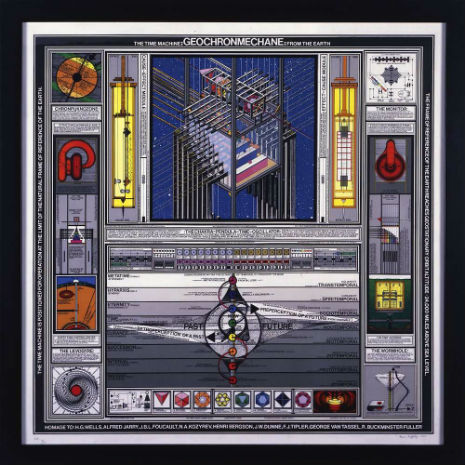
Paul Laffoley, “Alchemy: The Telenomic Process of the Universe” (detail) (1973), oil, acrylic, ink, and vinyl lettering on canvas, 73 1/2″ x 73 1/2″

The gents at Imperium Pictures have put together this terrific short film of artist Paul Laffoley discussing his 1973 painting “Alchemy: The Telenomic Process of the Universe” in New York recently.

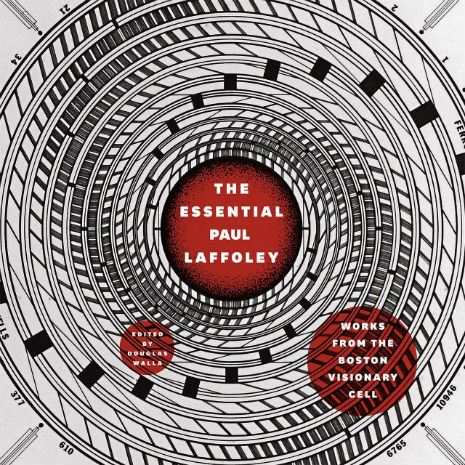
Paul Laffoley: The Boston Visionary Cell” is at Kent Fine Art LLC (210 Eleventh Avenue, 2nd Floor, Chelsea, Manhattan) and the show will be up through March 9th. It’s getting rave reviews from The New Yorker, Art Forum and The New York Times. You can download a PDF of the catalog here.
 

Posted by Richard Metzger | Discussion
Capitalist conundrum: Free WiFi for EVERYONE or protecting profit margins of the 1%?
02.04.2013
09:41 am

Topics:
Class War
Economy
Science/Tech
Thinkers

Tags:
Capitalism
Google


With the news that a five-member panel of the FCC are considering creating a series of super powerful free WiFi network across America, it’s to be expected that the corporate lobbyists for the $178 billion wireless industry are already working overtime to scuttle these plans.

Conversely, according to The Washington Post, there has been an equally aggressive push coming from tech giants like Google and Microsoft for free WiFi networks “who say a free-for-all WiFi service would spark an explosion of innovations and devices that would benefit most Americans, especially the poor”:

The airwaves that FCC officials want to hand over to the public would be much more powerful than existing WiFi networks that have become common in households. They could penetrate thick concrete walls and travel over hills and around trees. If all goes as planned, free access to the Web would be available in just about every metropolitan area and in many rural areas.

The new WiFi networks would also have much farther reach, allowing for a driverless car to communicate with another vehicle a mile away or a patient’s heart monitor to connect to a hospital on the other side of town.

If approved by the FCC, the free networks would still take several years to set up. And, with no one actively managing them, con­nections could easily become jammed in major cities. But public WiFi could allow many consumers to make free calls from their mobile phones via the Internet. The frugal-minded could even use the service in their homes, allowing them to cut off expensive Internet bills.

In a country where Wal-Mart is the nation’s largest employer and doesn’t really even pay a living wage, this sort of monthly savings for what has become a necessity of modern life would seen quite attractive for the common man. The costs are surprisingly minimal, too.

But what of the poor, put-upon media barons who won’t be able to continue sticking the masses with a monthly cell phone bill? Should the management and stockholders of AT&T, T-Mobile, Verizon Wireless, Intel and Qualcomm be disallowed from skimming around a hundred bucks a month from the bank accounts of the average American?

Of course, the wireless telecom and cable providers are determined not to let this happen. In a January letter to FCC Chairman Julius Genachowski, the architect of this ambitious plan, and a powerful member of the Obama inner circle, several major companies argued that the government should concentrate on selling the public airwaves to private business, and raising money for the US Treasury that way, rather than going with the free WiFi for all, option.

They would feel that way, wouldn’t that??? LOL.

Naturally, the Republicans are lining up behind this ridiculously blinkered, backwards “free market” approach. Who can forget watching the Tea party dolts who were against net neutrality—because someone on Fox News told them it was something “socialist,” I guess—and braying like buffoons for the privilege of being able to give more power to the telecoms, even if it would mean seeing their own monthly bills rise... because, um, THEIR FREEDUMBS were apparently at stake.

This is a different kind of free market entirely that we’re talking about, one that could alter American lives in profound ways, spurring great innovation and perhaps even unprecedented high tech job creation. The saying goes that there’s no such thing as a free lunch, but free WiFi is already occurring in New York City and parts of Silicon Valley. In January, Google announced that it was providing free WiFi for NYC’s Chelsea neighborhood (where Google is headquartered in Manhattan). Soon that will extend to indoor fiber optic wiring as well. Google also rolled out high-speed fiber-optic Internet coverage recently in the Kansas City area, with download speeds up to 1 Gigabit per second. That’s pretty good. In fact it’s approximately 200 times faster than your home broadband connection. It’s not five times faster, it’s 200 times faster. (So much for innovation among the cable companies themselves, eh?)

Google’s blazing fast fiber optic service is beginning to draw hi-tech start-ups to Kansas City. Who would have thought that would happen a few years ago?

Furthermore, the major wireless carriers own far more spectrum than would even be necessary to provide public WiFi, and it would also improve their existing wireless networks for their own consumers. The only downside for this is for a relatively tiny group of stockholders. The benefits for Americans overall? Well, they seem limitless in terms of what can be imagined from 2013.

Designed by FCC Chairman Julius Genachowski, the plan would be a global first. When the U.S. government made a limited amount of unlicensed airwaves available in 1985, an unexpected explosion in innovation followed. Baby monitors, garage door openers and wireless stage microphones were created. Millions of homes now run their own wireless networks, connecting tablets, game consoles, kitchen appliances and security systems to the Internet.

“Freeing up unlicensed spectrum is a vibrantly free-market approach that offers low barriers to entry to innovators developing the technologies of the future and benefits consumers,” Genachow­ski said in a an e-mailed statement.

He’s 1000% right. Although not seeing the economic benefits flowing upwards at first may discombobulate their tiny brains, how idiotic would even Republicans have to be not to see the logic of this decidedly free market approach? If they balk, they need to be reminded of what the earlier—but far more technologically limited, pre-PC, iPad and smartphone, of course—Reagan-era changes in the management of the public airways wrought for the economy.

This is a real us vs.against them situation. The fattest cats versus EVERYBODY ELSE. It’ll be interesting to see how this shakes out. It’s an idea that’s time has come—IF NOT, WHY NOT—and I don’t think it’s going to go away until there’s free Wifi for all. The cat’s out of the bag and it ain’t going back in.

Posted by Richard Metzger | Discussion
Page 2 of 30  < 1 2 3 4 >  Last ›