


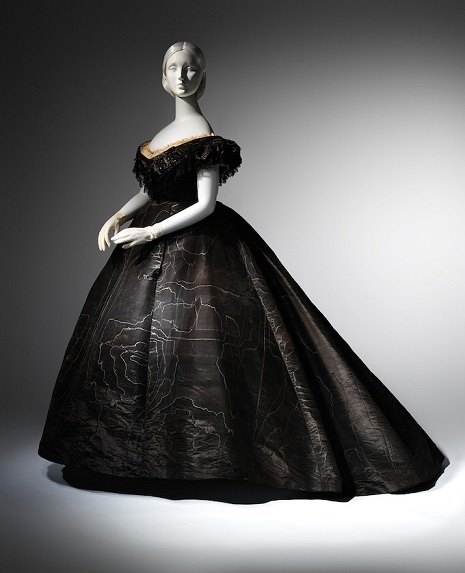
I’d kill for that dress: Gorgeously gothy mourning attire from 1815-1915
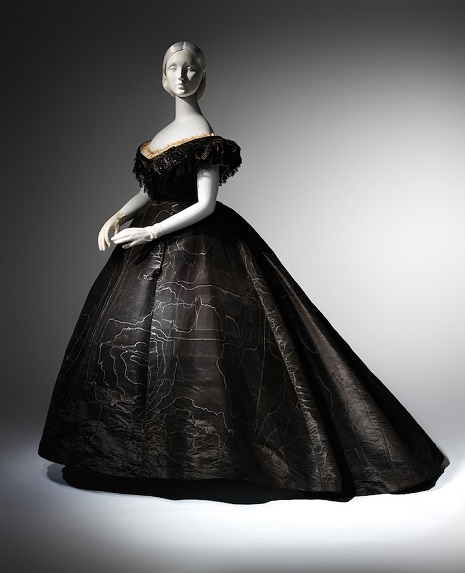
Evening dress suitable for late mourning, from around 1861
The Metropolitan Museum of Art recently announced a breathtaking new exhibit, “Death Becomes Her: A Century of Mourning Attire“–upper-class women’s widow couture, if you will. The clothing ranges from 1815 to 1915, when the death of a husband was met with strict social expectations among the English (and sometimes American) elite. During the Victorian era, a widow was expected to observe a year and a day of “full mourning,” during which she would refrain from “society” activities, veiled and wearing simple black dresses. After that, there was a nine-month period where she could drop the veil and incorporate small adornments, like jewelry or a trimmed hem. Then came “half-mourning,” where she could add grey, purple or a little white–this lasted three to six more months.
If a woman did not observe proper mourning etiquette (especially if she was still young and pretty), she would usually be considered not only gauche, but downright libidinous. Additionally, if the mourning attire was too flashy, she could also be judged as advertising her new singledom–scandalous! Widowers on the other hand, were just expected to wear dark clothes for an unofficial amount of time, and they could remarry in as little as a few months without fear of judgement.
If you can’t make it to the Met, you’re in luck! Almost all of their archives are searchable online, and I have compiled an exhibit for you right here. I even added some pieces that aren’t on display, including a dress worn by Queen Victoria herself. Kind of makes you long for the days when people died from a seasonal flu, huh?
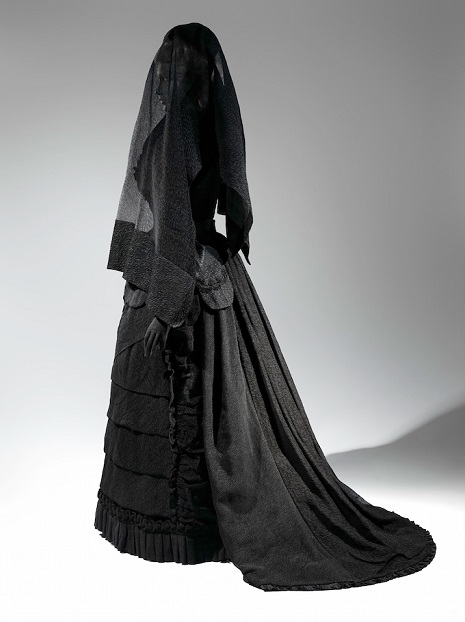
1870, with veil
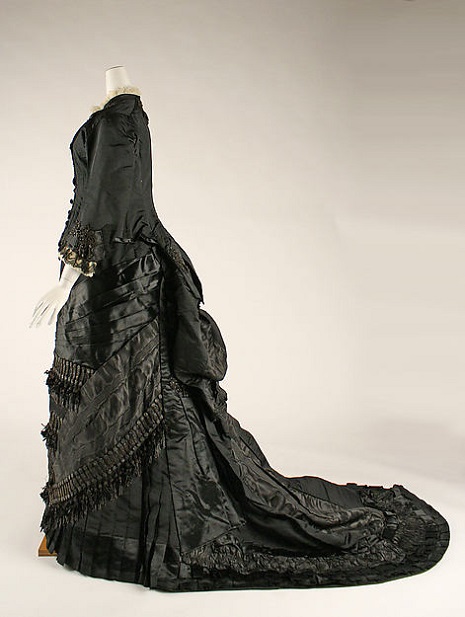
1880, not on view

1848
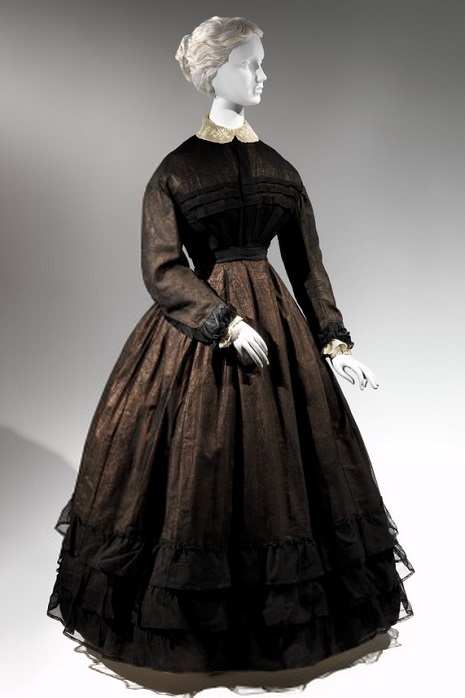
1867
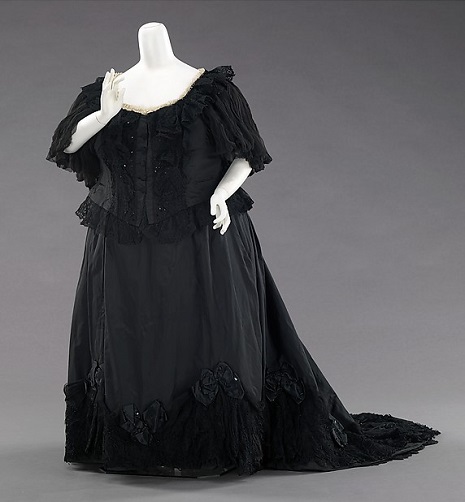
1894-1895
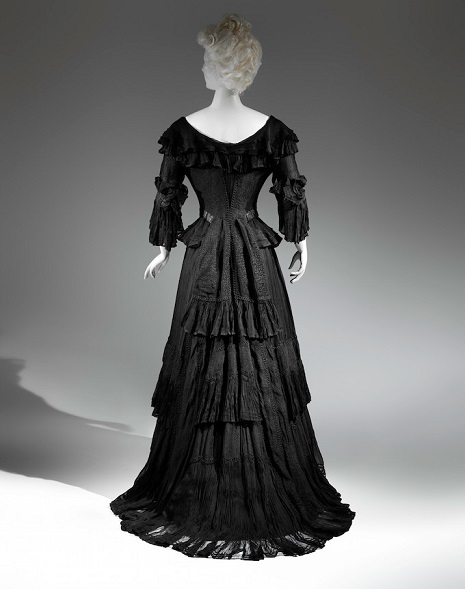
1902-1904
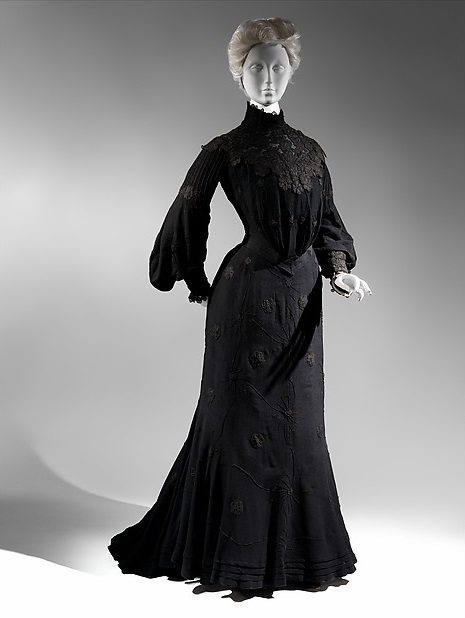
1903
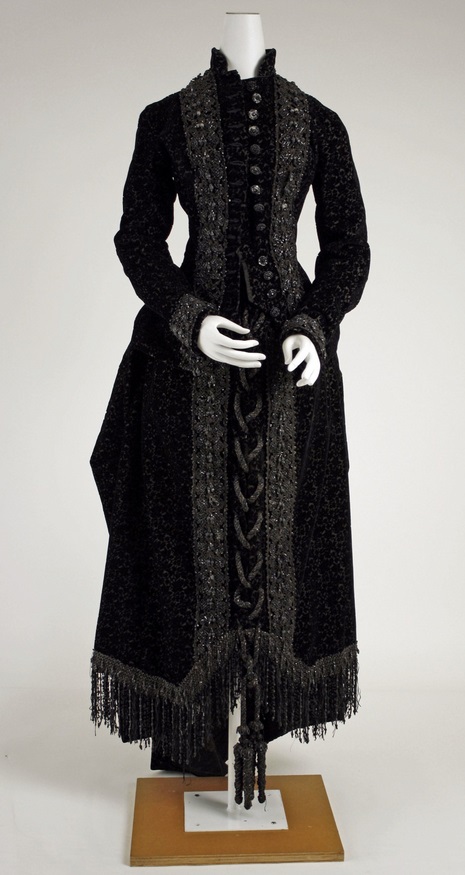
1883, not on view
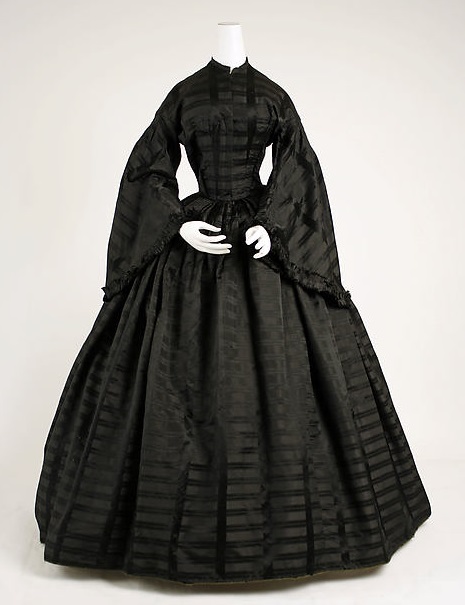
1850, not on view
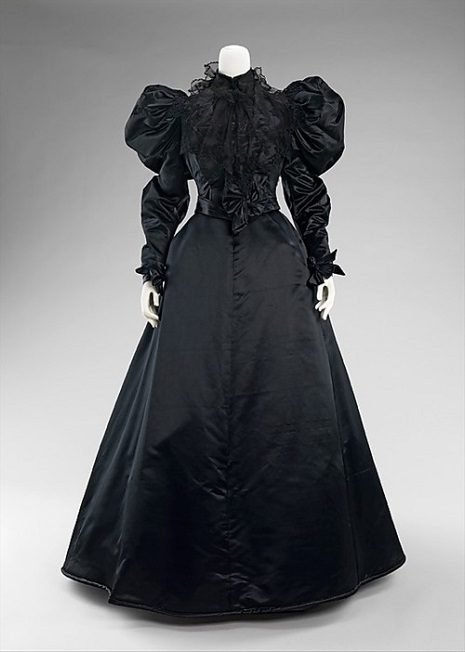
1894-1896
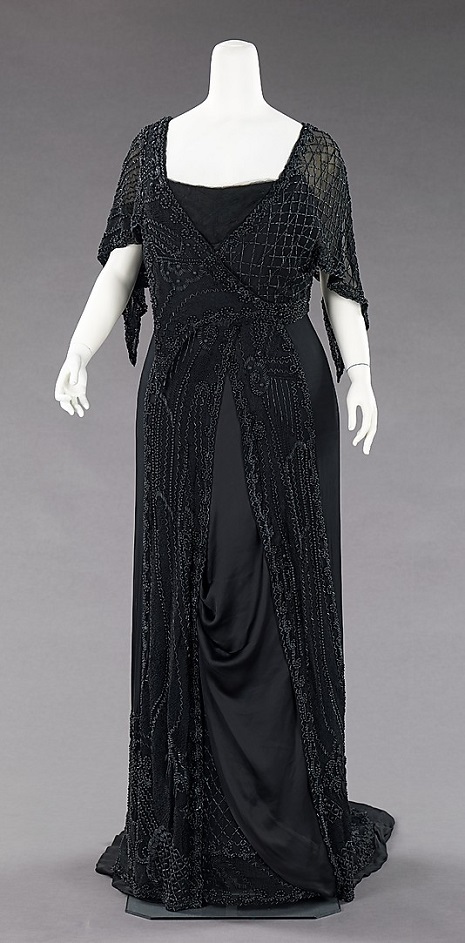
1910-1912
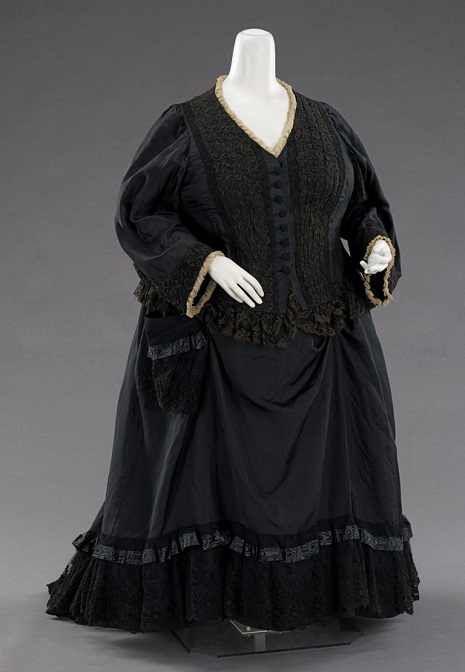
Worn by Queen Victoria, 1894, not on view
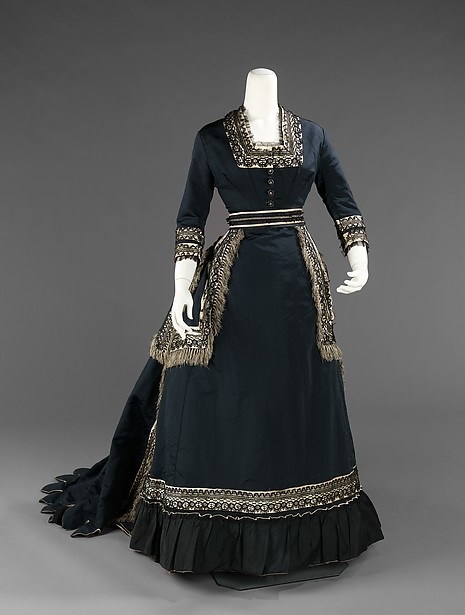
1872–1874
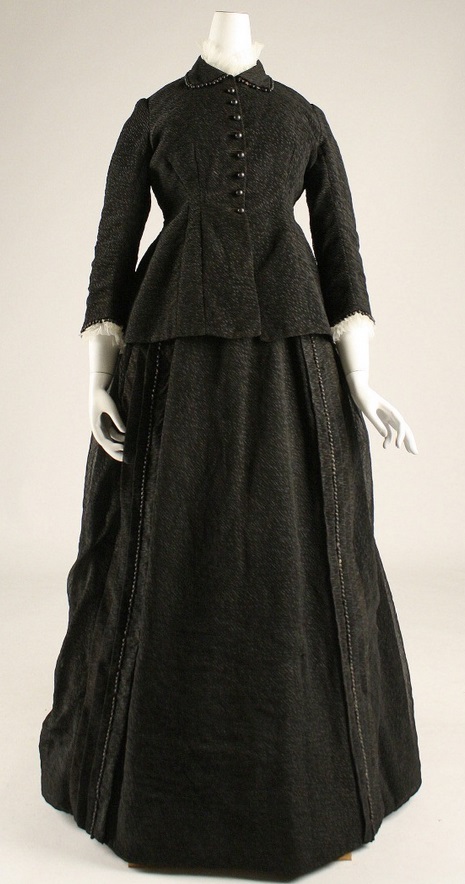
1874, possibly maternity wear
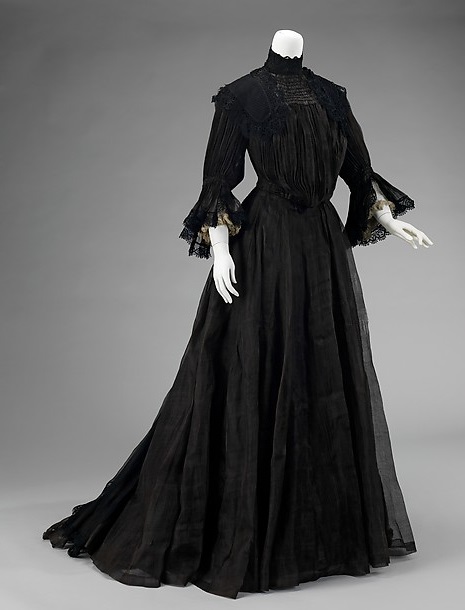
1902-1904, not on view
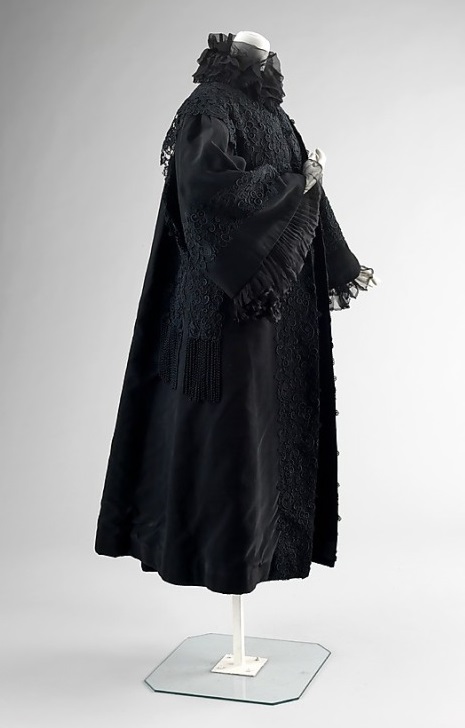
Mourning coat, 1907
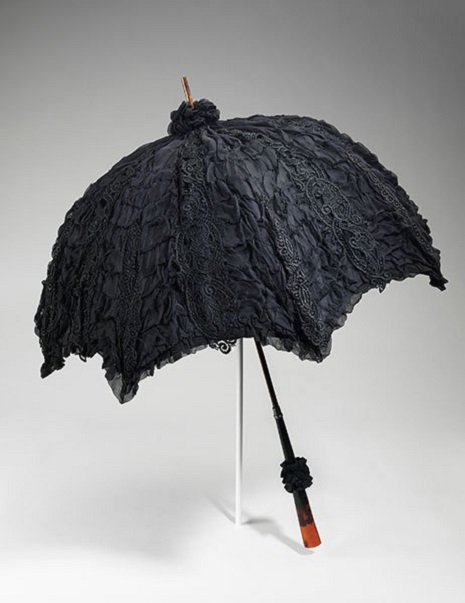
Mourning parasol 1895–1900
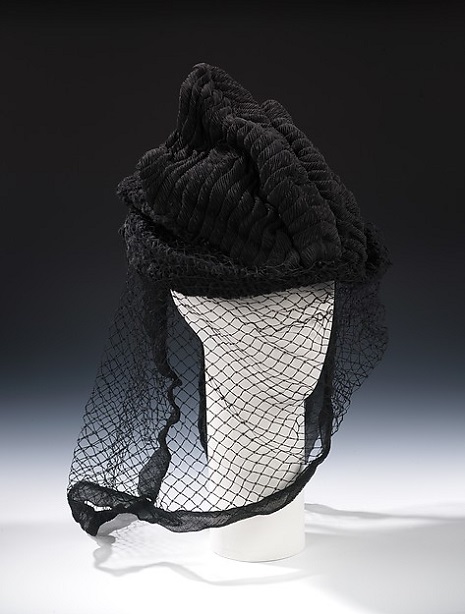
Mourning hat, 1915
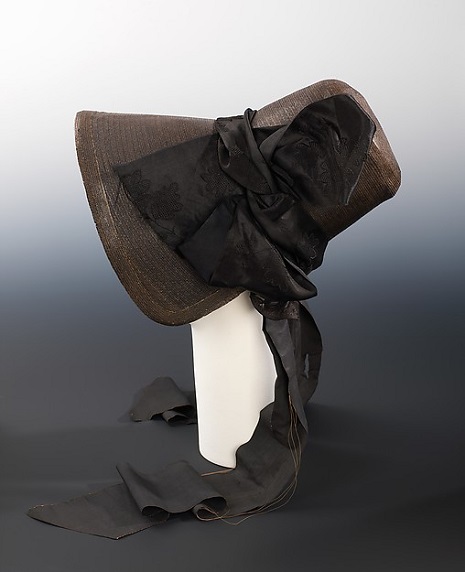
Mourning bonnet, 1840