


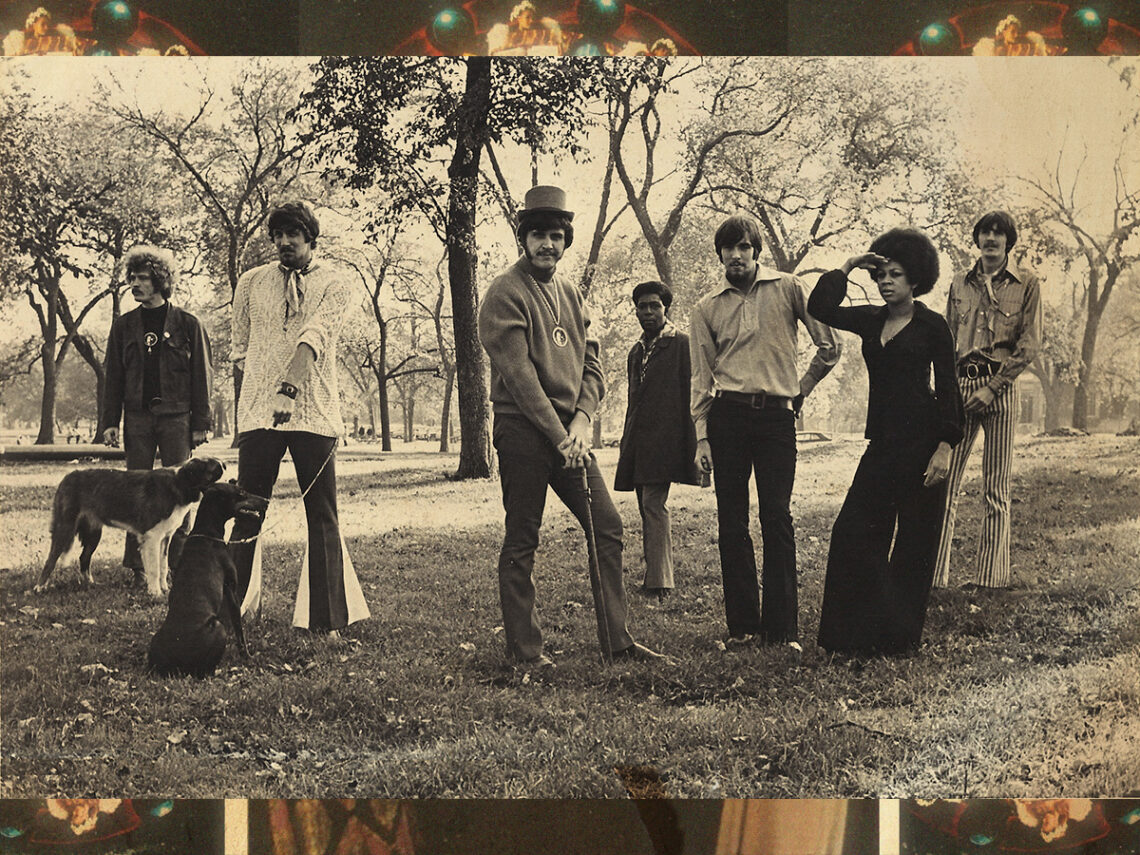
Rotary Connection: The psychedelic soulsters who turned down Woodstock
Rotary Connection were a psychedelic soul group put together by Marshall Chess, the son of Chess Records founder Leonard Chess, later president of Rolling Stones Records, in 1966.
At the time, Chess wanted to get away from the straight up rhythm and blues the label was known for and tap into the new psychedelic sound, so he enlisted the aid of Chess staff arranger Charles Stepney (a musical genius who would later work extensively with Earth, Wind & Fire) for help.
Together, Stepney and Chess hired members of a white rock band called the Proper Strangers—Bobby Simms, Mitch Aliotta, and Ken Venegas—and added a few more members, including, notably, the 20-year-old receptionist at Chess Records, a gorgeous five octave soprano named Minnie Riperton. Soul legend Sidney Barnes was also a Rotary Connection member as was vocalist Judy Hauff.
‘Turn Me On’, a single from Rotary Connection’s self-titled 1967 debut album led the way. This chamber-pop masterpiece was recorded with members of the Chicago Symphony Orchestra and features a sitar, but the real revelation is Riperton’s voice, which is used here as a background “instrument” almost like the way the Beach Boys used the theremin in ‘Good Vibrations’.
Make no mistake, that single is completely sublime. Once you dive into their music, you can’t help but wonder why Rotary Connection aren’t considered to be one of the all-time great late 1960s groups. Their albums are admittedly a little bit spotty, but at their best they could hold their own against, say, The 5th Dimension, and that’s really saying something, if you ask me.
Their exotic blend of psych-soul chamber pop was truly original, the musicianship top-notch and the vocals out of this world.

Rotary Connection went on to record six albums, including a long-player of Christmas songs, but never really broke out nationally. The blame for this might be said to fall squarely on their management’s shoulders—it couldn’t have been the music—who did stuff like book the group for a better-paying gig in Toronto and turning down a slot for them at Woodstock.
Part of the problem with Rotary Connection, if you can even call it a problem, is that they didn’t fit neatly into anyone’s box. Too weird for Motown, too lush for the freaks, and too out-there for the longhairs in the suburbs who were busy tripping over The Doors.
They were the misfit kids at the party, doing something ten times more interesting while everyone else was still fumbling with the punch bowl. And that’s why people like Jay-Z and A Tribe Called Quest circle back decades later – because buried in those grooves is something alive, something that never got watered down. Stepney’s arrangements? Like Sun Ra gone uptown. Riperton? She could make dogs three blocks away tilt their heads. If you play this stuff loud, it doesn’t sound retro, it sounds alien.
History didn’t crown Rotary Connection, but who cares? Not everything worth remembering has to end up in the Rock & Roll Hall of Whatever. Some bands exist to be discovered in dusty bins, their covers cracked and their vinyl still buzzing with electricity. That’s Rotary Connection. They were too good for the middle of the road, so they carved out their own crooked little path, and that’s exactly why they endure.
If you’ve got ears, do yourself a favour: find a copy, drop the needle, and let it warp your living room. You’ll never hear Minnie Riperton’s ‘Lovin’ You’ the same way again.