


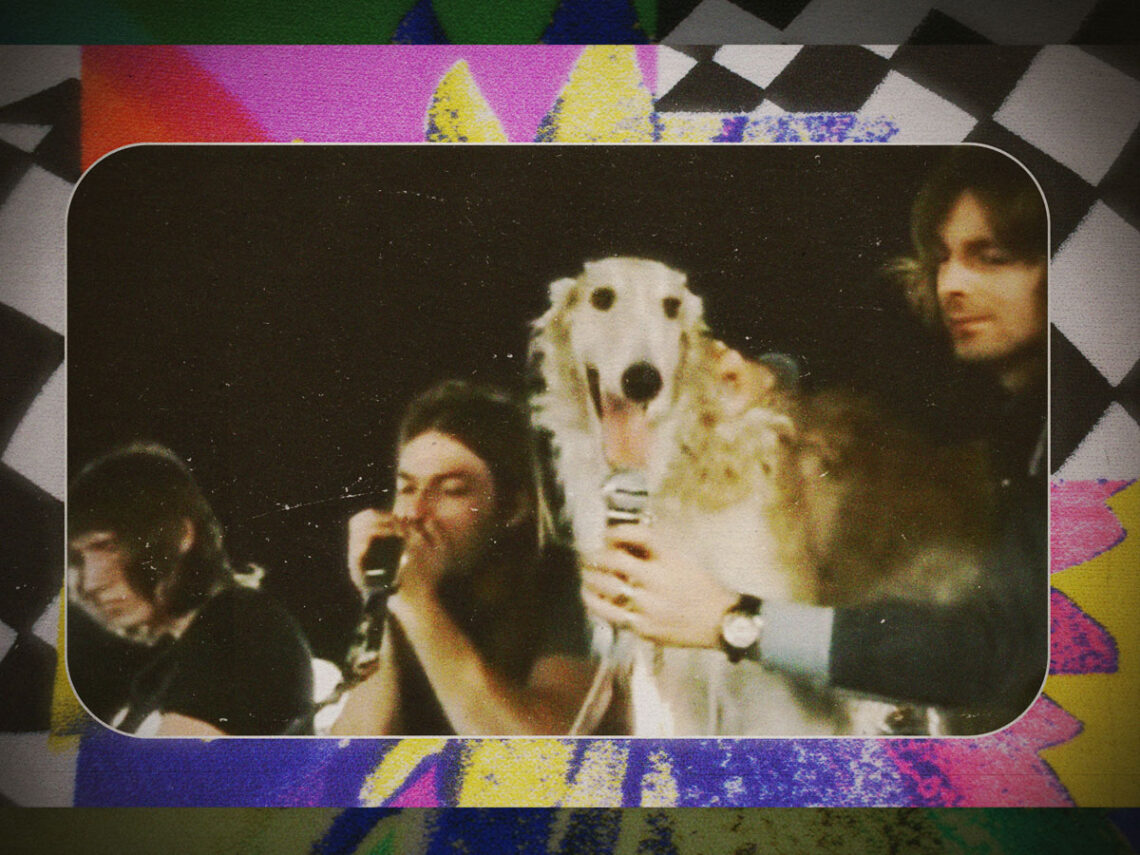
Seamus: The musical dog that joined Pink Floyd in 1971
I have a soft, fuzzy spot in my heart for bands with animal performers. The genre is often categorised as a mere novelty, but, in my opinion, it should be considered as nothing less than it actually is: artistic genius.
I’m sure the first band in this category that will come to mind for most is the notorious death grind outfit Caninus, once fronted by pitbulls named Budgie and Basil. There is also Hatebeak, the Baltimore death metal band with Waldo the African grey parrot as its lead singer. Both groups released a like-minded split EP in 2005 on Reptilian Records.
Of the non-metal variety, Beatle Barkers was a parody record from 1983 that used animal sounds (mostly human barking) in place of the vocals on Beatles covers. Similarly, acts like popular holiday favourite, Jingle Cats, as well as its 1950s predecessor, The Singing Dogs, manipulated animal noises to serve in lieu of vocals. There’s even something now called Whalestep, which has me at a loss for words.
But let’s not forget about the musical groups that are made up entirely by animals. The Thai Elephant Orchestra is a rotating cast of up to fourteen elephants in Northern Thailand. Improvised on heavy-duty versions of traditional and mostly percussive Thai instruments, the ensemble has released three records to date, and the music is actually quite beautiful. One of the more recent additions to this list is Tuna and the Rock Cats, the travelling feline circus band made up of five cats and a chicken. The Rock Cats play every instrument of your average rock band and, as you would have guessed, their live shows are more of a performance art.
Now that we are all on the same page, I wanted to pay tribute to probably the most famous, yet often overlooked, animal musician of our time: Seamus the dog. As the story goes, David Gilmour was caring for his friend’s German Shepherd at some point in 1971 while Pink Floyd was in the studio recording their sixth studio album, Meddle. The dog, whose name was Seamus, belonged to Humble Pie and Small Faces frontman Steve Marriott, who at the time was on tour in the United States.
Seamus was a dog who responded well to music and, as a result, had previously performed a small role barking in the background of Small Faces’ 1968 cut, The Universal. The members of Pink Floyd were quick to act upon the musical capabilities of their new canine friend when it was discovered during recording that Seamus could howl in tune with their instruments. Acting on the bizarre opportunity, the band quickly wrote a twelve-bar, slide guitar blues track for Seamus to “sing” over. Additional instrumentation and Gilmour’s lead vocals were later added. Meddle was released on Halloween of 1971, with ‘Seamus’ closing out the A-side.
“Seamus, my old hound, was outside, mmm. Well you know, the sun sinks slowly, but my old hound dog sat right down and cried”.
Pink Floyd – ‘Seamus’
Critics have since panned ‘Seamus’ as one of Pink Floyd’s worst songs ever written, claiming the spoof to be dispensable to both the record and the band’s discography. In response to such objection, Gilmour defended the track, once stating: “It wasn’t really as funny to everyone else [as] it was to us”. Perhaps due to the song’s unpopularity or the unavailability of its backing vocalist, the group and Gilmour have never played ‘Seamus’ live in concert. That is, with the exception of their monumental concert documentary, Pink Floyd: Live at Pompeii.
Live at Pompeii was filmed over four days in October 1971. The film’s primary focus is Floyd’s psychedelic concert set in an ancient Roman amphitheatre in Italy. Since the recording coincided with the release of Meddle, most of the songs included on the original version of the documentary were from the new record. The film was re-released in 1974 to include footage of Pink Floyd while recording The Dark Side of the Moon at Abbey Road Studios.
The song ‘Seamus’ made its way onto Live from Pompeii in the form of a segment titled ‘Mademoiselle Nobs’. The scene presents the song in altered form with David Gilmour playing harmonica and Roger Waters on blues guitar. Lying beside the two is a howling Russian Wolfhound, Nobs the dog. Nobs was a female Borzoi who belonged to Madonna Bouglione (daughter of circus director Joseph Bouglione). At the request of the band, Madonna brought Nobs to the studio during shooting so they could recreate Seamus’ performance for the documentary. The scene was shot outside of Paris.
While ‘Seamus’ may be the best Pink Floyd song you’ll ever hear, it wasn’t the group’s last use of animal noises. In a way, perhaps we have Seamus to thank for 1977’s Animals.