
‘Imaginary Man’: Julien Temple’s superb documentary on Ray Davies

seivadyarsknikehtnamyranigami.jpg
 
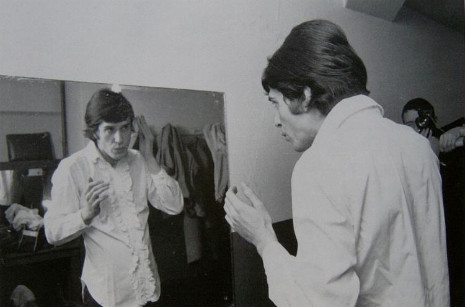
Director and Kinks fan, Julien Temple beautifully captures Ray Davies’ wistfulness in his excellent documentary on the former-Kink, Ray Davies: Imaginary Man. Davies is allowed to gently meander around his past life, talking about his childhood, his family of 7 sisters and 1 brother, his early days with The Kinks, the development of his writing skill (the quality and consistency of which now makes him seem at times better than, if not on par with Lennon & McCartney, Jagger & Richard), and onto his life of fame, of parenthood, of growing-up, all of which seemed to happen so fast.

It would seem Davies has always lived his life with one eye on the past—from the nostalgia of The Village Green Preservation Society through to his film Return to Waterloo, Davies takes solace from the past. It gives his music that beautiful, bittersweet quality, as Milan Kundera reminds us that:

The Greek word for “return” is nostos. Algos means “suffering.” So nostalgia is the suffering caused by an unappeased yearning to return.

But it’s not just about wanting to return to some mythical past, it’s also about loss—whether this is the loss of the past, of opportunities, of career, or, even of memory—for without memory we are nothing. Memory keeps us relevant, and all artists want to be relevant. Throughout Temple’s film, Davies makes reference to this sense of loss, from the remnants of Hornsea Town Hall, to the changing landscape of London, or the songs he has written. And put together with the brilliance of the songs, the wealth of archive, and Ray Davies’ gentle narration, Temple has created a clever, beautiful, and moving film, which leaves you wanting to know and hear more.


Previously on Dangerous Minds

Stations En Route to Ray Davies’ Film Masterpiece: ‘Return to Waterloo’


‘Kinkdom Come’: A beautiful film on Dave Davies


Written by Paul Gallagher | Discussion
‘Cracked Actor’: BBC’s landmark documentary on David Bowie, 1975

image
 
Cracked Actor captured David Bowie at “a fragile stage” in his life. His relationship with his wife, Angie, was beginning to falter, there was business problems looming, and he was addicted to cocaine, which caused “severe physical debilitation, paranoia and emotional problems.” Filmed during Bowie’s legendary “Diamond Dogs Tour” in 1974, Alan Yentob’s film revealed a man on the run, taking stock, even questioning his own ambitions:

‘I never wanted to be a rock ‘n’ roll star. I never, honest guv, I wasn’t even there. But I was, you see, I was there. That’s what happened.’

Revealing his difficulties with fame:

‘Do you know that feeling you get in a car when somebody’s accelerating very fast and you’re not driving? And you get that “Uhhh” thing in your chest when you’re being forced backwards and you think “Uhhh” and you’re not sure whether you like it or not? It’s that kind of feeling. That’s what success was like. The first thrust of being totally unknown to being what seemed to be very quickly known. It was very frightening for me and coping with it was something that I tried to do. And that’s what happened. That was me coping. Some of those albums were me coping, taking it all very seriously I was.’

And the singer’s paranoia, at the time of Watergate and Richard Nixon’s resignation:

‘There’s an underlying unease here, definitely. You can feel it in every avenue and it’s very calm. And it’s a kind of superficial calmness that they’ve developed to underplay the fact that it’s… there’s a lot of high pressure here as it’s a very big entertainment industry area. And you get this feeling of unease with everybody. The first time that it really came home to me what a kind of strange fascination it has is the… we… I came in on the train… on the earthquake, and the earthquake was actually taking place when the train came in. And the hotel that we were in was… just tremored every few minutes. I mean, it was just a revolting feeling. And ever since then I‘ve always been very aware of how dubious a position it is to stay here for any length of time.’

In a series of interviews, filmed in limousines, backstage and in hotel rooms, Cracked Actor reveals an uncertain, vulnerable, and at times incoherent Bowie; but in performance, he is magnificent.

Originally made for the BBC’s arts strand Omnibus, this is a brilliant, mesmeric, landmark documentary, even if Yentob is slightly disparaging of Bowie’s re-invention as “a soul singer.”

Footnote: when film director, Nicholas Roeg watched Cracked Actor, he decided to cast Bowie in The Man Who Fell to Earth.


Written by Paul Gallagher | Discussion
Classic documentary on William Burroughs

image
 
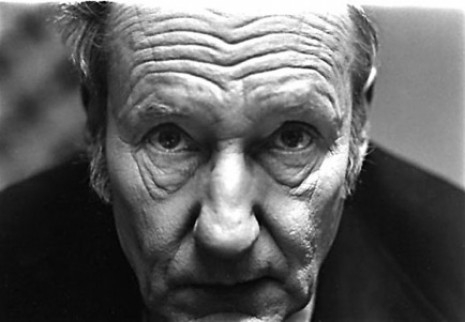
Last year, Dangerous MInd writer, Bradley Novicoff posted a link to this excellent BBC documentary on William S. Burroughs. At the time it wasn’t possible to embed Arena: Burroughs onto our site, but now it is.

Burroughs was originally made in 1983 by Howard Brookner and Alan Yentob, as part of the BBC’s art strand Arena, and repeated after Burrough’s death in 1997. It is an exceptional documentary, one that gives an intimate and revealing portrait of Burroughs, as he revisits his childhood home; discusses his up-bringing with his brother, Mortimer; his friendship with Jack Kerouac, Allen Gisnberg, and Brion Gysin; and has a reunion with artist Francis Bacon, who Burroughs knew in Tangier. Other contributors include Terry Southern, Patti Smith, and James Grauerholz.


Written by Paul Gallagher | Discussion