

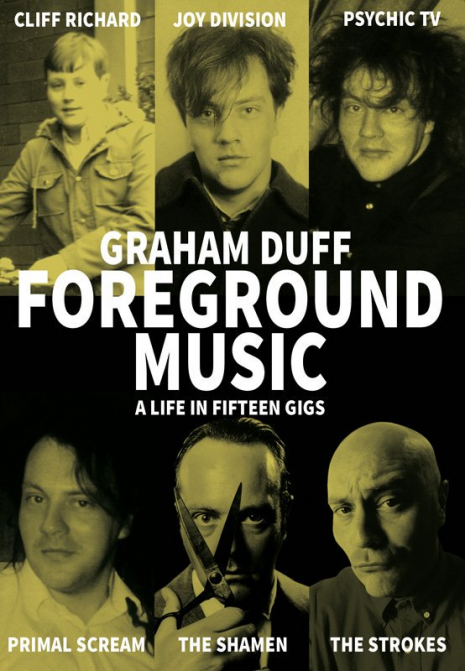
In Graham Duff’s charming new memoir, Foreground Music: A Life in 15 Gigs, the actor-writer looks back on some of his favorite concerts and discusses what was going on during those times in his life. Duff writes about seeing Cliff Richard, Joy Division, Psychic TV, Primal Scream, the Strokes, the Specials, the Velvet Underground reunion, the Fall, and his favorite, Wire.
In this excerpt, Graham goes to see Throbbing Gristle’s concert at London’s Heaven discotheque on Fathers Day, Sunday June 21, 2009. At that time he was 45 years old.
My good friend Malcolm Boyle and I enter the venue. Heaven usually operates as a gay nightclub. But, due to its location and superb sound system, from time to time it’s also used as a rock venue. Today, bizarrely, Throbbing Gristle have already done a matinee show here. This helps me keep my expectations of tonight’s show in check. Is it possible the group could channel the amount of energy and passion required for the creation of their music twice in one day? Unlikely I think.
We buy drinks from the bar and survey the capacity crowd. I spot my friend Andrew Lahman and the Pop Group’s Mark Stewart. Throbbing Gristle attract a far more eclectic audience than one might expect. There are men in leathers, both biker style and fetish style. There are women in their 30s with crimson lipstick and long, straight 60s hairstyles. There are Japanese boys and girls in their early 20s who are probably art students. There are people in their 40s who look like they’ve just returned from raving in Ibiza. There are numerous morbidly overweight men in their 50s, wearing combat fatigues adorned with TG and PTV patches. Hell, there’s even a substantial gaggle of goths.
There are also quite a few straight-looking people here tonight. And I guess, I’m probably now in that camp too. Long gone are the days where I might daub the word “Resistance” on a T-shirt and wear that. Gone too are the days where I’d wear a long mac, even indoors. Now, I wear the clothes that I feel confident and comfortable in. In my brown linen suit and black cotton shirt, I suppose I look like a father on Father’s Day.
Suddenly, Throbbing Gristle begin to assemble on stage. No lighting change, nothing. All around us people are clapping, whistling and whooping. The sound of awe and respect. It’s only now, as the group are taking a few moments to sort out their equipment, I realize I have no idea what to expect from tonight’s performance. Will they play new material? Greatest ‘hits’? Cover versions? All of these are a possibility.
On the left hand side of the stage, stands Cosey Fanni Tutti - impossibly glam in her black diaphanous top, black glittery leggings and shiny candy apple red knee high latex boots, her snub nosed Hohner guitar around her neck. Centre stage is Genesis Breyer P-Orridge. Hair cut into a sharp blonde bob, s/he’s dressed in a set of very feminine pale pink clothes that are so tastefully styled, s/he could have almost stepped out of the pages of a Toast catalogue.
At the rear of the stage, occupying the space where you might expect a drum kit to be placed, there’s a table covered with a black cloth. Sleazy sits on the left hand side, laptop open in front of him. He wears a white and black gown with a fur trim, which looks part oriental priest and part Cruella de Vil. Opposite him, leaning over a battery of electronic devices, is Chris Carter, dressed in a white lab coat, looking like a concerned technician in a science fiction film. Their combination of outfits could be seen to symbolise the unlikely coalition at the heart of the group - the meeting of the beautiful, the grotesque, the camp, the mystical and the scientific.
“Oh it’s so wonderful to be back in London,” sneers Breyer P. Orridge, their tone dripping with insincerity. And yet this still elicits applause and cheers from certain sections of the audience. “Home of political corruption and asshole politicians. Don’t you just love this country? Where no one tells the truth.” It seems a surprisingly straightforward statement. Trite even. But then, just to put a bit of a spin on things, s/he adds “Gordon Brown, I want to suck your cock.” Hmmm. As I stand in the densely populated environs of Heaven, I wonder if Throbbing Gristle will still be able to disturb, confound and exhilarate.
Suddenly, all qualms are blown aside, as a deep primeval thud reverberates through the venue. I can feel it in my guts. Another enormous thud. And another. And another. This isn’t a rhythm. It’s a series of timed depth charges. It’s the kind of sound that seems designed to trigger my fight or flight instinct. Malcolm looks across at me beaming, yet somehow also looking concerned. Each thud is coated in a thick, sickly synthetic tone that increases the sense of deep dread. This is a surprising reinvention of the ironically titled ‘Very Friendly’, one of the group’s earliest compositions.
As the evenly spaced thuds continue to pound into the very foundations of the building, Cosey’s distorted guitar creates darts of noise that pierce the song’s corpus. Then Breyer P-Orridge begins to intone “It was just an ordinary day in Manchester, Ian Brady and Myra Hindley drinking German wine.” The narrative goes on to describe the hacking up of a corpse in the couple’s living room, as Eamonn Andrews blithely presents This Is Your Life on the television set. Blood splashes on the screen and runs down Andrews’ chin. This is music with a very strong, very sour flavor.
People sometimes ask why anyone would actively choose to listen to music that makes them feel unsettled or even scared. Although the question is a valid one, interestingly it’s a question that is rarely asked of cinema, or literature, or fine art. The paintings of Francis Bacon are unremittingly bleak and unsettling, yet there is no question over his genius or the validity of the work. Similarly the books of Stephen King, and the films of David Lynch contain huge swathes of material specifically designed to frighten and deeply disturb. Again we accept that they are masters of their craft. But it would seem that music, the most abstract of the arts, should expect to be judged by different criteria.
Despite the popular image of the group as purveyors of unleavened doom, they have so much more in their armory than provocation and matter of fact terror. Unlike many of the Industrial bands that followed in their wake, Throbbing Gristle always engaged with a genuine range of emotions and ideas. “United” is a sincere love song, “Exotica” is a piece of subtle drifting ambience, “Hot on The Heels of Love” smolders with dance floor sensuality and “AB/7A” exudes electro exhilaration and positivity.
However, in live performances, Throbbing Gristle do tend to lean more heavily towards the darker side of their work. And songs don’t come much darker than “Very Friendly.” After eight punishing minutes, the song closes in a tsunami of echoing vocals. There’s enthusiastic clapping, cheers and whistles from the packed audience. I feel relieved the song has finished, but exhilarated by the primal assault. “Well thank you. That was the first song we ever wrote, in 1975.” Says Breyer P-Orridge, before adding “It was a love song.”
Foreground Music: A Life in 15 Gigs is published by Strange Attractor Press on December 10th, 2019. Pre-order here.
See what was described above via this crowd shot video of Throbbing Gristle live at Heaven, June 21, 2009.


 An immediate yet artfully crafted album of energised machine music, courtesy of Italy’s Emmanuel (full name Emmanuel Beddewela). On the tensely pulsing “Chainreaction” Emmanuel seems to be mining the same seam as France’s Gesaffelstein. But when he adorns the otherwise sleek and gleaming rhythm with strange lopsided percussive fills, they transform the track into a thing of sublime strangeness. Beddewela’s attention to detail ensures, the whole album is as imaginative as it is thrilling. And if “Conductor” powers along like Jeff Mills at his most optimistic, elsewhere, tracks such as “Ultratribe” and “Killer Floor” operate as dark darts of full tilt 21st century techno.
 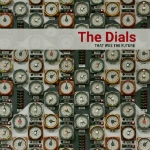 No one could accuse The Dials of hiding their influences. Their sound is a glorious mix of late 60s pop-psych, fuzzed up guitars and funky 70s style keyboard and synth lines. Yet this is no exercise in homage. What sets The Dials apart is both the standard of their songwriting and Joe Allenby and Rich Parrish’s perfectly judged vocal melodies. Songs such as the genuinely funky “Cuckoo Stone” or the Spencer Davis Group style strut of “The Nark,” display an effortless cool. The band’s previous releases hinted at something great, but That Was The Future comes straight out and delivers it.
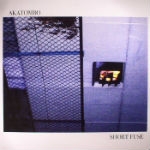 Under his Akatombo alias, Paul T. Kirk has been releasing beautifully judged albums of stark, grainy hip hop inflected electronica since 2003’s Trace Elements. In 2015, Kirk’s life threatening health problems fed directly into his album Sometime, Never. That was a set cloaked in claustrophobic dread. But with Short Fuse, Kirk seems to have reached a position of bruised grace. He still fashions skanking rhythms of a mean and distorted aspect. But it feels like he’s able to let in a little more light than before. And the album frequently ups the pace, with tracks such as “George Kaplan” and “Solitude in Numbers” driven by a propulsive kinetic energy.
 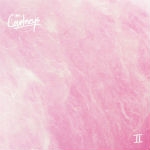 Vancouver all girl trio The Courtneys are exponents of a catchy harmonic new wave pop, whilst also being home to some very gnarly guitar textures. Their sound is fat and driving, and, on “Minnesota,” Courtney Garvin’s guitar manages to sound like an overdriven keyboard. Vocalist Jen Twynn Payne is also the band’s drummer and she keeps the rhythms lean and uncluttered. The highlight is the closing “Frankie,” where Twynn Payne’s sad autumnal vocal melody is kept in motion by a precise motorik groove. There may be trace elements of Sonic Youth or Joy Zipper in their sound, but over the spread of this album, The Courtneys create their own distinct world.
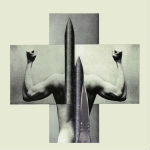 Vukovar are a band with feet in several camps. Opening track “Ubermensch” strides into view like an epic Walker Brothers ballad seen through the prism of post punk. On the other hand, S.S.S.” comes across like early Cure remixed by a space age King Tubby. Stand outs include the seesawing “Once More For The Puritan,” where Rick Clarke’s vocals are complemented by the sweet, clear tones of Elizabeth Mcnally. Elsewhere “This Moment Severed” could almost be an out take from Joy Division’s “Closer.” Puritan is an album of genuine poetry and exciting textures, beautifully underpinned by Buddy Preston’s richly detailed drum patterns.
 Foregrounding the strictest of electronic rhythms and thick burred chips of 8-bit noise, Huoratron (aka Aku Raski) is a Finnish electro house artist whose high impact dynamics connect directly with the body. A number of these tracks have already seen the light of day on earlier EPs, but they sit neatly next to newer pieces such as “Autocannibalism,” where sheets of detuned synth and twitchy glitched out rhythms collide with fragments of a drum and bass session. Much more suited to the dance floor, than domestic listening, there are nevertheless moments where headphone listening reveals astonishing feats of programming.
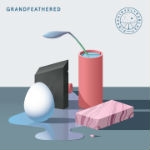 Pinkshinyultrablast hail from St. Petersburg, and couldn’t really be accused of trying to conceal their influences. Their name is taken from the title of a song by Astrobrite and their songs unashamedly summon up the golden era of shoegaze. There are shades of Lush, Ride and MBV here, but on tracks such as “Cherry Pit,” Pinkshinyultrablast bring plenty of their own contemporary inventiveness to the table. Theirs is a brisk and sparkling sound where song-craft isn’t sacrificed for the sake of effects pedals. It’s impossible to tell whether Lyubov Soloveva is singing in English or Russian, largely because her melodic vocals are meshed so thoroughly with the instrumentation. Whatever the language, this is pure class.
 2016 has been a year ripe with albums of sadness and loss (see especially Blackstar and Not to Disappear) and Skeleton Tree is definitely one of the most moving. 2013’s Push the Sky Away saw the group operating in fresh sonic environments, experimenting with loops and looser structures and drawing on Cave and Warren Ellis’ extracurricular soundtrack work. Skeleton Tree continues that journey, accompanied by some of the most heart-rending poetry you will hear this year. “Girl In Amber” has an arrangement which is in total harmony with its tender lyrics, whereas “Jesus Alone” may be quite simply the best song Cave has ever written.
 A subtle and sympathetic collaboration between Charlie Martineau’s Esperik Glare and the multi-talented and now sadly departed John Everall AKA Tactile. The album comprises four lengthy minimal and uneasy instrumentals. “The Dweller” fizzes with elemental energy. On “The Thing In The Pit,” a nervously fluttering electronic pulse is pierced by high pitched darts of sound. Best of all is the slowly shifting “The Psychophage.” A beautifully sustained sequence of grainy washes of noise underscored by a bass tone which flickers like helicopter blades in a heat haze.
 PLU (aka Vicki Bennett) is a transformative artist. Shunning copyright laws, she deliberately samples the most familiar, over worked and banal of source material, then refashions it into something unique and uncategorizable. There’s a large dose of humour in PLU’s work—which at times approaches a kind of audio slapstick. But don’t let the comedy blind you to her razor sharp intelligence. A track like “Panic As Usual And Avoid Shopping” will make you smile even as it gives you goose bumps.
 When industrial music pioneers Throbbing Gristle reformed in 2004, it was never going to be just a case of regurgitating their back catalogue. Their ‘comeback’ albums Part Two: The Endless Not and the largely instrumental Third Mind Movements proved that TG were still ahead of the pack. But perhaps one of their most intriguing and unprecedented ideas was to rework Nico’s highly regarded 1970 album
  Italian born, London based Mauro Remiddi delivers a flawless album of dreamy hauntological bedroom pop.
 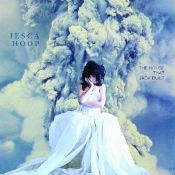 Whilst recent releases have seen Hoop focussing on a more stripped back acoustic feel,
  As if completing and delivering the X-TG double header wasn’t enough, Chris Carter and Cosey Fanni Tutti also released
 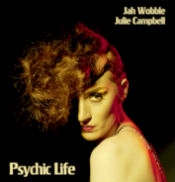 Bass man Wobble is a genuine maverick spirit. Sadly, much of his output over the last decade has tended towards a thoughtfully produced but strangely anonymous world music lite. Even the much longed for reunion with early Clash guitarist and former PIL sidekick Keith Levene only produced a patchy and frequently uninspired album and EP. It would seem that Wobble was saving up his best tunes and ideas
  This quiet, foggy, unassuming debut from a duo comprising Liz Harris of Grouper and Jesy Forentino of Tiny Vipers is way more than the sum of its parts. An expansive album (6 songs in 40 minutes),
  One of the exciting things about Brooklyn based
 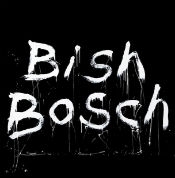 Dissonant, histrionic, morbid and claustrophobic are all words you will hear applied to this collection. Admittedly, these are all apposite descriptions of the most difficult album on this list, however, it’s also one of the year’s most rewarding listens. Scott’s increasingly oblique but vivid lyrics would appear to focus on geopolitical struggles and abuse of human rights. Meanwhile, his dynamic and genuinely experimental musical compositions are, at times, truly frightening. The most easily digested track is “