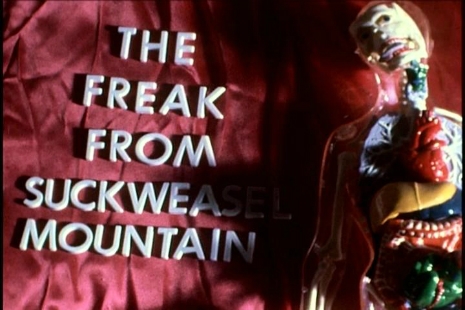
One of the most enticing things about delving into fringe culture is finding both the gems and scraps that even the underground tries to nudge away with their boot. Nick Zedd, one of the most notable underground filmmakers to have emerged in the past 30 plus years, has created a number of short works that still play film festivals and merit academic criticism. Titles like War is Menstrual Envy and Police State are often bandied about like a seasoned musician’s greatest hits. (Which is not a snark, since both are worth merit.) One Zedd film that is the unloved B side to his better regarded work is 1983’s Geek Maggot Bingo or The Freak from Suckweasel Mountain. The title alone is so gloriously brain damaged or drain bamaged, that it already is going to weed out the less slackful of the art house crowd.
Don’t be fooled by the play on words, since Geek Maggot Bingo has about as much in common with the teenage-surf masterpiece, Beach Blanket Bingo, as The Deer Hunter. The film begins with a quote, featuring lines like “If you cut a face lengthwise, urinate on it and trample on it with straw sandals, it is said that the skin will come off.” It’s attributed to Hagakare, Yamamota Tsunetomo’s centuries old text about the code of the samurai. Unless there’s a hidden metaphor in the film that I missed, this also has about as much to do with Geek Maggot Bingo as any beach or Vietnam war film. But, hey, that is part of the dark ride from Mars journey you are about to go on.
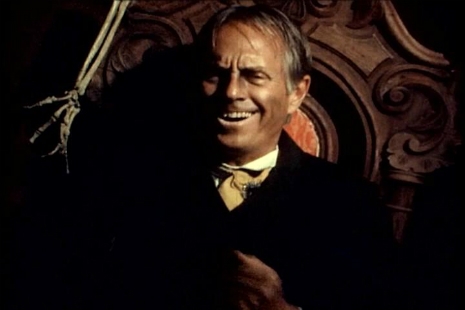
Like any cinematic carnival ride worth its salt, there is a fabulously macabre host and it does not get much more terrific than the cool ghoul himself, legendary horror host Zacherley aka John “Dinner with Drac” Zacherle. For all of you monster kids, this should be a name that holds a dark, cobweb infested place in your heart. Looking at least twenty years younger than his actual age, Zacherley laughs, mugs and says some intentionally ridiculous dialogue like “Suckweasel Mountain…That’s in Brooklyn I presume!” with warm-hearted yet sarcastic relish.
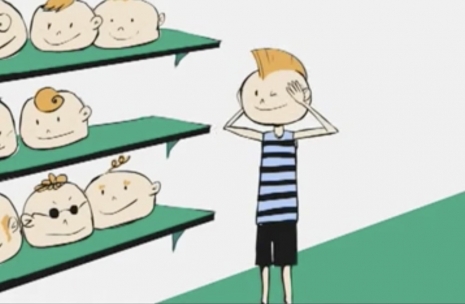
After that, there’s a colorful beginning credits sequence involving some striking art portraying each character in the film, all courtesy of Donna Death who will pop up later. In true ham-boned 1950’s sci-fi/horror style, we meet the formerly esteemed and currently mad Dr. Frankenberry (Robert Andrews). You’ve heard it before. The brilliant but insane Doctor is obsessed with not only reviving dead tissue but with creating a new super race of enlightened beings. His boss, Dean Quagmire (Jim Giacama), is fed up with Frankenberry’s (groan) “unholy experiments.” It gets better, when the Dr. pulls out the evidence that his research has been fruitful. This “evidence” ends up being one Quasimodo Residue, an adorable white & beige kitten with magic marker markings on its dirty looking fur.
Does such cute proof win the Dean over? Absolutely not, though this leads to the Dean’s best line, where he goes on about how “that poor cat has been humiliated for no reason!” Fantastic.
Fresh out of a job, the Doctor puts an ad out for an assistant, a position quickly filled by Geeko (Bruno Zeus), a new wave looking hunchback with a rich history of assault and murder. Naturally, the Doctor loves Geeko’s resume and he quickly puts his new hire to work. “Do you know anything about prostitution?” segues into Geeko dressing up as a flea bitten hooker, luring a john that fell right off of the “night of the living dorks” truck. Instead of an evening of diseased hunchback loving, Geeko hacks away at the man & takes pieces of the “fresh specimen” back to the Doctor.
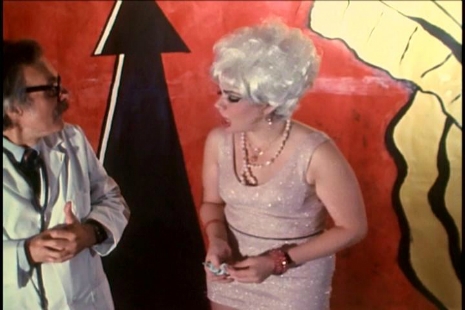
Meanwhile, the Doctor’s tarted up daughter, Buffy (comic singer Brenda Bergman) is nagging him about the basement. More specifically, what exactly is he up to in the locked room. She finds out quicker than you think, since Geeko comes back from his kill in record time, causing the bleach blonde harridan to pass out shrieking.
The average person’s libido would be more than likely quelled after getting a faceful of severed limbs, but Buffy is not your typical All American girl and is quickly sneaking her beau, Flavian (Gumby Spangler, real name), in the castle for some full on starkers, limp noodle soft core shenanigans. But of course, Geeko has to ruin Buffy’s fun and scares the bejeesuz out of Flavian, to the extent that he jumps out of a window?! Running in the woods, still completely nude, he has the misfortune of running into Scumbalina (Donna Death), a Morticia styled vampire who makes lunch with the Warhol-bewigged “actor.”
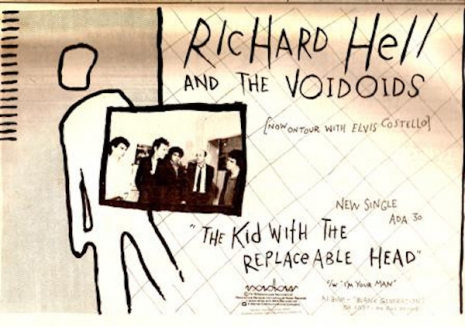
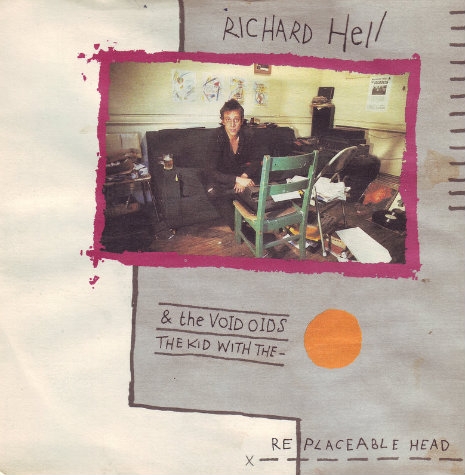
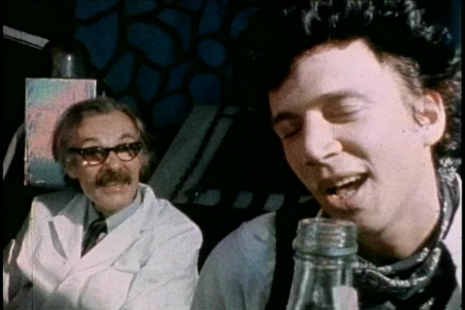
The Doctor decides to fully satisfy his daughter’s curiosity and has Geeko bring her to the lab. There’s a method to his madness and he goes on a long speech (a specialty of the mad Frankenberry’s!) ranting about how he needs her seamstress skills for sewing up the parts of his creation. He actually convinces her but she sees the monster, who is off screen, screams and passes out. Not catching a break, Buffy is later on visited by Flavian, who bites her but doesn’t fully turn her into a vampire. Just yet. Realizing that a potential vampiric epidemic is on the rise, the Doctor decides to work on his maddest creation yet: The Formaldehyde Man. Along the way, the alcoholic Rawhide Kid (Richard Hell) shows up and in an even stranger twist, so does the the Dean. Will the Doctor be able to save his daughter and the rest of humanity from Scumbalina? Will the Dean find his son? Will the Rawhide Kid find more booze?
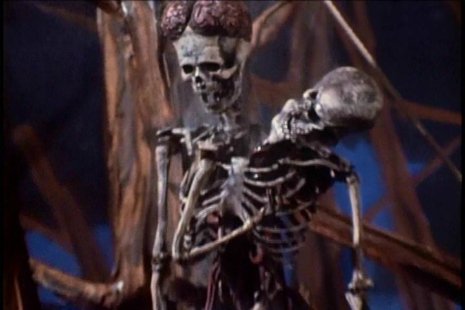
Geek Maggot Bingo is like one living, creature feature themed Mad Lib. The plot makes sense in only the foggiest of ways, the set and props toe that line between expressionist absurdism and a 3rd grade play and the acting ranges from hammy to laughable. It is these elements that have garnered this film some pretty bad reviews over the years, however, it is actually one of the things I enjoy about it. It’s not only goony, but it knows it is goony. In fact, it thoroughly revels in its ridiculousness, with lots of loving nods to everything from 1960’s sexploiters to B-Horror films from the 1950’s. The special effects, especially with some of the gore and monster design, courtesy of noted effects craftsmen Ed French (Riot on 42nd St, Terminator 2), Tom Lauten (Class of Nuke’em High, King Kong) and Tyler Smith (Tales from the Darkside), are actually quite good, especially taking the uber-low budget into account.
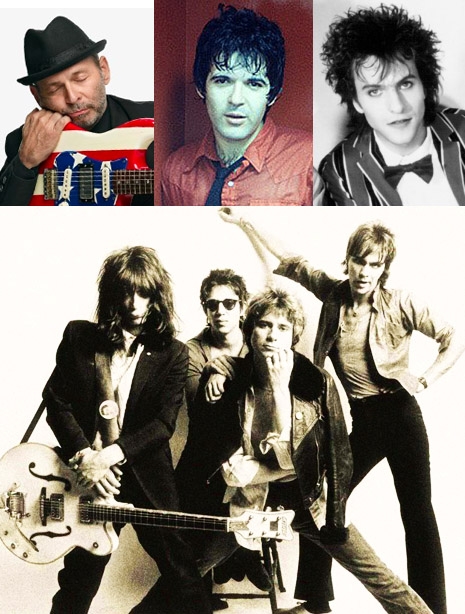
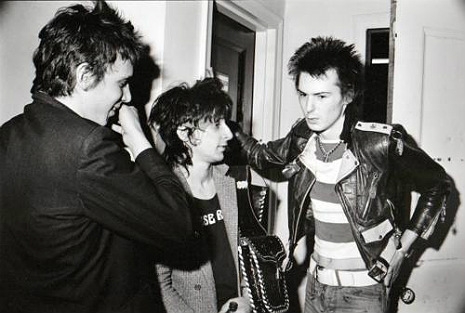
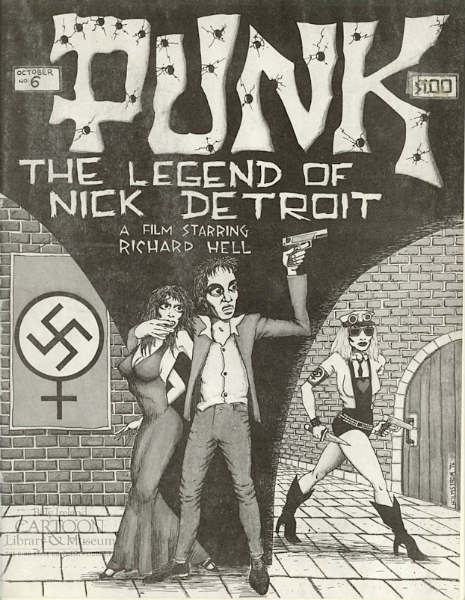
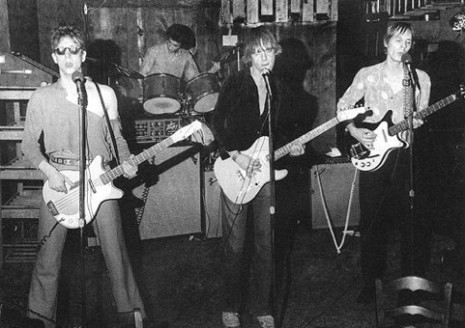
The cast is a fun, hot mess. Andrews is endearing as the crazed and highly verbose Doctor. He manages to inject some gravitas into his live-action cartoon of a role. Zeus makes a great, pervy assistant and while he doesn’t come into the film until it is halfway over, Hell is pretty funny as the Rawhide Kid. If you ever wanted to see a respected DIY legend in writing and music sing cowpoke songs that lyrically are more on the side of Dada than Will Rogers, this is your film. The fabulously named Gumby Spangler is horrible and is often out-acted by his wig, which is quite terrific. Donna Death doesn’t have a whole lot to do, other than look pretty-menacing.
There’s also a cameo by original Fangoria editor, Robert “Uncle Bob” Martin, doing an impression of one of the magazine’s former writers that is about as accurate as anything else in this film. (I’ll save that surprise for anyone who makes it to the end credits.) Of course, I would be remiss if I did not mention the glory that is Zacherley. The legendary horror host is as great as he always is here. If you need further proof, seek out his slack-laden appearance on the Uncle Floyd Halloween special or his voice work as Aylmer in Frank Henenlotter’s Brain Damage.
Geek Maggot Bingo is deliriously stupid and plays out like a strange, acid-laced make out session at your local carnival’s dark ride. It might not be one of Zedd’s more heralded works, but it is a lot of fun and even if you loathe it, you cannot say it is dull.