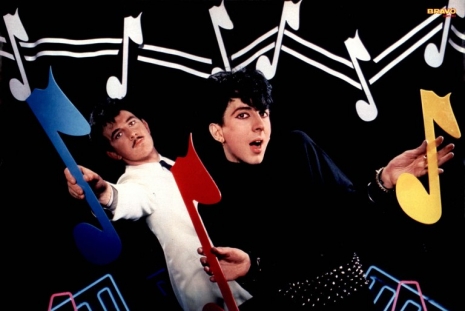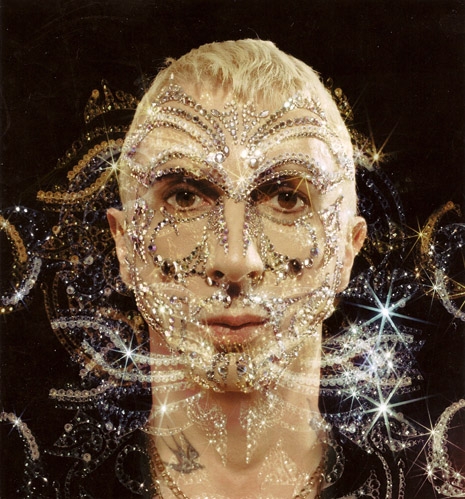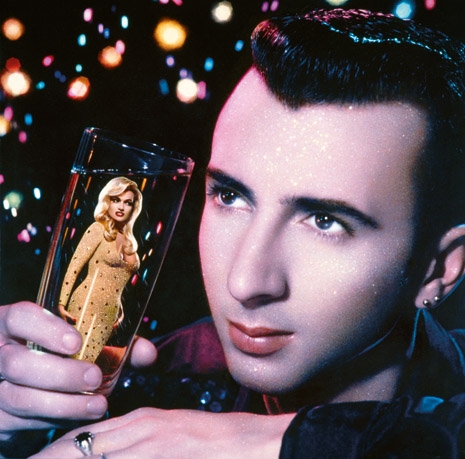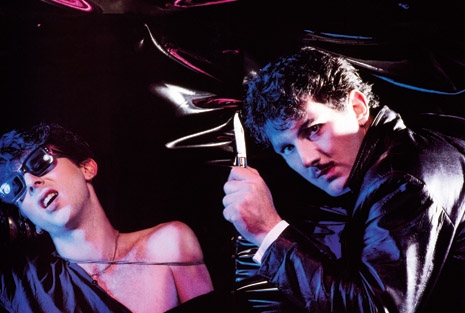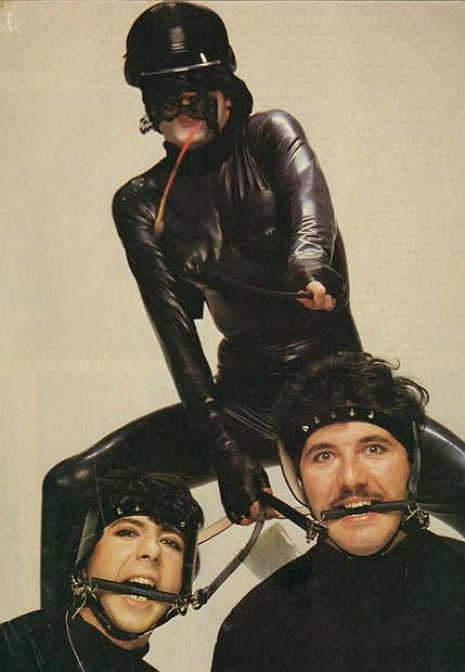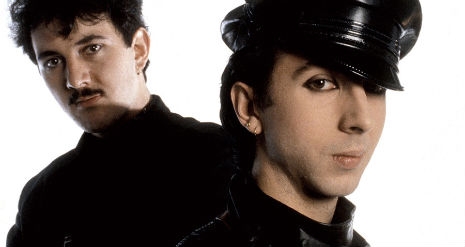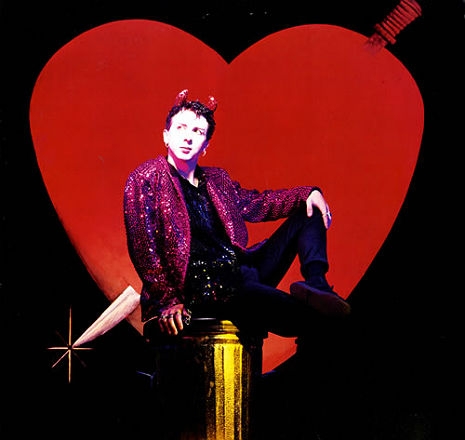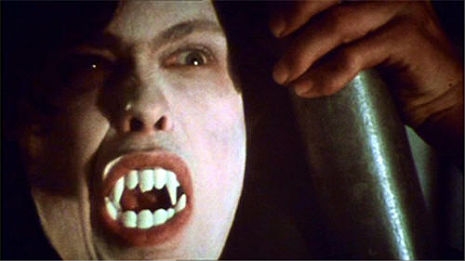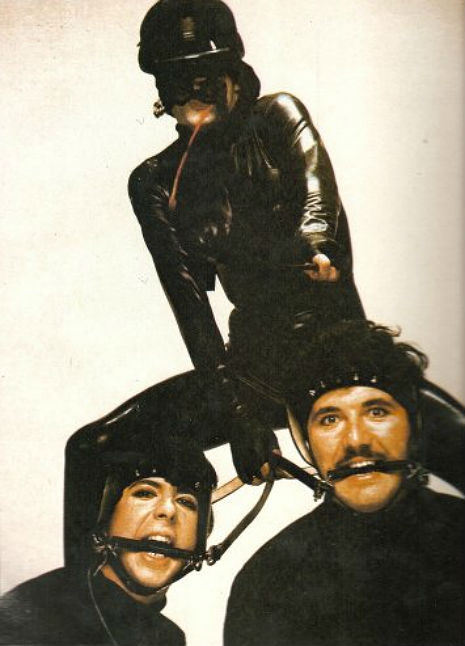


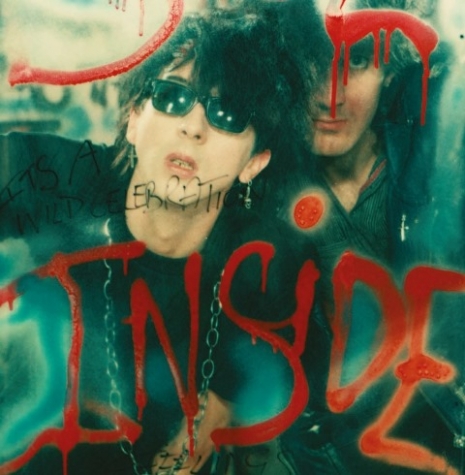
On May 1 what is probably the ultimate piece of Soft Cell memorabilia will be published by Chris Smith’s Renegade Music in a strictly limited edition of 1300. To Show You I’ve Been There… is a 176-page oversized coffee table book featuring images of Marc Almond and Dave Ball taken throughout their forty year history, from the nightclubs of the north of England in the late 70s all the way to their sold out farewell performance at the 02 Arena last year. Photographer Peter Ashworth, who shot several album covers and publicity shots for the band has opened up his archives for the project, which include his contact sheets and fantastic early live performance shots. Additional photographs from Peter Anderson, Tony Mottram, Justin Thomas and many others round out the exhaustively compiled book. Each photograph is accompanied by comments and context from Marc and/or Dave.
Exclusive to the book is also a 7” clear vinyl EP (or digital download) of three recently re-recorded early Soft Cell numbers (and a cover of Fad Gadget’s “Back to Nature”) titled Magick Moments which has a cover drawing by Dave Ball. The book will never be reprinted and the record will never be repressed independent of the book. You can preorder To Show You I’ve Been There… HERE.
In anticipation of the book’s publication, I asked Soft Cell’s Dave Ball some questions over email.

The Mini-Korg 800 DV, Dave’s first synth.
First I wanted to ask you about recording in New York. It’s nearly impossible to truly convey just how jaw-droppingly insane NYC was in early 1980s to someone who who didn’t experience it. What was your first reaction upon arriving in the city?
NYC was a crazy place back in the early 80s. I’d previously visited in 1978. The city was almost bankrupt and there was a heroin epidemic. They had one of the highest murder rates after Detroit.
How old were you then?
I was 18 years old when I first visited with my mum and sister.
Had you seen Taxi Driver before you got there?
It was about the same time Taxi Driver came out and walking in the evening was very reminiscent of the film – steam coming out of the potholes and Checker cabs everywhere.
Did New York live up to your expectations?
I thought it was like a very intense version of Soho in London. One morning I was walking down 42nd Street towards Times Square and a guy offered me a pistol for sale.
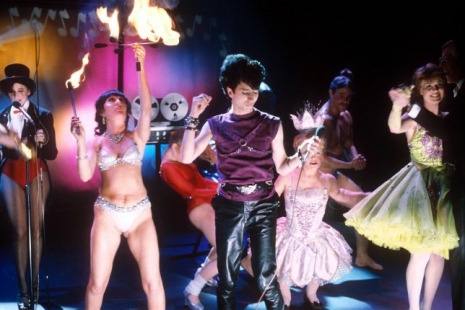
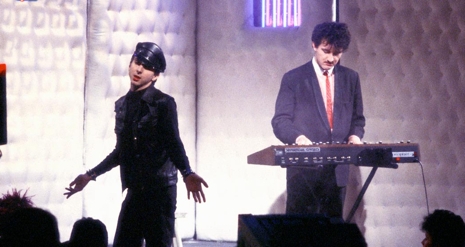
On the set of the ‘Enterian Me’ video shoot.
Marc’s predilection for sleazy situations is, of course, the stuff of legend—literal legends, quite an achievement that!—but what about you? What are some of the more notable things you saw or did in Times Square?
When I returned to the city three years later with Marc Almond and Stevo it was a totally different experience. We fully immersed ourselves in NY club culture. Apart from our usual hangout, Danceteria, other clubs we visited and sometimes frequented were Paradise Garage, the Roxy, the Ritz, the Peppermint Lounge, Berlin, the Red Parrot, Negril, the Mudd Club and Studio 54, of course. They were mainly dance clubs but we also discovered there were some very different clubs where they didn’t just play music but also got involved in lots of live sex action. One night we ended up in Manhattan’s meatpacking district and discovered a sex club called the Hellfire Club where there were people having various kinds of sex everywhere. I guarantee we never actively took part, we were just there as voyeurs. There were also predominantly gay clubs like the Mineshaft and the Anvil.

At the Factory with Andy Warhol in 1982
Tell me about meeting Andy Warhol.
When we met Andy Warhol at The Factory he was just as I expected – very quiet, creepy, old looking with a very limp handshake.
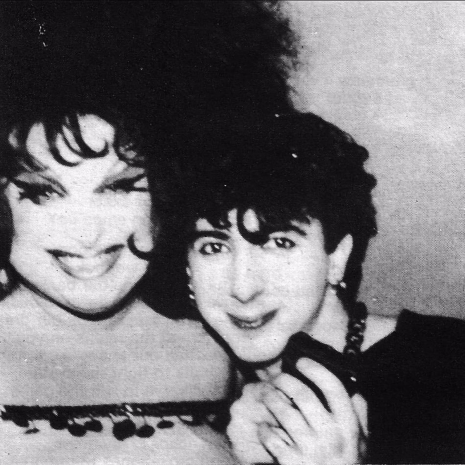
Where did you guys meet Divine?
We met Divine in a club called Danceteria. He was really pissed off and said he hated NY and wanted to go home to Baltimore.

The Roland CR 78, the “Tainted Love” beat machine.
I know that the debut album was recorded very quickly. What were the sessions like? How solidified was your sound before you went into studio for first album?
We worked at Mediasound Studios on West 57th St. from 11am ‘til 6pm everyday except weekends. We worked very fast as we knew all the material inside out. We’d been playing it live for the previous two years every week in clubs around the UK.
How conscious was the notion that you were making music for people who were on drugs to listen to? I feel like that’s an important part of what made the Soft Cell sound so powerful. Psychedelic isn’t the right word, but “druggy” is a step in the right direction, certainly.
We were experimenting with a lot of different drugs on the NY club scene – cocaine, quaaludes, ecstasy, opium, acid, heroin, crystal meth & Special K (ketamine). Anyone wanting to read more should check out my forthcoming autobiography Electronic Boy coming out this summer from Omnibus Press.
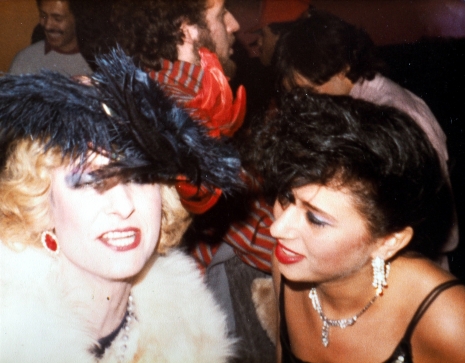
Anita Sarko and Cindy Ecstasy at Danceteria
On his blog (Soft Cell producer) Mike Thorne says that he feels bad that Cindy Ecstasy is often described, unfairly he feels, as your drug dealer. That it was a more casual passing of drugs from one friend to another, but a friend of mine remembers her being at Danceteria and other clubs of that era and he says “No, she was definitely a drug dealer.” How did she enter your orbit?
Cindy Ecstasy’s contribution was great as it gave a little taste of the life we were living in NY. There have been all sorts of questions and answers about what became of her. The one that sounds the most plausible to me is she became a screenwriter in Hollywood, under a different name of course.

Cindy Ecstasy during downtime on the ‘Torch’ video shoot
The shots from the Non Stop album launch party at Danceteria look… rather interesting. What happened that night and who came to the party?
The NY launch party for Non Stop Erotic Cabaret was great. All the Manhattan clubbers were out in force. Some of the Warhol crowd, some John Waters people, notably Cookie Mueller who was a friend of my girlfriend, the late Anita Sarko. Mick Jones from The Clash was there and was very complimentary about us and a pre-famous Madonna was there doing her little dance routine as normal.
Continues after the jump…