The “Little Free Library” movement is adorable. I mean like, painstakingly adorable. Folks can make or buy (for around $600!) a twee little birdhouse for books, set it up anywhere with foot traffic, and run a little book-borrow entirely on the “take a book, leave a book” honor system. Even I’m not so jaded as to criticize that—it’s sweet, neighborly, and totally unobjectionable.
Recently, Brokelyn wrote a post about Jennifer Wilenta, a yoga-teaching, organic-gardening, blogging Brooklyn mom, who installed one such library in front of her picturesque house in Ditmas Park.
Of course, I found something to be annoyed about.
Before you remind me that I’m a hateful little toad, let me just say that I take great pride, pleasure, and personal satisfaction in being a hateful little toad. I’m sure Wilenta is an amazing human being. She looks like a magical urban yoga fairy, and she literally lends books to her community with absolutely no strings attached. But, while these precious little literary penny jars are heart-warming (for those New Yorkers who still have hearts left to warm… sellouts), we’re facing a desperately under-reported attack on our actual libraries, which are already free, and able to use $600 way more efficiently than any one person.
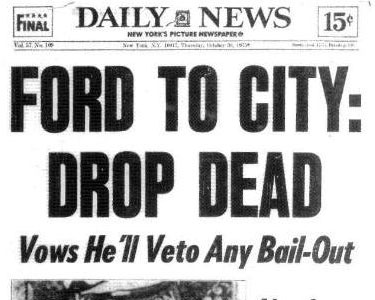
Our billionaire mayor, Michael Bloomberg is proposing a 35% cut in funding to libraries across all five boroughs, which would close over 60 branches, add to growing unemployment, and demolish hours and services. Aside from books and classes, NYC libraries have immeasurably important resources for computer literacy and Internet use for those without home access. NYC libraries are already ranked below freakin’ Detroit in open hours, and reducing hours would gut their utility even further. For the little people.
So by all means, let’s coo over the beautiful Brooklyn mom and her beautiful kids and her beautiful home and garden her beautiful little library, but when sweet, novel little facsimiles of common goods pop up, maybe we could take a moment to remind ourselves that individual gestures can’t replace collective resources.
In 1986, Keith Haring got a $25 ticket for painting graffiti on a handball court in East Harlem. Perhaps sensing the crack epidemic of the 1980s reaching a fever pitch, the Parks Department contacted him months later with a request to finish the mural. The two murals on either side of the wall not only still stand, the Parks Department has officially named the park the “Crack is Wack Playground,” acknowledging it among the most salient dedications of public art in the city.
Haring, one of the quintessential New York City artists, died in 1990 of AIDS related complications, and in a poignant way, signaled the passing of a cultural moment.
Like the elusive Sasquatch, the Brooklyn Headbanger rarely makes appearances when quality video equipment is present
As a Brooklynite, I love him for being a part of the human pageantry that brought me to New York in the first place. I salute his passion, and I defend his public displays of frolic with all my heart and soul. Also as a Brooklynite, if he was ever on my train on a day where I was hungover or even slightly cranky, I would bury my head in my book and hate him… so… fucking… hard.
This is the paradox of New York—the communal nature of our shared space throwing us into an ambivalent love affair with humanity, along with all its potentially irritating, but sometimes jubilantly invigorating weirdness. Keep doing what you’re doing dude; I can’t promise I won’t hate you for it, but I can’t promise I won’t love you for it either.
“If the Ghetto Brothers’ dream comes true, the world will learn that the ‘little people’ wish to be acknowledged, wish to be properly educated in order for them to pass on their knowledge to their children, and proudly inform them about their heritage and culture, and be a functioning part of the dream of America. If the Ghetto Brothers’ dream comes true, the ‘little people’ will be ‘little people’ no more, and make their own mark in this world. Listen to the Ghetto Brothers… and take heed.”—from the back cover of the original 1972 release of Power-Fuerza
I’m not one to go in much for year end lists (I like reading other people’s, but not compiling my own, besides it’s the new year already, isn’t it?) but if I was, then the Ghetto Brothers jaw-droppingly amazing Power-Fuerza deluxe re-release from Truth & Soul would have been hovering very near the top of mine. You know how every once in a while something or someone long-forgotten (or that never was) gets rediscovered and it’s just so fucking good that music fans take it to their bosoms and become all-out evangelists for said album or performer? (Death, The Langley Schools Music Project, Zambian psychrockers WITCH, Jobriath, Father’s Children and Shuggie Otis come immediately to mind.) Well, this is one of those albums, and one of those bands and the back-story of brothers Benjy, Robert and Victor Melendez, doesn’t disappoint either.
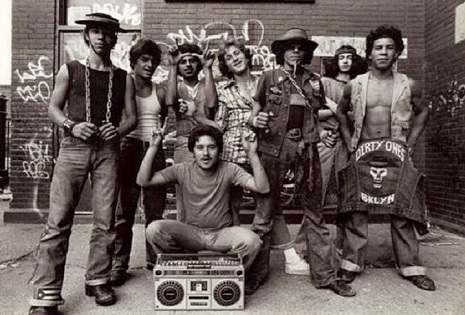
Power-Fuerza was recorded on a single sunny day in New York City in 1972 by a Beatles-influenced garage rock group comprised of a bunch of well-intended, socially conscious teenage Nuyorican gang members led by three brothers who wanted to broker peace between South Bronx street gangs and have a good time.
Do I have your attention? This isn’t just a truly great “lost” record, it’s uncovering an entirely hidden history—and a very important history at that—of New York City in the early 1970s.
The music on Power-Fuerza reminds me of a lot of things, including, but not limited to, a less-technically proficient early Santana (I mean that in a good way), doo-wop, Motown and even the first Strokes album for its confident, youthful, boyish bravado. I can’t really say that it doesn’t sound like anything else I’ve ever heard before, because it definitely sounds like a whole bunch of stuff I’ve heard before put into a blender, but don’t get me wrong, the exuberantly sweet-sounding inner city blues of the Ghetto Brothers is still unique as fuck when judged on its own merits.
There is an emotional purity to this album that cannot be described in words. It is unabashedly joyous and stunningly beautiful. Its low-fi imperfections are what make it so perfectly perfect. Power-Fuerza hit my pleasure centers damned good and hard on the first spin. I came close to crying tears of joy, it’s that good. The second and third times I played it, I loved it even more. And then I played it again, and again, and again (it’s a super short album and that’s the only downside of Power Fuerza, you’ll be left wanting to hear more and there is no more).
Hip-hop historian Jeff Mao writes in the CD’s extensive liner notes:
“By mid-1971, Benjy’s social conscience and interest in Puerto Rican nationalism dovetailed with the rise of young urban activist groups like the Black Panthers, the Young Lords, and the Puerto Rican Socialist Party. Catching the revolutionary spirit in the air, the Ghetto Brothers eradicated junkies and pushers from their neighborhood, cleaned parks and garbage-strewn empty lots, and participated in clothing drives and breakfast programs.”
As the Ghetto Brothers gathered daily in their clubhouse on East 162nd Street in the early ‘70s, they brought another aspect to their legacy: musicianship. Influenced as much by the Beatles – Benjy, Robert and Victor were in a neighborhood tribute group in the mid-‘60s called Los Junior Beatles – and doo-wop harmonies as by Santana and Tito Puente, they quickly cooked up a potent, NYC-flavored musical stew. It was a melting pot of styles gobbled up by a growing fanbase, who heard them on the street or, on occasion, traveled across gang lines to check the scene.
After jamming and building up enough tunes, the GBs garnered the attention of local record store and record label owner Ismael Maisonave (Mary Lou Records / Salsa Records). After agreeing to his invitation to put their music on tape, the group rehearsed furiously and gathered material. In the summer of 1972, they were ready.
The album’s eight tracks were recorded in one day at Manhattan’s Fine Tone Studios on 42nd Street, produced and engineered by Latin studio maven Bobby Marin. Seven of the eight are originals written by Benjy and/or Victor Melendez. Arrangements were written on the spot. The result: a beautiful, absolutely innocent audio snapshot by three brothers, their friends and a powerful gang of musical energy.
Power-Fuerza was a minor hit around New York, but that was about it. Until this new reissue from Truth & Soul (cased like a hardback book with 80 pages of fascinating liner notes and photographs), the 1972 LP was changing hands in collector’s circles for a thousand bucks. Not even all of the band members owned a copy. Forty years after its initial release, people (like me) are just going nuts for this album. It must be incredibly gratifying for everyone involved in creating and then bringing this hidden gem to the public some forty years after the fact and seeing it embraced the way it has been. Seriously, kudos to Truth & Soul for putting together a fantastic product that, frankly, is practically piracy proof. People are gonna want to buy it because the liner notes are SO ESSENTIAL. When you hear the music, you will want to know the story behind it.
The original group split up, but the Ghetto Brothers are still very much together as a musical family affair: Benjy and Robert Melendez and their sons Joshua and Hiram, playing bass and drums respectively, meet at their studio every Friday to play music (Their brother Victor Melendez died in 1995).
“There’s Something in My Heart”
“Got This Happy Feeling”
WNYC’s Soundcheck awesome show on the Ghetto Brothers with Benjy Melendez and author Jeff “Chairman” Mao:
“8 Million Stories: Yellow Benjy” by Andreas Vingaard
Since I was only ever able to catch a few of them on TV (I moved to NYC the year it went off the air), I was always on the look-out for bootlegs of a cable access program called Paul Tschinkel’s Inner-Tube, perhaps THE greatest (I can’t imagine what would compare to it) underground video archive of late 70, early 80s punk, post-punk, No Wave and New Wave music that exists.
The Gun Club, Bad Brains, Dead Kennedys, The Cramps, Blondie, Talking Heads, James Chance and the Contortions, Johnny Thunders, Television, Richard Hell and the Voidoids, The Dead Boys, The Ramones, Siouxsie and the Banshees… the list of bands seen on Inner-Tube goes on and on and on. Shows often shot in color, with two cameras and sound board audio. Performances taped at CBGB, Mudd Club, Danceteria, Max’s Kansas City, Irving Plaza and usually the camera was right up front.
Inner-Tube ran for ten years on Manhattan Cable (meaning that you could only watch it if you lived in Manhattan, the outer boroughs didn’t get it, TV Party, Midnight Blue or Robin Byrd, either). Seriously, it was the best of the best. Unbelievable shit.
I’ve been waiting in vain for years, hoping for a proper DVD release of the “best of” Inner-Tube, but the rights issues would probably make that a nightmare. Now it looks like Tschinkel is starting to put some on YouTube. This should be encouraged!
“This ‘Paul Tschinkel’s Inner-Tube’ program appeared on his Manhattan Cable TV show in 1980. It features live performances at Max’s Kansas City and CBGBs in New York that epitomize the dynamic, exciting music of the time. We see a riveting performance by the Dead Boys and a fast paced one by Levi and the Rockats that also includes a guest appearance by rocker Jayne County. A short piece of old time fiddling music, taped a fiddling convention in Independence VA in 1973, rounds out the program.”
This has only been on YouTube since last night. Here’s hoping for more Inner-Tube!
Bloomberg doing his best approximation of a Christian rock album cover, and half as sincere
New Yorkers are pissed off with local response to Sandy. Trains in poorer neighborhoods have been lower priority for restoration. Bloomberg defended going through with the New York Marathon while they were still fishing bodies off of Staten Island. When public sentiment finally forced his hand, he was demonstrably begrudging, perceiving the cancellation as a huge concession on his part.
Afterwards, it took forever to bring the (highly portable) marathon resources from the race points to those in need. There’s a gas shortage further immobilizing the city. People are still waiting in long lines for shelter and food, and necessities, and many areas are still woefully under-serviced. And now there’s been a nasty cold snap.
It only makes sense that Bloomberg make an appearance for a photo-op. Fortunately, the awesomely bitter New York spirit takes no truck with his unctuous performance. Notice how he just walks away from his constituency and instead drops a sound bite on the cameras.
So rarely have I ever been quite beautifully claw hammered by a movie than I was by the 1965 film, Who Killed Teddy Bear? It’s one of those films that can leave you slack jawed over what you have just seen and all the while it just seeps further and further into your consciousness. It’s been days since I last watched it and I still cannot stop thinking about it.
The basic plot revolves around a young, beautiful DJ and aspiring actress, Norah (Juliet Prowse), who soon becomes the focal point of a stalker. He starts off as a creaky voiced, hot and heavy breathing obscene phone caller, making comments like “I know what you look like right now” and “I can make you feel like a real woman.” She’s annoyed at first but gets progressively more rattled as the number of calls grow and violence starts to blossom around her.
Where things get really interesting is that instead of building up the identity of Norah’s mystery obsessive to the very end, we find out who he is midway through the film. The lithe but muscular figure, often shiny with sweat and clad in white briefs, turns out to be the boyishly handsome busboy, Lawrence (Sal Mineo), who works with her at the discotheque. The jolt of seeing former teen idol and Rebel Without a Cause star Mineo as the sexually damaged obscene phone caller with homicidal tendencies is as strong now as it must have been back when it was originally released.
But Mineo’s performance is much more than just a teen dream novelty. He brings some serious depth and layers to Lawrence, creating a character who is alternately sad and frightening, mostly due to his childhood rooted dysfunction. Whether he is taking his mentally challenged sister to the zoo or working out with an intensity that precedes either the hottest sex act or the worst murder, Mineo is a powerhouse here. His Lawrence is right up there with Anthony Perkins in Psycho and John Amplas’s titular role in George Romero’s Martin.
The film itself is a powder keg of beautifully moody B&W cinematography and the grimy underbelly of the human condition. The opening credit sequence alone sets the tone, featuring a blurry undulation of bodies as a little girl watches, clutching her cherished teddy bear. She turns away, only to fall down the stairs, with her face now suddenly blank, as if she is dead or brain damaged. Without a breath of relief, the actual film starts in a cramped, shadowy bedroom, complete with a nightstand littered with lurid publications, featuring titles like French Frills and When She Was Bad. A mirror reflects the image of a man caressing his bare chest while looking at photos of Norah, right before calling her up.
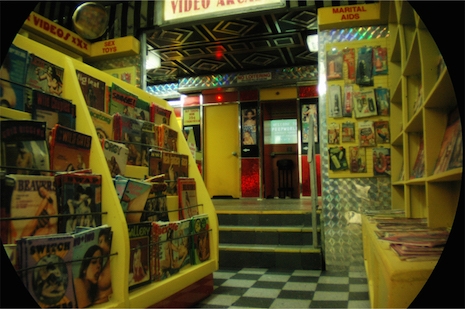
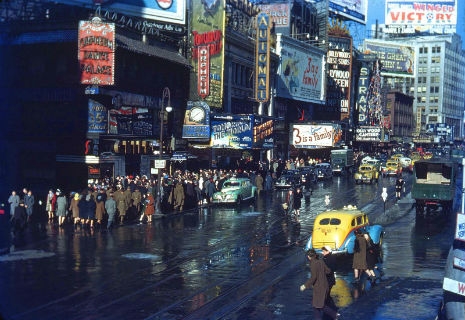
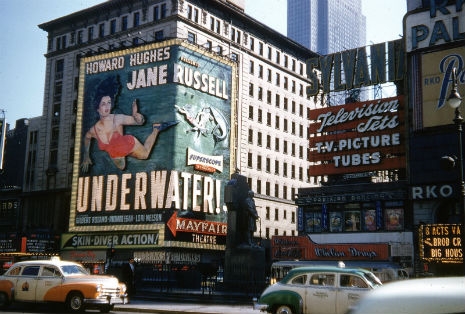
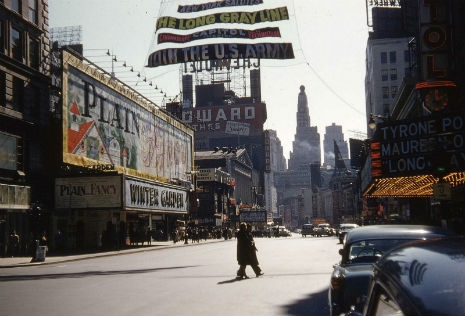
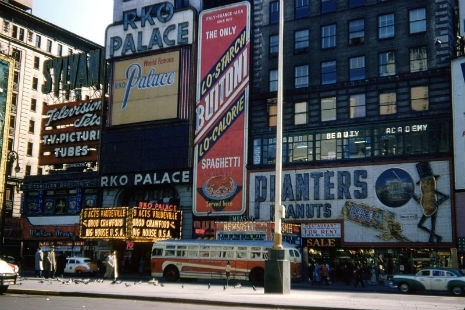
The elements of sleaze continue as Norah encounters police Lieutenant Dave Madden (Jan Murray), a single dad whose fascination with all manners of sexual deviancy infects his home life. (At one point, one of his coworkers mentions how Dave’s young daughter talks like a “vice squad officer.”) Even Norah’s boss, the glamorous ball buster Marian (Elaine Stritch), comes across like an uneasy mixture of maternal and less than pure motive. We even get some now-historic footage of a seamier New York City, with the highlight being Lawrence’s jaunt to an adult bookstore. Seeing shelves lined with girlie mags and books ranging from Fanny Hill, William S. Burroughs Naked Lunch, Hubert Selby Jr.‘s Last Exit to Brooklyn to more purple prose titles like Dance Hall Dyke and My Naughty, Naughty Life is a much beloved peek into the pre-gentrification and Disneyfication of Times Square.
Who Killed Teddy Bear? is a brave film that gives you no easy answers. Sadly, it didn’t really do a thing for anyone that was involved, career-wise. Mineo did continue to do film, TV and theater work, including staging a controversial version of the prison drama Fortune and Men’s Eyes that featured a young Don Johnson. All of that was cut short in 1976, when he was murdered by a drifter. Elaine Stritch continues to be a monolithic character actress on Broadway, film and TV. Juliet Prowse, Jan Murray and Daniel J. Travanti, who has the small role of Carlo, Marian’s deaf bouncer, all went on to have healthy careers in television. The same could be said for director Joseph Cates, though perhaps that is the biggest shame given that he never was given the chance again to direct anything as nuanced and challenging as Who Killed Teddy Bear?. In an ideal world, this film should have forged a different career direction for Cates and certainly for Mineo, whose wounded eyes and brutal actions are hard to forget.
Who Killed Teddy Bear? is ripe for proper rediscovery. It’s a mystery why this great film is still not available legally on DVD here in the US. (It did get a release in the UK, though that appears to already be out-of-print.) It is viewable on YouTube, for anyone who does not have access to the UK, PAL formatted disc. Hopefully, it will someday get the proper release that it so justly deserves.
The mighty Fran Lebowitz takes on Mayor Bloomberg and New York University with the righteous indignation of someone who loves the city passionately and hates the steady shift away from a metropolis known for its cultural, racial and architectural diversity to one of homogeneity, privilege and wealth. She kicks ass and I think she’s absolutely brilliant. Lebowitz IS New York. She’d make a great mayor.
What Lebowitz and many New Yorkers are specifically upset about is NYU’s plan to construct four new buildings in Greenwich Village which will radically alter the area’s landscape by creating six city blocks (1.6 million square feet) comprised of massive concrete structures. The Village is one of the last neighborhoods in Manhattan that has maintained its human scale and these “superblocks” would destroy one of the great cultural communities on the planet, replacing gardens with stone and flooding the area with more people, more bars and more noise - an urban Disneyland for academics and alcoholics.
Anyone who has recently visited the East Village knows just how bad things can get when a neighborhood is overrun by suburban asswipes whose idea of a groovy night out is finding the bar with the cheapest Jagermeister shots. The site of puke-slathered Lana Del Rays wobbling down Avenue B on their Jimmy Choo’s will make you long for the days of garbage strikes and man-eating rats.
You can read more about the struggle to keep the Village safe from the marauding armies of greed who are so arrogantly and wantonly hellbent on turning an historic neighborhood into a Bloombergian hellpit here.
The police put him into an ambulance bound for Metropolitan Hospital Center, but he was not arrested. The video spread quickly on the Internet, bringing out the dark humor, to some, of a cuddly children’s character engaging in a violent-sounding rant. Others thought it was just plain scary.
On Tuesday, Mr. Sandler, 48, of Ashland, Ore., removed his Elmo head from atop his own and tried to explain himself.
He said the doctors at Metropolitan told him he was “a little paranoid.” It was obvious from talking to him that he is troubled. But he told a lucid and detailed account of his life, and he told of his own dark past, one that might alarm parents whose children have posed with him. The tale he told underscored just how little is known about the men and women who dress as various children’s characters in tourist-clogged areas, looking for small tips. This tiny industry is unregulated.
The tale goes downhill quickly when it is revealed that Mr. Sandler once ran a pornographic website from Cambodia called “Welcome to the Rape Camp.” Officials there deported the future children’s entertainer in 1999 after an Associated Press article about his activities brought him to their attention.
Mr. Sandler said he went on to work at the New York office of Girl Scouts of the U.S.A. The organization’s headquarters, where he was recognized by staff members who saw news accounts of the Elmo incident Sunday, said he had not been an employee, but had worked there from a temp agency.
But he lost that job. Then he had an idea.
“I saw how these Elmo guys were working in Times Square,” he said. These individuals are not sanctioned by the Sesame Street Workshop, the nonprofit group that produces “Sesame Street,” “and we do not condone unauthorized representations of our characters,” a statement released Monday said.
Mr. Sandler bought an Elmo costume online for $300, he said, and when he started wearing it in April, he found it quickly paid for itself. Just Saturday, he said, he made $200.
He moved to Central Park when he felt Times Square was too saturated with Elmos.
At least two other outbursts in his Elmo costume have made it to the Internet. In one of them, he uses obscenities that send children running to their mothers. Mr. Sandler said the true number of his outbursts, as Elmo, was closer to 15. The police said he had no record of arrests. In none of the videos was Mr. Sandler physically abusive. It is unclear whether his rants as Elmo are illegal.
Just don’t let this Elmo tickle your kids…
Read more of Beneath a Ranting Elmo’s Mask, a Man With a Disturbing Past (New York Times)
Ana Lola Roman is a singer, a musician, a dancer, a choreographer, a curator, a writer. She’s talented and beautiful, funny and smart. Has the looks of a silent movie star, a Louise Brooks in a Pabst film, with a hint of Audrey Hepburn, via Maria Callas and and Frida Kahlo.
An only child born in the early 1980s into a large Spanish family, that had emigrated to America, “during the whole Iranian Revolution Post-Oil Boom Era” in the late 1970s. The first 5 years were spent in a ghetto of Del City, on the outskirts of Oklahoma City. The family worked hard, worked harder, until they settled into a middle class suburb of OKC.
Her home life was European by nature, American by inclination. A heady mix of European sophistication and American pop, which informed her musical influences.
‘I’d have to say my first influences were a heaping helping of various flamenco singers listened to while in the back of my Grandmother’s Cadillac. It was a weird mix of environments and influences. Gracia Montes and Lola Flores…well, these women had soul, heartache, moxie, and power.
‘Mixed with that and the impending sensations of early MTV. I fell in love with David Bowie’s “Let’s Dance” video when I was only 5 years old, developed a keen fascination with Numan’s “Cars”, and felt delightfully inappropriate when I witnessed Billy Idol’s curved lip.
‘I was only 5 years old when these things happened to me. And I knew right then that I wasn’t going to last long where I was. I was going to be restless for the rest of my life and end up somewhere as crazy as New York or Berlin.’
‘Then of course being 10 years old and seeing Siouxsie….that’s when everything fell apart and got worse, then I felt bitten by the vampire when Joy Division came along. That was the end of the road for my Oklahoma Journey.’
Some pretty amazing images turning up on this live feed. How much of this is anyone seeing via the major media outlets? Other than The Guardian’s coverage, I ain’t seeing much at all.
“What’s good about crack? Do you want to know? Do you want to know?” [You’ll have to watch the videos to find out].
Old school New Yorkers will remember Washington Square Park’s raunchy master of ceremonies, street comedian Charlie Barnett, who died 16-years ago from AIDS complications and drug addiction. From the late seventies onward, several times a day, Barnett would jump up onto a park bench and shout “It’s showtime!” and do a 20-minute stand-up set that had the whole park in stitches. Roaring. Crying with laughter. I must’ve seen Charlie Barnett do 30 such performances over the years. I was in the Washington Square Park area a lot back then and I’d always stop to watch his act. The guy was one of the best stand-ups I’ve ever seen in my life. Spontaneous. He said whatever came into his head. Breathtakingly fearless performer. Shocking, even. No topic was off limits, which is why Barnett was perhaps better suited for street performances than the comedy clubs.
When he was on the mic, the man simply owned Washington Square Park. Truly, he was a fixture of NYC life in the 1980s. At one point, it came down to Barnett or Eddie Murphy who would become a cast member of SNL, but Barnett’s inability to read—he was a functional illiterate who read very, very slowly—saw Murphy get the nod. Barnett did have some notable roles (“Tyrone Bywater” in D.C. Cab, “Noogie” on Miami Vice) but he never really made it and died in 1996.
I haven’t thought about Charlie Barnett in years, but there’s an interesting short essay about him over at the Splitsider comedy blog by College Humor’s Conor McKeon:
On any given day hundreds surrounded the fountain. Barnett circumnavigates the makeshift oblong stage — his cocksure strut somewhere between that of preacher and prizefighter — and bellows, “I love a New York audience” in a voice as gravelly as the rural Appalachian roads he once travelled just to get here, to this fountain. With most comics, “I love a New York audience!” suggests a trite attempt at audience appeasement, but crowd work is not necessary for Charlie Barnett — they’re chanting his name before he’s said a word — and in his voice there is a palpable sincerity which implies he really truly means it.
His act, an array of outsized characters and one-liners (“I took an AIDS test — I got a 65”), doesn’t contain the underlying sensitivity of Bruce or Pryor’s social consciousness, but instead serves as a modern re-imagining of the blue-tinted Vaudevillian raunch of Foxx and Rickles.
Of course, in Charlie Barnett’s case, the material is more or less immaterial, secondary to the mesmerizing physicality of his performance, with its perpetual motion and jutting limbs and rubber faces. He simply possesses a mindfulness on stage that you are either born with or you are not: One gets the impression that he could perform for an audience of the hearing impaired and his act would lose not an ounce of potency.
Another notable aspect of Charilie Barnett’s time on the planet was his nurturing of one of this generation’s greatest comedic talents, Dave Chappelle, who was due to play Barnett in a 2005 feature film about his life that sadly never got made. After a young Chappelle was booed off the stage of the Apollo Theater, Barnett took the bruised comic under his wing and showcased him to the crowd in the park. Roast-master general Jeffrey Ross was also heavily influenced by watching Barnett work the crowd.
Although I would imagine that there must be hundreds, even thousands, of videos of Charlie Barnett that were shot by tourists over the years, few of them have made it to YouTube. This clip from the cult film Mondo New York, captures Barnett working the fountain exactly as I recall him doing it, circa 1986. Comedy dates quickly, of course, but Barnett’s work from 25+ years ago retains an edge that is as sharp as ever. This clip still has something to offend everyone:
This particularly over-the-top performance from a 1993 Def Comedy Jam taping was never aired on TV, but did surface as a “2 Hot 4 TV” DVD extra. By this time Barnett’s health was starting to visibly deteriorate, but his comedy was still blistering, crude and rude.
To coincide with the Keith Haring: 1978-1982 exhibition at the Brooklyn Museum, New York, the Keith Haring Foundation has scanned the artist’s journals and will be posting one page a day for the duration of the show. The first few pages are already available here. Nothing startling to see yet, but one to keep an eye on.
For details of Keith Haring: 1978-1982 at the Brooklyn Museum, check here.
More pages from Keith Haring’s journals, after the jump…
Great news for people living in NYC, Bjork is bringing her phenomenal Biophilia live experience to the city next month. The shows will be taking place over two different residencies; one at the New York Hall of Science (six dates in all, between February 3rd and 18th) and one at the Roseland Ballroom (four dates there, between February 22nd and March 2nd).
While the Roseland Ballroom is more intimate, the grapevine tells me the Hall of Science will be better as it will facilitate the whole 360 degree stage show, which should hopefully incorporate giant tesla coils, homemade instruments, a large female choir and the full surround sound PA and plasma screens. I was lucky enough to catch a Biophilia show last year in Manchester, and it ranks as one of the best live shows I have ever seen. I reviewed it for Dangerous Minds, and you can read that here.
There have also been Biophilia shows announced at various European and South American festivals over the summer - for more info on the shows (and links to buy tickets for individual performances), visit the Facebook page for Bjork events.
Here’s an inkling of what you can expect:
Bjork “Joga” (Live at Manchester International Festival 2011)