

Rock Hudson was killing time waiting for that one big role to come along to change it all. He was making money, sure, lotsa money, he was box office mint but he was just doing the same damned thing over and over and over again. The hopes he once harbored after his performances in Giant or Written in the Wind or even The Spiral Road (a role he claimed to have studied the bejesus for) had all come to nought. Zip. Nada. No one was giving him a chance least of all his agent and long-time pal Henry Willson.
Willson was doing sweetheart deals with the studios. A stash of cash under the table to get Hudson signed-up for another goddamn contract. Five more movies, sure, Rock would love to do them…where do ya want me to sign? Hudson was Wilson’s money-maker. He pimped him out to whoever had the most moolah. Wilson felt justified in his actions. He had been the one who’d picked up the six-foot-four beefcake when he was a long-streak of piss truck-driver fresh outta Winnetka. Willson pushed Hudson on the casting circuit and got him a deal when he still couldn’t get his lines right or even make an entrance without tripping over the props. Willson had also christened him Rock (after the Rock of Gibraltar) and Hudson (after the river) and made him into America’s number one heart-throb who made teenage girls swoon and their moms all dreamy-eyed. Wilson was taking what he thought was rightfully his—money. Which meant no big dramatic roles came Hudson’s way after Giant or The Spiral Road because there was no money and no interest there. All he got was rom-coms with thirty-something girl-next-door Doris Day or sexy swing-hips Gina Lollobrigida.
Hudson’s relationship with Willson was complex. It was a business partnership with benefits. Both men were gay and Wilson had the hots for Hudson and acted on it. To make matters more Freudian, the older Willson was also a father-figure to Hudson. A replacement for the father who had abandoned Rock when he was about three. Hudson always felt he was responsible for his father’s departure, which of course wasn’t true. Eventually, his mother remarried and his new stepdad was a drunk, a coward, and a bully who beat the shit outta Hudson just because he could.
Hudson was about nine-years-old at the time. He quickly learned how to hide his feelings, how to make his face a mask, and keep his thoughts to himself.
When Hudson grew like Topsy, he was able to hit back. That put paid to the ole drunk stepdad’s violence. In the same way when Hudson became a big movie star, he didn’t need Wilson no more. The roles he sought hadn’t materialised and he no longer wanted Willson signing his life away so he could line his pockets while Hudson did all the work. Hudson fired Willson. Now he was gonna make his own decisions.
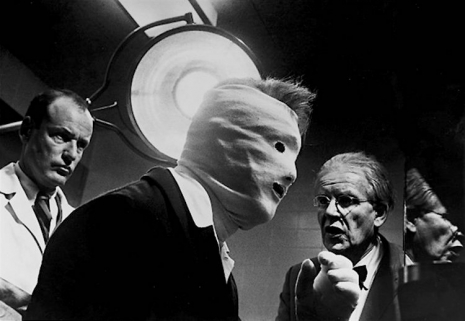
Hudson decided on making a movie that would be so different, so far removed from his usual jokey isn’t-this-fun fare, that he hoped it would make audiences and producers appreciate his talents as an actor and not his hunky good looks. His decision turned out to be a kinda Pyrrhic victory. Hudson got the part he had always wanted but the movie bombed and killed-off his ambitions to ever try something like this again.
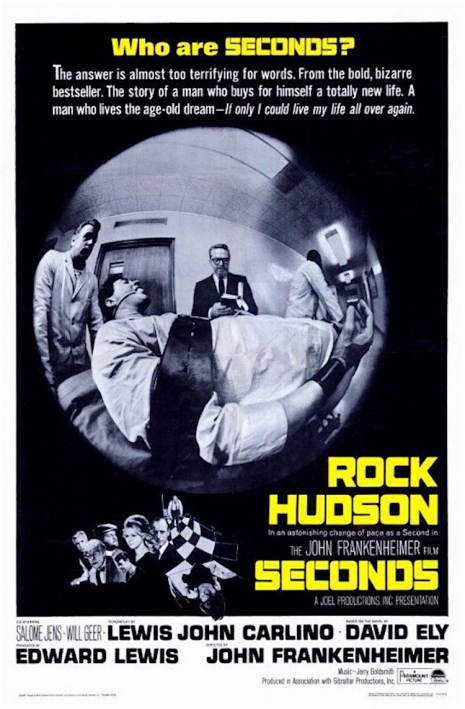
The movie was Seconds.
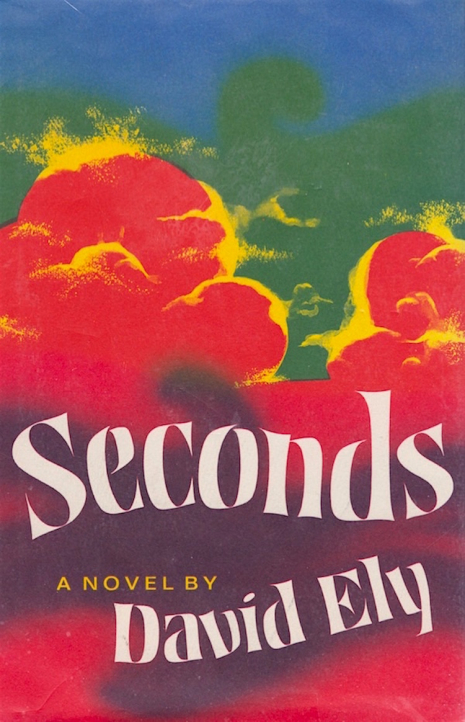
Based on a novella by (the vastly underrated) David Ely, Seconds tells the story of Antiochus Wilson (Arthur Hamilton in the film), a bored frustrated deadbeat middle-aged banker who feels his life is over until one day he is offered a second chance by a dark mysterious secret organization. For the right amount of money, this organization will give Wilson a new face, a new identity, a whole new life which he can keep so long as he plays by their rules.
Kirk Douglas had originally optioned the book thinking here was a sure-fire Best Actor Oscar if he played both the before and after roles of Hamilton/Wilson. Unfortunately, when the green light came, Douglas was busy making other plans. The rights were then bought by Paramount for their young director John Frankenheimer who’d earned his spurs and made the studio mega-bucks with a series of box hits—Birdman of Alcatraz (1962), The Manchurian Candidate (1962), Seven Days in May (1964), and The Train (1965). In Hollywood, you’re only as good as your last movie. Frankenheimer was yet to have a flop. This meant he could do what the hell he liked.
Frankenheimer thought the only actor who could play the before and after roles of Hamilton/Wilson was Laurence Olivier. He hopped on a plane to England and got the theatrical knight to agree to the role. But this wasn’t what Paramount wanted. They wanted a BIG NAME. A BIG BOX-OFFICE NAME that would bring as wide and as varied an audience to the movie as possible and therefore lotsa money. Through a friend-of-a-friend-of-a-friend, Rock Hudson was suggested as a possible lead to Frankenheimer. The director couldn’t see it but agreed to meet with the actor.
Hudson wanted the part but he knew his limitations. He suggested to Frankenheimer that two actors should play the before and after roles rather than just one. It was a clever idea—one Frankenheimer thought would work. Hudson inferred he wanted the role because he knew exactly what it was like to be Hamilton/Wilson. Here was an actor who been forced to hide his true feelings since childhood and had had a whole new (fake) identity as America’s red-blooded hetero-beefcake foisted on him by movie studios. All so he could he have the one career he had always dreamed about.
More from Rock and ‘Seconds,’ after the jump…